
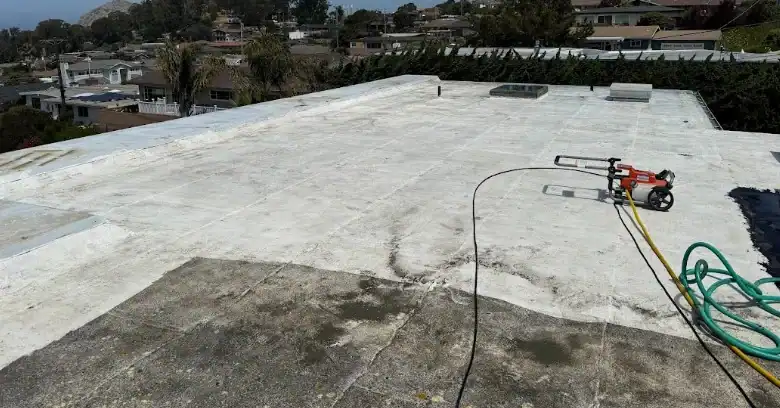
Researching TPO Membrane Roofing Installation Near Sacramento California?
Creative Roofing handles the seams, drains and edges where a flat roof succeeds or fails, for properties in Sacramento California and the towns around it.
Dial 805-723-2381 to arrange a visit to look at the roof.
The Challenge of a Level Surface
A flat roof is never truly flat, but its slope is so slight that water drains slowly and lingers, and the materials and details are chosen for it. A flat roof gives little margin for error in the details, and it pays to think it through.
Types of Flat Roofing
The seams on thermoplastic sheets are fused rather than glued, which makes them strong, and repairs are made by welding on a patch. The big rolls of rubber cover large areas with few seams, and the details are worth a closer look. Gravel surfacing on a built-up roof protects the layers from sun and foot traffic, and repairs can be made in place.
The Weak Points of a Level Roof
Failures concentrate wherever the membrane stops or is cut, so the inspection follows a set order. Cracked sealant at the top of a wall flashing is one of the most common sources of leaks, and it pays to think it through.
When Water Will Not Leave
Ponding is the condition of standing water on a roof, and it accelerates wear on any membrane, and clear leaves and debris from scuppers. Angled boards under a new membrane direct water toward the drains and eliminate low spots, and a roofer can map the low areas.
How Heat Wears a Low-Slope Roof
A flat roof faces the sky all day, and the sun heats it far more than a steep roof ever experiences, and it is easy to overlook. Liquid coatings are rolled or sprayed onto a sound roof to form a continuous reflective skin, and that is worth keeping in mind.
Foot Traffic, Equipment and Penetrations
These openings are the most common leak sources, so they get the most attention in an inspection, and plugging with caulk is only a stopgap. Roof-mounted air conditioners and other equipment bring service people who walk on the membrane, and avoid storing items on the roof.
What a Roof Can Still Do
Targeted repairs buy time and protect the interior while a bigger plan is made, and temporary fixes should be called what they are. When the surface is simply worn, a coating or an overlay can refresh it without a full tear-off, and an honest answer starts with a survey. Replacing wet insulation restores the performance of the roof and the comfort of the rooms below, and that is worth keeping in mind.
Patios, Garages and Modern Homes
Residential low-slope roofs turn up over additions, covered patios, carports and contemporary houses designed with clean horizontal lines, so ask whether the company handles low-slope work regularly. Leaks that appear in the room next to an addition often trace back to this single joint, and fixing it properly takes some patience. A roof used as living space has to meet higher standards than one that nobody walks on, and ask about drains and overflows.
What Sits Between the Roof and the Ceiling
Because there is often little or no open space under the deck, heat from a hot summer day passes quickly into the rooms below unless the roof is well insulated, and the combination is worth planning. Water that gets into the insulation layer spreads sideways, so the damp area can be much larger than the visible stain on the ceiling, and the map is a useful record.
A Simple Maintenance Calendar
Photographs taken each year create a record that makes changes easy to see, and the work is quick. Branches, loose objects and windblown trash can cut a membrane or block a drain, and they should be removed promptly, so do not wait to see whether it dries out.
Holding a Membrane Down in a Gust
After a windy spell it is worth checking the perimeter from a ladder for loose trim, lifted seams and curling edges, and a small problem there grows quickly. Stones that have been scattered by wind or foot traffic leave bare patches that expose the membrane to ultraviolet light, and the details are worth a closer look. A careful roofer walks the roof beforehand and counts every penetration, then includes them all in the proposal, and it is easy to overlook.
Roof Penetrations, Skylights and Hatches
Replacing a worn skylight and its curb flashing together with the roof is far cheaper than doing the two jobs separately, so ask how every opening will be handled. Gathering the pipes and conduits into fewer penetrations reduces the number of places where leaks can begin, so ask about consolidating them. Keeping every outlet clear and in good repair is the most important single habit of flat roof care, so check them often in the rainy months.
Questions for a Flat Roof Contractor
A good proposal names the membrane, its thickness, the attachment method and the insulation to be used, and the details are worth a closer look. Ask who will supervise the work and how weather delays will be handled, and notes help you compare.
Scheduling and Living With a Flat Roof Project
The crew needs clear access to the roof, a place to set up the equipment and a path for removing old material without crossing living areas, and that is worth keeping in mind.
Common Worries Before a Flat Roof Project
Questions about a level roof are best answered by someone who has looked at it in person, and it pays to think it through.
Next Steps for Your Roof
Those comparing TPO Membrane Roofing Installation in Sacramento California can reach us by phone, and the number is 805-723-2381. There is no pressure in asking about a flat roof, and a little care goes a long way.
Verified

Verified
Verified
Verified
Verified






















