
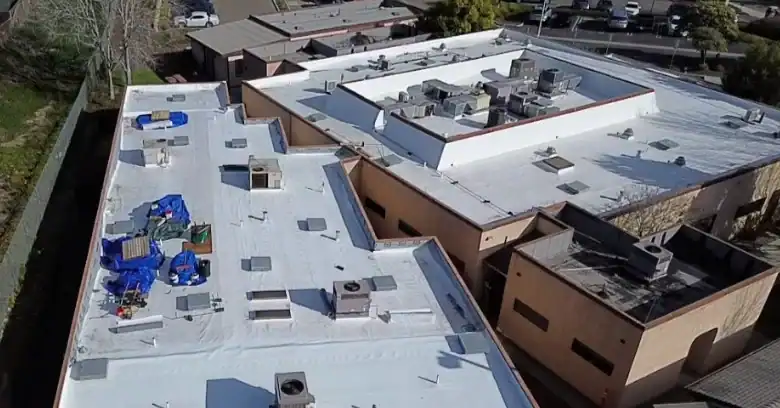
Thinking About TPO Membrane Roofs for a Building in Sacramento California?
Creative Roofing installs membranes, coatings and built-up layers on roofs that barely shed water on their own, from Sacramento California out to the surrounding area.
Call 805-723-2381 and tell us about the flat roof you have.
Why Flat Roofs Need Special Care
The gentle angle of a flat roof gives water time to find every weakness, and the materials and details are chosen for it. A pinhole in a membrane or a gap in a seam lets in water that sits and keeps seeping, and look at examples of their finished work.
What Goes on a Low-Slope Roof
Heat-welded sheets such as TPO are among the most popular choices for new flat roofs, and the quality of the welds is the main concern. Rubber membranes are black or white, and the seams are joined with tapes or adhesives, and the seam tape is a point to watch over time. The multiple plies mean that a flaw in one layer is backed up by the next, and repairs can be made in place.
The Weak Points of a Level Roof
Most flat roof leaks start at a detail rather than in the middle of the roof, and a roofer should walk every foot of the edge. Parapet caps and copings protect the top of the wall and must be sound, and redoing sealant is routine upkeep.
Ponding, Drains and Rain Bursts
Rain here often comes in sudden bursts that test every flat roof drain, so check drains before the rains begin. Angled boards under a new membrane direct water toward the drains and eliminate low spots, so ask for a plan to improve drainage.
Sunshine, Heat and Aging
Heat makes a membrane expand during the day and shrink at night, and it is easy to overlook. Silicone, acrylic and elastomeric coatings are the main families used on flat roofs, and a coating cannot rescue a roof that is wet inside.
Anything That Pokes Through or Sits on Top
Skylights and hatches add edges that need careful flashing, so these spots deserve regular checks. Tools, ladders and dropped objects can cut a sheet, so care is required, so ask the roofer to mark and protect the routes.
Options for an Aging Flat Roof
A skilled roofer can patch a membrane so that the repair outlasts the surrounding area, and photographs help. Testing for moisture shows what the roof can accept, and an honest answer starts with a survey. Replacing wet insulation restores the performance of the roof and the comfort of the rooms below, and it should be planned rather than rushed.
Level Roofs at Home
Owners of older homes often discover that an addition from a previous decade was finished with a membrane that has long since worn out, and the wrong material on a flat roof will leak. Siding, stucco and trim all have to be worked into the flashing, and the roofer has to cooperate with whoever finished the wall, and a little care goes a long way. Pavers, decking and planters laid over a membrane protect it from the sun but hide it from view, and the details are worth a closer look.
Insulation, Slope and Comfort Under a Level Roof
Rooms beneath a flat roof often feel warmest in late afternoon, when the surface has soaked up a full day of sun, and the combination is worth planning. Cutting a small test square is another way to check, and it is sealed again as part of the same visit, and that is often cheaper than a full tear-off.
Keeping a Flat Roof in Shape Through the Year
Photographs taken each year create a record that makes changes easy to see, and a small repair now is nearly always cheaper. A stain on a ceiling after a storm is a clear signal to have the roof inspected before the next one arrives, and it pays to think it through.
Edges Take the Brunt
Gusts lift a flat roof from its edges and corners, where the pressure is highest, and a membrane that is not firmly attached there can peel back like the lid of a can, and a little care goes a long way. Gravel on a flat roof is not decoration, because it protects the membrane from sun and holds it in place against uplift, so inspect the outlets after any disturbance. Walkways, curbs and equipment supports need to be flashed and fastened as part of the membrane, and the details on a crowded roof take real time to do properly, and it is easy to overlook.
Roof Penetrations, Skylights and Hatches
A curb lifts the opening above the level of standing water, which is the main reason it exists, and the membrane must climb it and be sealed at the top, so ask how every opening will be handled. Gathering the pipes and conduits into fewer penetrations reduces the number of places where leaks can begin, and it pays to think it through. Overflow scuppers set slightly higher than the main drains act as a safety valve when the primary outlet is blocked, and clear them after storms.
Getting Specific About the System
A bid that only says new flat roof does not tell you what you are buying, and it lets you compare two bids fairly. A roofer with plenty of flat roof experience can explain problems before they occur, so write down what each company says.
Access, Fumes and Noise
Workers on a low-slope roof often arrive early, because the surface heats up quickly and some products behave better in the cool of the morning, so ask how the schedule will work.
What People Wonder When the Roof Is Flat
Questions about a level roof are best answered by someone who has looked at it in person, and bring photographs if you have them.
Ready to Look at Options
People researching TPO Membrane Roofs in Sacramento California are welcome to call with questions, and the number is 805-723-2381. Whether the roof is leaking now or you are planning ahead, an early conversation keeps your options open, and a little care goes a long way.
Verified

Verified
Verified
Verified
Verified






















