
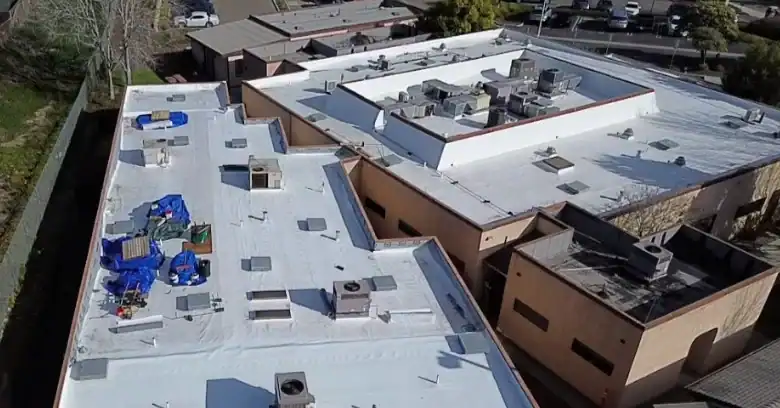
Researching TPO Membrane Roof Services for a Building in Sacramento California?
Creative Roofing handles the seams, drains and edges where a flat roof succeeds or fails, for properties in Sacramento California and the towns around it.
Dial 805-723-2381 to arrange a visit to look at the roof.
How a Flat Roof Differs From a Pitched One
Low-slope roofs rely on a continuous waterproof skin because gravity does little to clear the surface, so shingles are never the answer. Standing water multiplies every defect and speeds up aging, and look at examples of their finished work.
What Goes on a Low-Slope Roof
TPO and PVC are single-ply sheets that are welded at the seams with hot air, creating a continuous waterproof surface, so a damaged area can be fixed cleanly. Rubber membranes are black or white, and the seams are joined with tapes or adhesives, and the seam tape is a point to watch over time. Layered asphalt systems have been used for generations and are valued for redundancy, and repairs can be made in place.
Details That Fail First
Failures concentrate wherever the membrane stops or is cut, so the inspection follows a set order. Parapet caps and copings protect the top of the wall and must be sound, and redoing sealant is routine upkeep.
Scuppers, Drains and Slope
Puddles that remain a day or two after rain signal that water is not leaving the roof as it should, and the first storm of the season shows the problems. A new roof is the best time to correct drainage problems for good, and the improvement is permanent.
How Heat Wears a Low-Slope Roof
Ultraviolet light and heat are the main forces that age the surface of a low-slope roof in this region, so the surface slowly dries and cracks. A white or reflective coating can lower the surface temperature and protect the membrane beneath, and the preparation is as important as the product.
What Happens Around Machinery
Skylights and hatches add edges that need careful flashing, and it pays to think it through. Regular foot traffic wears a path in the surface unless it is protected, and a little care goes a long way.
Repair, Recoat or Replace
Repairing a small area is practical when the surrounding material is still healthy, and the key is an accurate diagnosis. These options depend on the condition of the insulation under the old surface, so be cautious of any bid that skips the testing. Replacing wet insulation restores the performance of the roof and the comfort of the rooms below, so begin conversations before the leaks become urgent.
Level Roofs at Home
Plenty of ordinary houses have a flat or nearly flat section, whether it is a porch, a garage, a bay or the whole roof of a modern design, and it pays to think it through. Leaks that appear in the room next to an addition often trace back to this single joint, and fixing it properly takes some patience. A roof used as living space has to meet higher standards than one that nobody walks on, and the details should be planned with the whole project.
Insulation, Slope and Comfort Under a Level Roof
Rigid insulation boards above or below the deck slow the passage of heat, and they matter more on a level roof than on any other type, so ask what insulation is part of the proposal. Replacing only the saturated sections can restore performance while leaving the dry parts in place, and that is often cheaper than a full tear-off.
Small Habits That Prevent Big Leaks
The best time to look at a flat roof is at the end of the dry season, when leaves and debris have piled up and the rains are about to test every drain, so make it a fixed date on the calendar. Branches, loose objects and windblown trash can cut a membrane or block a drain, and they should be removed promptly, and acting quickly limits the damage.
Edges Take the Brunt
After a windy spell it is worth checking the perimeter from a ladder for loose trim, lifted seams and curling edges, so ask how the edges will be attached. A ballasted roof needs a structure strong enough to carry the added load, which is a point to confirm before choosing the system, and the details are worth a closer look. Walkways, curbs and equipment supports need to be flashed and fastened as part of the membrane, and the details on a crowded roof take real time to do properly, and point out anything unusual.
Openings That Need Their Own Waterproofing
Replacing a worn skylight and its curb flashing together with the roof is far cheaper than doing the two jobs separately, and that is worth keeping in mind. The seal around a pipe on a low-slope roof has to be formed to match the membrane, because a generic rubber boot will not bond to every type, and a tidy roof is easier to maintain. Overflow scuppers set slightly higher than the main drains act as a safety valve when the primary outlet is blocked, and clear them after storms.
What the Paperwork Should Say
A bid that only says new flat roof does not tell you what you are buying, and read them slowly. A roofer with plenty of flat roof experience can explain problems before they occur, and trust the overall impression.
Preparing the Property for a Membrane Job
Workers on a low-slope roof often arrive early, because the surface heats up quickly and some products behave better in the cool of the morning, and tell the crew about pets and schedules.
Common Worries Before a Flat Roof Project
A flat roof is not doomed to leak, and one that is well built and looked after can serve a property for a very long time, and an honest opinion is the goal.
Next Steps for Your Roof
A conversation about TPO Membrane Roof Services in Sacramento California usually starts with the type and age of the roof, so use 805-723-2381 to set up the next step. Planning ahead usually leads to better choices than reacting to an emergency, and we are glad to help you sort it out.
Verified

Verified
Verified
Verified
Verified






















