
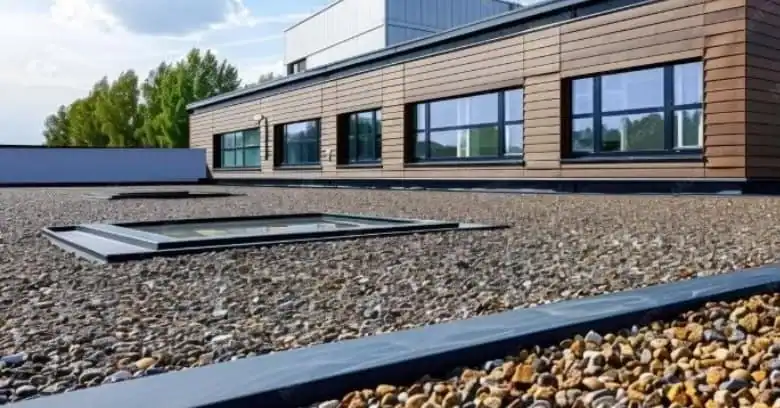
Thinking About Built Up Roofing Around San Luis Obispo California?
Creative Roofing repairs and replaces the level roofs that cap porches, patios, shops and modern homes, across San Luis Obispo California and nearby.
Call 805-723-2381 and we will explain the options for a level roof.
Roofs That Do Not Shed Water by Themselves
A flat roof is never truly flat, but its slope is so slight that water drains slowly and lingers, so shingles are never the answer. A pinhole in a membrane or a gap in a seam lets in water that sits and keeps seeping, and ask what systems they install most.
What Goes on a Low-Slope Roof
Heat-welded sheets such as TPO are among the most popular choices for new flat roofs, and repairs are made by welding on a patch. Black EPDM absorbs heat, while a white version reflects more of the sun, and punctures can be patched with the same materials. Built-up roofing, often called BUR, layers hot or cold asphalt with reinforcing fabric and finishes with gravel or a cap sheet, and it is easy to overlook.
The Weak Points of a Level Roof
Failures concentrate wherever the membrane stops or is cut, so the inspection follows a set order. Parapet caps and copings protect the top of the wall and must be sound, so look at those joints every year.
Keeping a Level Roof Drained
Water that does not drain adds weight, breeds algae and ages the surface faster, and a clogged outlet can overload a roof. Tapered insulation or added crickets can create the slope that a level roof lacks, and it extends the life of the whole system.
Sunshine, Heat and Aging
Heat makes a membrane expand during the day and shrink at night, and the movement stresses seams and fasteners. Reflective surfaces keep rooms below cooler and may reduce the load on air conditioning, and a coating cannot rescue a roof that is wet inside.
Vents, Pipes and Rooftop Units
Every pipe, vent and curb through a flat roof is a place where the membrane has to be cut and sealed, and plugging with caulk is only a stopgap. Roof-mounted air conditioners and other equipment bring service people who walk on the membrane, and a little care goes a long way.
Matching the Work to the Roof
Targeted repairs buy time and protect the interior while a bigger plan is made, and temporary fixes should be called what they are. Adding a new membrane over an existing one is possible in some cases and saves removal costs, and wet insulation rules out a quick fix. Starting fresh gives the best foundation for another long stretch of service, and compare more than one proposal.
Flat Roofs on Houses, Porches and Additions
A level porch roof may look like a minor part of a house, yet it protects the walls and the ceiling beneath it just as a main roof does, and it pays to think it through. Siding, stucco and trim all have to be worked into the flashing, and the roofer has to cooperate with whoever finished the wall, and describe where the stain appears. A roof used as living space has to meet higher standards than one that nobody walks on, so involve the roofer early.
Keeping Rooms Cool Below a Flat Surface
A flat roof has little or no attic, so the layers of the roof itself have to do the work that attic insulation and ventilation do on a pitched house, and a light-colored membrane adds to the benefit. Replacing only the saturated sections can restore performance while leaving the dry parts in place, and that is often cheaper than a full tear-off.
A Simple Maintenance Calendar
The best time to look at a flat roof is at the end of the dry season, when leaves and debris have piled up and the rains are about to test every drain, so make it a fixed date on the calendar. A stain on a ceiling after a storm is a clear signal to have the roof inspected before the next one arrives, and acting quickly limits the damage.
Wind, Edges and Fastening on a Level Roof
Whether a membrane is fully adhered, mechanically fastened or held down by ballast, the edges are the place where the installation either succeeds or fails, and a small problem there grows quickly. Raking the gravel back into an even layer is a routine job that keeps the protection continuous, so inspect the outlets after any disturbance. Walkways, curbs and equipment supports need to be flashed and fastened as part of the membrane, and the details on a crowded roof take real time to do properly, and a thorough walk-through prevents them.
Openings That Need Their Own Waterproofing
Old skylights on flat roofs are a frequent source of leaks, because the seals harden in the sun and the frames move over time, so ask how every opening will be handled. Plumbing vents, conduits and exhaust ducts pass through the membrane and need boots, collars or pitch pockets that suit the material, so ask about consolidating them. Keeping every outlet clear and in good repair is the most important single habit of flat roof care, and a blocked outlet loads a roof beyond its design.
What the Paperwork Should Say
Look for the manufacturer system and the type of seam, whether welded, glued or taped, and it lets you compare two bids fairly. Ask who will supervise the work and how weather delays will be handled, and notice who answers plainly.
Access, Fumes and Noise
The crew needs clear access to the roof, a place to set up the equipment and a path for removing old material without crossing living areas, and tell the crew about pets and schedules.
Questions Owners Often Ask About Level Roofs
A roof with no visible slope is not necessarily failing, since most are designed with a gentle fall toward the drains, and bring photographs if you have them.
Start the Conversation
Those comparing Built Up Roofing in San Luis Obispo California can reach us by phone, and the number is 805-723-2381. There is no pressure in asking about a flat roof, and a little care goes a long way.
Verified

Verified
Verified
Verified
Verified






















