Searching for Residential Roof Contractors for a Home in San Luis Obispo California?
Creative Roofing walks a household through every stage of a roofing project, for homes in San Luis Obispo California and the towns around it.
Ring 805-723-2381 to set up a time for someone to look at the roof.
Before Anything Is Torn Off
Nothing gets decided until someone has walked the roof, because the rest of the plan rests on the findings from that look. Loose granules, lifted edges, cracked flashing and soft spots all say something about the layers below, and the findings are worth asking to see.
Heat is the quiet cause behind much of the wear seen on roofs here, and the sunniest side is usually the oldest-looking side.
Choosing How Far to Go
Not every worn roof needs replacing, and not every leak is a small one, and an honest roofer will say which one applies. Damage should be shown rather than only described, because you are the one living under the result.
Weak spots in the deck only show themselves once the old roof is off, and it helps to know that before the work begins.
Material Decisions
Most houses here wear one of three coverings, and the choice shapes everything else, so structure comes first and appearance second. A roof that faces strong sun all afternoon behaves differently depending on its shade, so hold a sample against the house in daylight.
Timing the Work
Roofing here follows the weather more than the calendar, and temporary dry-in layers keep the house safe overnight. Roof surfaces get hot enough in July to change how materials behave, and finishing early keeps people and materials in better shape.
Tear-Off and Preparation
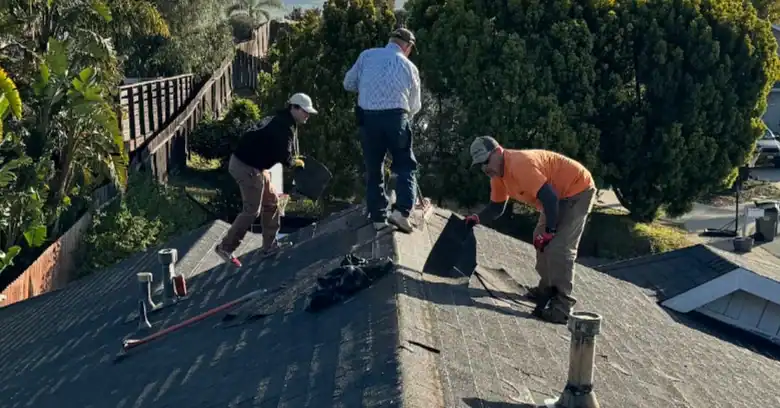
Taking the old roof off is the noisiest and messiest part of the job, so landscaping and windows are covered before the first piece comes up. Soft or split sheathing is cut out and new panels are fastened down, so this is not the place to save time.
Underlayment and Drying In
The surface you see is only the outer layer of a roof, and it is easy to overlook. The house is safest once the second layer is complete, and the visible covering goes on from there.
Where Roofs Meet Walls and Pipes
Flashing is the thin metal that keeps water out where the roof meets something else, since worn metal under new material becomes the weak link. Vent boots and pipe collars are rubber or lead pieces that wear out before the roof does, so replacing them along with the roof removes a predictable problem.
Ventilation in a Warm Climate
A roof without enough ventilation bakes the attic and everything stored in it, and a proper system draws air in low and sends it out high. The design of the system matters more than the number of vents, and a roofer should be able to describe it simply.
Leaving the Property Clean
Once the roofing is done, the property has to be put back in order, and covers come off the landscaping and the beds are inspected. A walk around the finished roof with the roofer is a reasonable thing to ask for, and a saved record answers questions nobody has thought to ask yet.
What the City Wants to See
Local requirements shape the job before the first shingle is touched, and a little care goes a long way. Where fire risk is high, the roof covering and the vents face tighter standards, and the details are worth a closer look. Vague wording on a proposal is a reason to ask questions, so keep a copy where you can find it.
Protecting the House and Yard
A busy work site needs boundaries, and a careful crew sets them before the work begins. The area under the eaves is the one to avoid, and keep a path clear for deliveries. Inside the house, vibration can shake items from shelves and loosen attic insulation, so it is wise to take down fragile pictures first.
What the Household Should Expect
Most residential projects are finished within days, not weeks, and plan on some slack for the weather. Neighbors appreciate a heads-up before the noise begins, and the whole thing is over sooner than it seems. Household routines bend a little while the work is under way, and the noise settles once the old roof is gone.
Questions Worth Asking Before You Agree
Ask how the crew protects the house when rain is in the forecast, and write the answers down. The product line matters as much as the type of covering, and a good roofer will be glad you asked. Ask what happens if something unexpected turns up under the old roof, and you will have a clear record.
Maintenance After the Job
Even a new roof benefits from an occasional look from the ground, so put it on the calendar like any other chore. Trim branches that touch or hang over the roof, and it also reduces fire risk in dry months. Missing pieces, lifted edges or a new stain are all reasons to have someone look, and the earlier the better.
Is There a Best Time for a New Roof
Waiting for the first storm to find the weak spot means hiring in a hurry, and a calm decision is nearly always a better one. Early fall is popular because the weather is still dry and the heat has eased, so do not feel the choice is locked in.
Roof Work and Your Attic
The attic is the roof as seen from below, and it often gives the clearest picture of how the roof has been performing, and attic problems are cheaper to deal with during a re-roof.
Talk to Us About Your Roof
Homeowners comparing Residential Roof Contractors in San Luis Obispo California can simply pick up the phone, so use 805-723-2381 to talk through the roof and the next step. Large or small, a roofing project goes best when the plan is clear before the work starts, so there is no harm in asking questions first. Taking the first step is usually the hardest part of any home project, and nobody will rush you.
Verified

Verified
Verified
Verified