
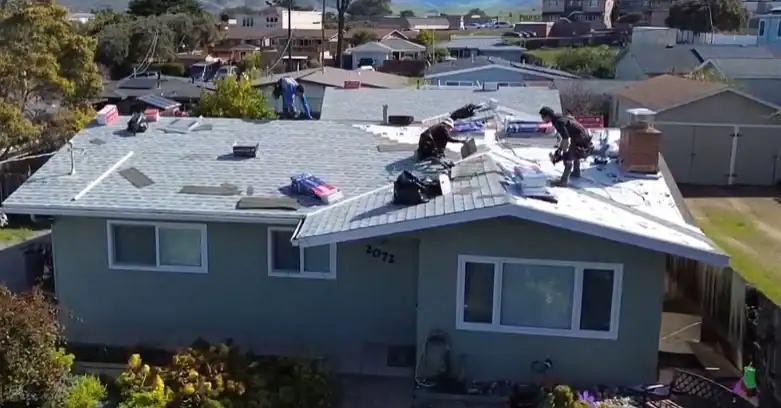
Looking for Roofing Contractors in San Luis Obispo California?
Creative Roofing walks a household through every stage of a roofing project, for homes in San Luis Obispo California and the towns around it.
Reach out at 805-723-2381 and tell us what has you thinking about the roof.
Where a Roofing Job Begins
Every roofing job starts with someone climbing up to see what is actually there, because the rest of the plan rests on the findings from that look. Signs of wear on top often point to a moisture problem underneath, and the findings are worth asking to see.
Sun and heat age a roof in ways that rain alone never would, and the sunniest side is usually the oldest-looking side.
Repair, Patch or Replace
The right answer depends on how much sound material is left on the house, and the details are worth a closer look. Ask to see the problem areas, either in photographs or from the ladder, and the answer tells you a lot.
When the decking underneath is damaged, the scope of the job grows, and agreeing on the approach in advance beats debating it with the roof open.
Choosing Materials for Your Home
Homeowners usually end up comparing shingles, tile and metal panels, and the style of the neighborhood often plays a part. A roof that faces strong sun all afternoon behaves differently depending on its shade, so hold a sample against the house in daylight.
Planning for Rain and Heat
Rain arrives in bursts, and a roof that is open when one comes needs protection, and temporary dry-in layers keep the house safe overnight. The temperature on the roof can run well above the temperature in the shade, so the day usually begins at sunrise.
Removing the Old Roof
Removal of the old material is where the project gets loud, and debris goes into a bin or trailer rather than onto the lawn. Once the deck is bare, any damaged boards are replaced, since good materials laid over a weak deck do not last.
Protection Under the Covering
The first layer laid over the deck is a barrier against moisture, and valleys, eaves and penetrations get extra layers. With the barrier in place the roof can shed rain even before the covering is finished, and the visible covering goes on from there.
Where Roofs Meet Walls and Pipes
Chimneys, skylights, vent pipes and walls all need flashing worked into the roof, so fresh metal is standard practice among careful crews. Vent boots and pipe collars are rubber or lead pieces that wear out before the roof does, and a new roof should not depend on a seal that is already tired.
Keeping the Attic Cooler
Attic heat is behind many worn roofs and many large cooling bills, and vents at the eaves let cooler air in. Adding vents at random may do little more than cut holes in the roof, so ask how the attic will breathe once the work is done.
Cleanup and the Final Walk-Through
When the last piece is installed, the cleanup begins, so gutters are checked and cleared of loose granules. Questions are easier to settle while the crew is still on site, so keep the paperwork and pictures together.
What the City Wants to See
Rules about reroofing differ from one city to the next, and the answer should be clear from the start. Where fire risk is high, the roof covering and the vents face tighter standards, and a roofer working in the area should already know them. A clear proposal lists what will be removed, what will be installed and what happens if the deck needs work, and it is easy to overlook.
Protecting the House and Yard
Heavy materials, ladders and falling pieces all share the space around the walls, and plants and patio furniture are moved or covered. Moving vehicles out of range for the day is a simple precaution, and a short talk the evening before covers the details. Inside the house, vibration can shake items from shelves and loosen attic insulation, and a sheet over stored boxes keeps the grit off.
What the Household Should Expect
A new roof usually takes a few days for an average house, though weather and size change that, and nobody can promise a date through a rain delay. A quick word with the people next door can head off complaints, and early starts mean early noise. Working from home during a roof job is possible, though not always pleasant, and everything returns to normal once the crew packs up.
A Short List for Comparing Proposals
Find out who will be on the roof and who will be in charge of the job, since confident answers come easily to people who do this daily. Product names and thicknesses on the proposal let you compare like with like, and it should be written on the proposal. A change in scope should be written down and approved before the work continues, and it is better to know in advance.
Small Habits That Extend Roof Life
Regular glances at the roof catch small problems early, so put it on the calendar like any other chore. Sweeping leaves off the roof and out of valleys prevents trouble, and that is worth keeping in mind. Early attention to a leak is almost always cheaper than late attention, and the earlier the better.
Choosing the Right Season
Many homeowners wait until a leak appears before they think about a roof, so a few weeks of lead time is common. Early fall is popular because the weather is still dry and the heat has eased, and the details are worth a closer look.
Checking the Space Beneath the Deck
When the old roof comes off, the crew sees the underside of the deck, and stains, rust on nail tips and darkened wood tell the story of past leaks, and attic problems are cheaper to deal with during a re-roof.
Ready When You Are
A call is the simplest way to begin planning work in San Luis Obispo California, and 805-723-2381 reaches the right person. A modest repair and a full re-roof both begin with an honest look at the roof, and we are glad to talk through the options. A short conversation can turn a vague worry into a clear plan, and the next step becomes obvious.
Verified

Verified
Verified
Verified
Verified






















