
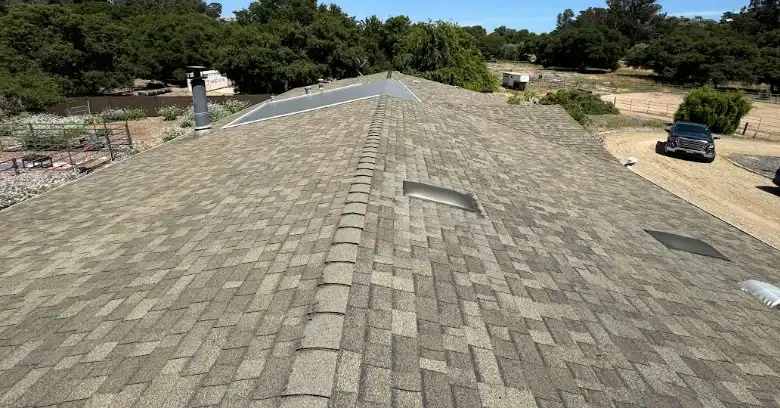
Choosing Architectural Shingle Roof Installations in Santa Barbara California?
Creative Roofing handles shingle roofing from the first nail to the last ridge cap, for homes in Santa Barbara California and the towns around it.
Ring 805-723-2381 and describe the roof you are weighing.
Inside a Shingle
Behind the familiar look is a layered construction, and the granules protect the asphalt from the sun. Granule loss is the clearest sign that a shingle is wearing out, and the granules end up in the gutters.
Shingle Grades Explained
A three-tab shingle has a flat, uniform look and the thinnest profile of any common type, and the saving is real but so is the shorter life. Architectural shingles are made of two or more laminated layers that give the roof depth and shadow, so there is something for most houses. Premium and luxury lines go further, with thicker laminates, deeper shadow lines and designer shapes, and the framing should be checked before choosing the heaviest types.
Heat Is the Slow Enemy
Heat, ultraviolet light and temperature swings wear the surface steadily, and the effects are visible on the south and west slopes first. Blisters appear when trapped moisture or heat pushes up the surface, and photographs make a useful record.
Cool Shingles and Heat Gain
A pale shade reflects more sunlight than a dark one, which can reduce heat entering the attic, and the effect is easiest to see on a hot day. Cool shingle lines are designed to lower roof temperatures without changing the look much, and local rules sometimes encourage them.
How Shingles Are Laid
The number and position of nails are set by the manufacturer for a reason, and it is easy to overlook. Starter shingles at the bottom edge anchor the first row and keep wind from getting underneath, and the pattern is part of the manufacturer specification. Ridge caps finish the roof where two slopes meet and shed water over the crest, and the ventilation opening below the cap should stay clear.
Seal Strips and Warm Weather
Shingles have a strip of adhesive that bonds each course to the one below once the sun warms it, and the nails hold the rest. Wind rarely harms a well-sealed roof, but it finds every weak spot on an old one, and a prompt repair prevents a leak.
Air Movement Under the Deck
Heat that cannot escape from the attic speeds the aging of the roof deck and the shingles, and it is easy to overlook. The right combination depends on the shape of the roof and the size of the attic, and a roofer can assess the layout in a short visit.
Flashing, Valleys and Underlayment
Modern synthetic underlayments resist tearing and last better in strong sun, and it pays to think it through. Valleys are the crossing channels where two slopes meet, and they carry the most water on the roof, and a little care goes a long way.
Is It Time for a New Roof
A roof that sheds grit, lifts at the edges and shows dark patches is reaching the end of its life, and a roofer can sort the serious from the cosmetic. A few damaged shingles can often be replaced without touching the rest of the roof, and the key is an honest assessment. Matching old shingles is difficult, so large repairs often look patchy, so plan the project before the leaks begin.
What Lies Under the Existing Roof
A complete tear-off lets the roofer inspect each sheet of decking and replace any that has been stained, softened or split, so the plan should allow for repairs to the wood. Laying new shingles over old ones is sometimes allowed, but it hides the deck and adds weight to the structure, and the decision deserves a little thought. Rotted boards and delaminated plywood are usually found around leaks, valleys and plumbing vents, and the cost of a few sheets is rarely large.
Keeping the Yard Safe During a Shingle Job
The first hour on site is spent setting up protection, and that time is well spent, so ask how the yard will be protected. Nails are the main hazard left behind after any roofing job, and a magnetic sweep of the yard and driveway is standard practice, and point out anything that was missed. Letting grit and leaves pile up in a gutter can lead to overflow along the fascia and the foundation, and it costs little to keep them clear.
Timing a Shingle Replacement
Shingle work goes best in dry, mild weather, when the sealing strips bond quickly and the crew can leave the roof open without worry, and the calendar is only part of the question. Crews adjust to the heat by working early and finishing before the worst of the afternoon, which protects the material and the people, and a rushed job in extreme heat is a poor bargain.
Openings, Brackets and Penetrations
Skylights and chimneys are best flashed with new metal whenever the shingles are replaced, since reusing old pieces under a new roof invites a leak, so list everything on the roof when you ask for proposals. Mounting brackets pierce the roof, and the seals around them age on the same schedule as the shingles beneath, so ask both contractors how they would proceed.
Blending New Shingles Into an Older Roof
Older shingles lose color and granules in the sun, so a few fresh ones will stand out until the surrounding roof catches up, and a small color difference is not a defect.
Where Shingles End and Gutters Begin
Metal edging installed under the underlayment at the eave and over it at the rake is the correct order, and it makes a visible difference to the durability of the edge, and a little care goes a long way.
Comparing Shingle Roofing Proposals
A good proposal names the shingle line, the color, the underlayment and the flashing materials, so ask for details in writing. Ask how many layers of old roofing will be removed and how the deck will be inspected, and it is easy to overlook.
Start the Conversation
People researching Architectural Shingle Roof Installations in Santa Barbara California are welcome to call with questions, so use 805-723-2381 to set up the next step. Calling before a problem becomes urgent makes it easier to compare materials and schedules, and the roof will tell the story once someone looks.
Verified

Verified
Verified
Verified
Verified






















