Considering Clay Tile Roofer Services Throughout Santa Barbara California?
Creative Roofing knows how to walk a fragile surface, find the broken piece and replace it cleanly, for homes in Santa Barbara California and the towns around it.
Phone 805-723-2381 and we will explain what is involved.
Clay and Concrete Units in Plain Terms
Clay and concrete units are individual pieces hung on a roof, overlapping like fish scales to shed water, and the real waterproofing sits underneath. Concrete units are molded from cement and sand and colored through the body or on the surface, and the look varies enormously.
Heavy Roofs Need a Sound Structure
Heavy coverings put real stress on rafters, trusses and walls, which is why the structure is checked first, and a sagging ridge is a sign of trouble. Adding weight without adding support invites cracks, sagging and even failure, and the cost of that work belongs in the plan.
Why Leaks Start Below the Surface
The membrane is out of sight, which is why it is easy to forget, so even a good surface can hide a tired layer. Sun and heat trapped under the units bake the underlayment for years, until it dries, cracks and fails, and that is why age matters as much as appearance.
Why Tile Suits Hot Weather
Long dry summers are easy on the material itself, though the layers underneath age in the heat, so the look holds up. A gentle wash and a clear sealer can refresh the appearance of an older roof, and it fades or washes off with time.
Walking on a Fragile Roof
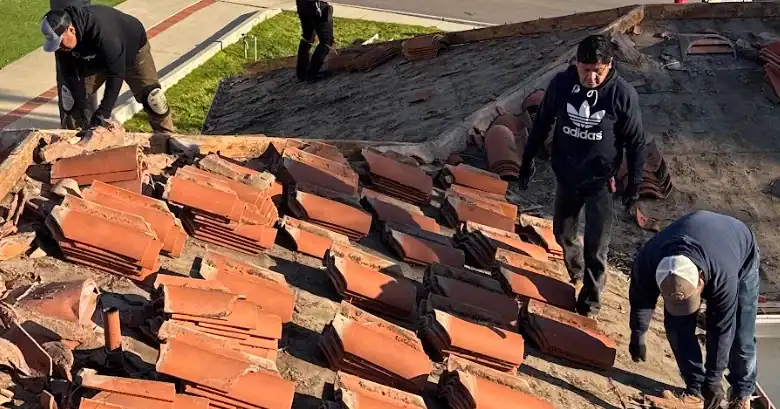
Broken pieces are the most common problem on a roof of this kind, and they usually come from foot traffic, and the details are worth a closer look. Roofers who work on fragile coverings place their feet on the lower part of the unit where it is supported, and a good roofer will always carry a supply.
Flashing, Valleys and Ridges
Flashing along walls, chimneys and skylights has to be formed and shaped by hand around each piece, and a hurried job shows up in the first heavy rain. Cracked and crumbling mortar along the ridge lets water and wind get under the cap pieces, and it pays to think it through.
Wind, Fire and the Fastening Question
Nails, clips and foam adhesive are the common ways to secure units to the roof, and the attachment method should be in the proposal. Clay and concrete are noncombustible, which is a strong advantage in a region with wildfire seasons, and the pieces themselves are only part of the answer.
Deciding What an Aging Roof Needs
A re-lay means lifting the units, replacing the underlayment and flashing, and setting the pieces back in place, and avoid roofers who recommend replacement without looking. Replacing the whole roof is the right call when the pieces themselves are failing, the framing is damaged or the style no longer suits the house, and the new material can be a different type.
How Units Are Bedded and Secured
Each fastening method has strengths, and the choice depends on the slope, the wind exposure and the local rules, and the best answer is specific to your roof. Gaps at the ridge need the same attention, since embers and animals will find any opening, and a little care goes a long way.
Moss, Stains and Keeping the Surface Clean
A gentle low-pressure wash can restore the appearance of a roof, but harsh pressure damages the surface and loosens the pieces, and a clean roof looks years younger. High pressure is the wrong tool for a roof made of individual pieces, because the water is driven uphill under the laps, and it is easy to overlook.
Underlayment Choices and Upgrades
Heavy felt, synthetic sheets and self-adhering membranes are the common options, and they differ in heat resistance and tear strength, so ask which product is specified. Counter-battens add further airflow and reduce heat transfer into the attic, and good detailing here pays off for decades.
Rooftop Additions on a Roof of Many Pieces
Special hooks and flashing kits exist for these roofs, and an installer who uses them keeps the surface watertight, and a little care goes a long way. Every person who climbs onto a roof of this kind risks cracking something, so access should be limited to those who know how to walk it, and a short sign near the hatch helps. Valleys and low points on a roof of this kind carry the heaviest flow in a downpour, and the units along their edges are cut to fit and sealed with care, and a small repair now prevents a leak later.
How the Two Kinds Differ
Both materials are heavy, fire-resistant and durable, and either can give a house a distinctive character, and the better choice depends on the house and the budget. Flat profiles give a contemporary look and are often used on modern houses, while barrel shapes suit traditional architecture, and it pays to think it through.
Comparing Tile Roofing Proposals
A thorough proposal names the material, the underlayment, the flashing and the method of attachment, and a clear proposal reflects a careful crew. Ask how the crew will handle the pieces, where they will be stored and how breakage will be managed, and a confident contractor will welcome them.
Planning a Re-Lay Step by Step
Sorting the units as they come off lets the roofer count how many replacements will be needed and order matching pieces, and the crew has to be careful with every piece.
What to Do Before Summer Ends
Before the dry season peaks, a quick walk around the house with binoculars can show broken units, loose ridge pieces and debris piled in the valleys, and a tidy roof is a safer roof.
What to Save After a Restoration
Passing these records to the next owner of the house adds real value and saves them a good deal of guesswork, and store them with the house papers.
Talk to Us About Your Roof
Those comparing Clay Tile Roofer Services in Santa Barbara California can reach us by phone, and 805-723-2381 reaches someone who can help. Planning ahead usually leads to better choices than reacting to an emergency, and a little care goes a long way.
Verified

Verified
Verified
Verified