
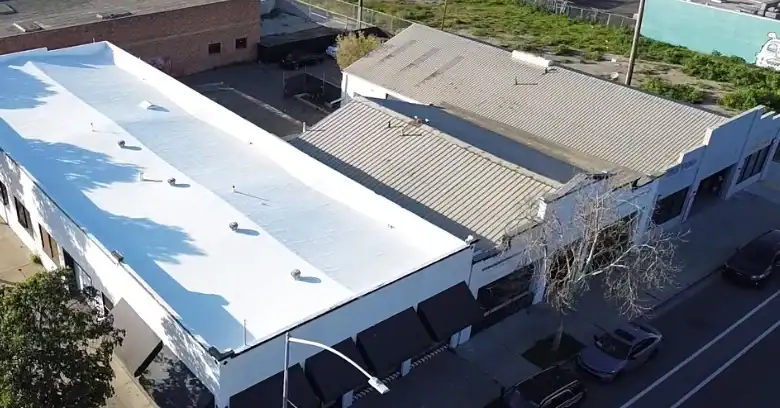
Researching Commercial Roofing Companies Near Me for a Building in Santa Barbara California?
Creative Roofing works on the roofs of shops, offices, warehouses and apartment buildings, from Santa Barbara California to the neighboring communities.
Dial 805-723-2381 and tell us about the building and the roof.
What Sets a Commercial Roof Apart
Most commercial buildings have low-slope roofs, which shed water slowly and carry equipment, and the failure modes are different too. Waterproofing on a low slope comes from the sheet itself rather than from the angle, and the quality of those seams decides how long it lasts.
Buildings also carry people, stock and equipment that a leak can ruin, and that makes prevention worth more than repair.
Types of Commercial Roofing
Single-ply roofing arrives in large rolls and is joined at the seams on site, so the choice affects how repairs are done later. Modified bitumen sheets are heated or adhered in overlapping layers to make a durable surface, and the layers add redundancy. Spray foam and fluid-applied coatings are also used in some situations, and each option has conditions where it works best.
Where the Rain Goes
A roof that holds puddles after rain is telling you something, so inspections are best scheduled in late summer. Sun-dried debris sits on a roof all through the dry season, and a little care goes a long way.
What Sits on the Roof
A roof with a lot of equipment has a lot of penetrations to maintain, and many leaks start there rather than in the open field. Service technicians walking to equipment can wear a path through a membrane, and everyone benefits from the protection.
Heat Over a Working Building
Long dry summers expose a membrane to strong ultraviolet light month after month, and the surface slowly dries, chalks and cracks. Owners often look at reflective roofing for the savings on cooling, and no roof saves everything it promises.
Inspections and Upkeep
Scheduled inspections catch small problems before they reach the ceiling, and the best times are before and after the rainy season. Small repairs made early keep water out and extend the life of the membrane, and tenants never notice because nothing leaks.
Weighing the Options
The right answer depends on how much of the system is still dry and sound, and a good contractor will show you what they found. A roof that is wet inside cannot be coated or patched into good health, so a clear diagnosis matters.
Keeping the Business Running
Roof work above an operating business needs planning so that normal activity can continue, and communication with tenants is part of the job. Access to the roof should be controlled while the work is in progress, so ask how the site will be protected.
Reading a Roof Proposal
A clear commercial proposal names the system, the thickness and the method of attachment, and the difference is often in what is not mentioned. Ask how the work will be inspected and what documentation will be provided at the end, and it is worth requesting before the work starts.
Why the Drip Is Never Where the Hole Is
Water travels along decking, insulation and ductwork before it shows up on a ceiling, so a careful inspection is worth the time. Common sources include seams, drains, flashing at walls and the base of every pipe, and fixing the cause stops the leak for good. Testing helps decide whether a repair will hold or the roof needs more extensive work, and the cost is small next to a wrong decision.
Edges Are Where Roofs Let Go
Wind lifts a flat roof from the edges and corners first, and the perimeter needs extra fastening. A strip of metal that has come away is an invitation for wind and water, and the work is usually quick.
Parapet Walls and Their Weak Points
The junction of roof and wall is where movement and water meet, and it is worth checking after every storm season. Stucco, masonry and metal walls each need a different kind of termination, so it helps to look at the wall as well as the roof.
Fluid-Applied Systems
Restoration coatings are meant for roofs that are still basically sound, and a coating is only as good as the surface beneath it. Coatings cannot fix a roof with wet insulation or widespread damage, and the follow-up inspections matter too.
When the Roof Covers an Acre
Materials arrive by the truckload and are lifted to the roof with cranes, and the roof can be done in sections. Shared roofs raise questions about who is responsible and who pays, and tenants appreciate being kept informed. Planning around families and daily routines matters on a residential property, and it pays to think it through.
Capital Planning for Building Owners
Treating the roof as an asset with a lifespan is the smart approach, and a good report gives a reasonable range of years remaining. The cheapest proposal is not always the best value, so compare what is included before comparing totals.
What Sits Between the Deck and the Membrane
Foam or fiberboard panels are laid over the deck and covered by the membrane, and they are protected by the membrane above. A sturdier base means fewer punctures and longer service, and the result is a tougher roof. Slope built into the insulation is one of the cleanest ways to fix drainage problems, and the drawings show where the water will go.
Late-Summer Readiness Checks
A pre-season checklist includes clearing drains and scuppers, checking seams and flashing, and photographing the condition of the surface, and share the results with the owner.
Ready to Look at the Roof
Managers researching Commercial Roofing Companies Near Me in Santa Barbara California are welcome to call and ask questions, and 805-723-2381 reaches someone who can help. Whether the roof is leaking today or just getting old, an early look gives you more options, and the details are worth a closer look. People who manage property tend to value a straight answer about the roof above all, and the roof will show the rest. Tenants, lenders and insurers all take an interest in the state of a roof, so it pays to begin early.
Verified

Verified
Verified
Verified
Verified






















