
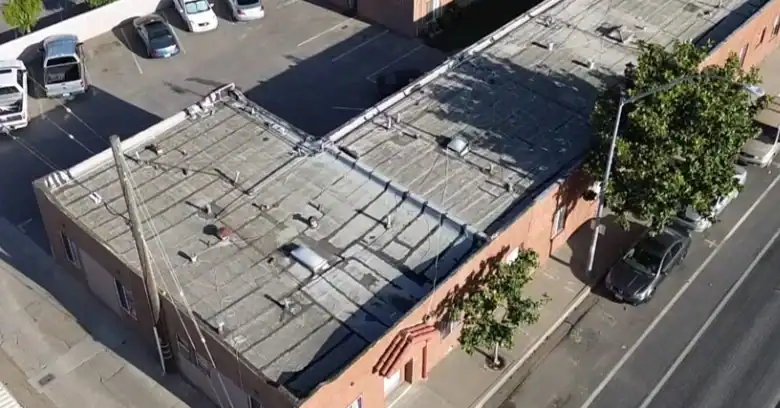
Researching Commercial Roof Replacement Serving Santa Barbara California?
Creative Roofing deals with the flat and low-slope roofs that sit above working buildings, throughout Santa Barbara California and the towns nearby.
Contact us at 805-723-2381 to start planning the work with someone who knows low-slope roofs.
Roofs Over Businesses
Low slopes make a commercial roof a different problem from a house roof, so the finer points carry the weight. Flat roofs rely on continuous membranes with welded or glued seams, and the quality of those seams decides how long it lasts.
The cost of a failed roof is often higher inside the building than on top of it, so planning ahead is the practical approach.
Types of Commercial Roofing
Many newer commercial roofs use a single-ply membrane over insulation, and the differences matter when comparing proposals. Older buildings often have built-up roofing, with several layers laid over one another, and the layers add redundancy. Metal roofing is used on some commercial buildings, particularly those with a steeper pitch, and each option has conditions where it works best.
Drainage Is Everything on a Flat Roof
Every flat roof is only as good as its drainage, so inspections are best scheduled in late summer. Drains, scuppers and gutters collect water and carry it away from the building, so clearing drains is the cheapest maintenance on the list.
What Sits on the Roof
A roof with a lot of equipment has a lot of penetrations to maintain, and many leaks start there rather than in the open field. Foot traffic that is not planned for wears the roof where it matters most, and it is easy to overlook.
How the Climate Affects a Building Roof
Sun and heat are the steady stresses on a commercial roof in this part of California, and that is worth keeping in mind. Owners often look at reflective roofing for the savings on cooling, and the details of the benefit depend on the building.
Small Jobs That Prevent Big Ones
Roof maintenance is a habit more than a project, so owners often tie visits to the seasons. A visit usually covers drains, flashing, seams, curbs and the condition of the surface, and the details are worth a closer look.
Deciding What to Do With an Aging Roof
Not every aging roof needs a full tear-off, and testing is better than guessing. Once water has spread through the layers, replacement is the honest answer, and it is better to know the truth sooner.
Working in an Occupied Building
A good plan keeps customers and staff away from the areas under construction, and communication with tenants is part of the job. Access to the roof should be controlled while the work is in progress, and that is a reasonable thing to discuss in advance.
Apples to Apples
A clear commercial proposal names the system, the thickness and the method of attachment, so compare the line items one by one. A record of the materials and details used helps with later maintenance, and it is easy to overlook.
Where the Water Really Gets In
The wet patch indoors only tells you where the water finally escaped, so a careful inspection is worth the time. Penetrations and terminations are the usual suspects, and the open field is checked last. Testing helps decide whether a repair will hold or the roof needs more extensive work, so it is worth asking about on a larger roof.
How Wind Affects a Flat Roof
The edges and corners of a flat roof take the highest wind loads, and repairs there should not wait. Perimeter metal is the first line of defense against uplift, and a gap there can grow quickly in a gust.
The Seams That Join Roof to Wall
Where a flat roof stops against a wall, flashing has to turn the membrane up and seal it, and it is worth checking after every storm season. Cracks in a parapet cap or the wall below can feed water into the roof system, so it helps to look at the wall as well as the roof.
Restoring a Roof Without Tearing It Off
Acrylic, silicone and urethane are the main families of liquid roof coatings, and a little care goes a long way. Coatings cannot fix a roof with wet insulation or widespread damage, and the follow-up inspections matter too.
When the Roof Covers an Acre
Large roofs pose logistical problems that small ones never do, so coordination with the building operator is essential. Shared roofs raise questions about who is responsible and who pays, and tenants appreciate being kept informed. Planning around families and daily routines matters on a residential property, so schedules are shared in writing.
Planning a Roof Budget Without Surprises
Treating the roof as an asset with a lifespan is the smart approach, and nobody likes a surprise expense. Choosing on the lowest initial figure alone can cost more over the life of the building, and the details are worth a closer look.
What Sits Between the Deck and the Membrane
Insulation under a flat roof keeps the building comfortable and reduces energy use, and wet boards lose most of their value. A thin board over the insulation spreads loads and gives the membrane a better base, and that is worth keeping in mind. Angled boards direct water toward drains and reduce ponding, and few owners regret it.
Late-Summer Readiness Checks
Property managers who inspect their roofs before the rainy season avoid most of the emergency calls that come with the first heavy downpour, and a little care goes a long way.
Ready to Look at the Roof
Owners comparing Commercial Roof Replacement in Santa Barbara California can start by describing the building and what concerns them, so use 805-723-2381 to set up the next step. Even a quick conversation can clarify what the building needs, and the details are worth a closer look. People who manage property tend to value a straight answer about the roof above all, and describe what you are seeing. Good records and photographs make those conversations easier, and written records show the property has been cared for.
Verified

Verified
Verified
Verified
Verified






















