
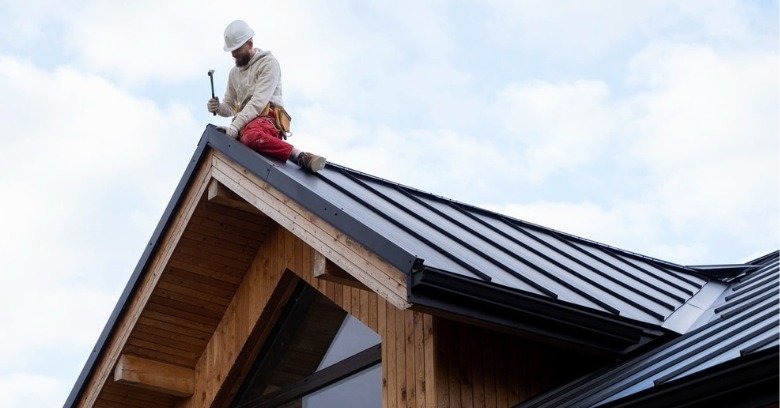
Looking Into Metal Roofer Contractors in Santa Barbara California?
Creative Roofing puts up ribbed, seamed and stone-coated metal coverings on houses, throughout Santa Barbara California and the neighboring communities.
Call 805-723-2381 and we will explain how a metal roof goes together.
What a Metal Roof Really Is
Every metal roof is a combination of panel, fastening method and finish, and the quality of the whole depends on the weakest piece. Coatings with a painted finish protect the metal and set the color, so the choice depends on the house and the budget.
Metal Roof Styles Compared
Hidden fasteners are the signature of a standing seam system, and a little care goes a long way. Corrugated and ribbed panels are fastened with screws that pass through the face of the sheet, and many owners are happy with the trade-off. Many homeowners choose these products when they want a traditional look in a metal system, and installation uses small pieces rather than long panels.
Strong Sun on a Metal Surface
Long dry summers put a metal roof under strong sun for months at a stretch, and quality finishes are made for that exposure. A pale panel reflects more solar energy than a dark one does, and the finish is only part of the picture.
Thermal Movement Explained
Temperature changes make panels grow and shrink along their length, and a little care goes a long way. A washer that has gone brittle no longer seals the hole, and replacement screws are cheap.
Holding Metal Down in the Wind
A well-built roof depends on secure, continuous edge metal, and it is easy to overlook. Ridge caps and closures keep wind-driven rain and debris out of the ridge opening, and replacing a worn one is simple.
A Noncombustible Covering
Panels made of steel or aluminum do not ignite from windblown embers, so ask how openings are protected from embers. Keeping the roof clean is part of keeping a house safer in dry months, and trim trees back from the house.
Living Under a Metal Roof
The reputation for noise comes from barns and sheds with no ceiling below the panels, and the deck and underlayment absorb most of it. A metal system does not replace insulation, but it can cooperate with it, and the results are noticeable in summer.
How Metal Goes On
A good metal roof begins with good preparation of the surface beneath, and heat-resistant types last longer. Penetrations are sealed with purpose-made boots or formed metal pieces, and sloppy details tend to leak. Measuring twice and laying out chalk lines pays off on a metal job, and a straight roof looks as good as it performs.
What a Metal Roof Needs From You
Debris that sits on metal holds moisture and can lead to staining and corrosion, and the details are worth a closer look. Dissimilar metals can cause corrosion when they touch in the presence of moisture, and the roofer should know the rules.
Handling a Sudden Downpour
Rain in this region tends to arrive in short, heavy bursts after months of dry weather, and valleys need to be wide and clean. Overshooting is a known issue where a fast-draining roof empties straight over a gutter, and larger gutters are common with metal.
Overlay or Tear-Off
Some metal systems are designed for installation over old shingles, while others are not, and hidden problems under old shingles stay hidden. Replacing rotten decking is only possible when the old covering is out of the way, so owners weigh the benefits against the effort.
Roof Pitch and Metal Choices
A shallow roof demands a system with sealed or mechanically locked seams, so the roofer has to check before recommending a panel. Combining two panel types on one house is common and usually works well, and that is worth keeping in mind.
Thinking Beyond the First Installation
A well-installed metal roof can outlast several rounds of shingles on the same house, and it pays to think it through. Homebuyers often view a metal roof as a selling point, especially in areas with wildfire concern, and that is worth thinking about early.
Common Problems and How to Prevent Them
Leaks around penetrations usually come from poor flashing details rather than bad panels, and asking for references is reasonable. Anyone who must go on the roof after installation should be careful where they step, and avoid walking on it if you can.
What to Ask Before You Choose
Panel thickness is measured in gauge, and a lower number means thicker metal, and a thorough contractor will welcome the questions. Seeing finished roofs of the same style in person is more convincing than any brochure, and trust your sense of the conversation.
Choosing Colors and Finishes
Most residential panels carry a factory-applied finish that is cured onto the metal in a controlled process, and a little care goes a long way. Matching trim to the panels keeps the roof looking uniform from the street, and do not decide from a screen. Neighborhood rules and local fire safety requirements can limit what colors and materials are allowed, and the proposal should reflect them.
Details Around the Edge of a Metal Roof
A clean edge detail matters on a smooth metal surface, where every line shows from the street, and a neat edge is the mark of a careful crew. Metal sheds leaves quickly, and they land in the gutters in a heap during autumn winds, so schedule a check at the end of summer.
Lead Times and Custom-Formed Panels
Many metal panels are formed to the exact length of each roof plane, so the job begins with careful measuring rather than a quick order from stock, and ask for an honest estimate of the wait.
Next Steps for Your Roof
Those comparing Metal Roofer Contractors in Santa Barbara California can reach us by phone, and 805-723-2381 reaches someone who can help. Whether the roof is leaking now or you are simply planning ahead, an early conversation keeps your options open, so reach out whenever you are ready.
Verified

Verified
Verified
Verified
Verified






















