
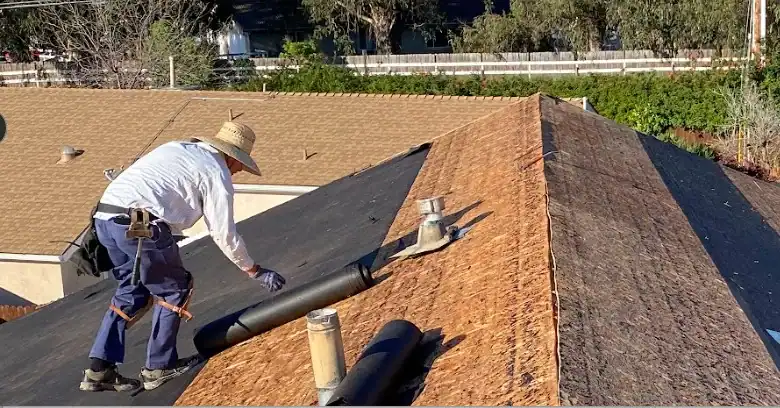
Choosing Premium Shingle Roofers for a Home in Santa Barbara California?
Creative Roofing installs and repairs the shingle coverings found on most houses in the area, across Santa Barbara California and nearby.
Dial 805-723-2381 to set up a visit to look at your shingles.
Inside a Shingle
Each shingle is a thin sandwich of mat, asphalt and stone granules, and that is worth keeping in mind. A shingle that has lost its granules is losing its sunscreen, and the granules end up in the gutters.
How Shingle Lines Differ
Traditional three-tab shingles are a single flat layer cut into three tabs, and they are the lightest and plainest option, so many homeowners compare it with thicker lines. Most new roofs on houses today use architectural shingles, which look richer and resist wind better, and the details are worth a closer look. A luxury shingle uses extra layers and special granules to create a handcrafted appearance, and the added weight is a benefit in wind.
Why Sunny Slopes Age First
The sun does more to age a shingle roof in this region than any other force, and that is worth keeping in mind. A shingle that has begun to curl no longer lies flat against the roof, and each one is a place a leak can start.
Picking a Shade That Works in the Sun
The color of a roof affects both its appearance and its temperature, and the effect is easiest to see on a hot day. Special coatings on the granules help send solar heat away from the house, and the difference is most noticeable in the hottest months.
How Shingles Are Laid
Shingles are fastened with nails placed in a specific spot, and a few inches either way changes how well they hold, and check that they are driven flush. Offsetting the seams from row to row keeps leaks from lining up, and that is worth keeping in mind. The cap shingles on a ridge take extra abuse from sun and wind, and it pays to think it through.
Wind, Seasonal Gusts and Sealing
Seal strips need warmth to activate, which is why roofs installed in cool weather may take longer to bond, and the nails hold the rest. A creased or missing shingle after a gust is a sign that the adhesive has failed, and the details are worth a closer look.
Air Movement Under the Deck
A balanced system of intake and exhaust keeps the temperature under the roof closer to the air outside, and the plan should be part of the proposal. Adding insulation without maintaining airflow can make an attic hotter in summer, so ask what will be done about ventilation.
Flashing, Valleys and Underlayment
The underlayment is the water-resistant layer under the shingles that catches whatever gets past the surface, and it matters most when the roof is open to weather. Valleys are the crossing channels where two slopes meet, and they carry the most water on the roof, so quality work here matters a great deal.
Spotting Trouble Early
Granules in the gutters, curling edges and bald spots are the most reliable signs of an aging shingle roof, so take the whole picture into account. Repairing a small area costs far less than a full replacement when the surrounding roof is sound, and the key is an honest assessment. Replacement is the sensible answer once the field of shingles has lost its protective surface, so plan the project before the leaks begin.
Tear-Off, Layers and the Deck Beneath
Old shingles come off in sections and go straight into a bin, leaving a clean deck ready for the next step, and soft spots are cut out and replaced with new panels. Laying new shingles over old ones is sometimes allowed, but it hides the deck and adds weight to the structure, so ask for both options in writing. Agreeing on how replacement boards are measured and charged prevents a dispute halfway through the job, and the details are worth a closer look.
Cleanup, Nails and Protecting the Property
Tarps along the walls, plywood over delicate plantings and a bin positioned below the edge keep the mess contained, and the crew returns it to normal when finished. A professional crew checks the ground more than once, including the gutters, where granules and nails often collect, and that is worth keeping in mind. A new shingle roof sheds a little loose grit in its first months, and some of it ends up in the gutters, and the new roof will thank you.
Choosing the Right Season for Shingles
Timing a project well means picking a stretch of dry days and leaving some room for delays, and the busiest months fill up quickly. On a scorching day the surface of a roof becomes too hot to handle, and the asphalt softens enough to mark if walked on carelessly, and a rushed job in extreme heat is a poor bargain.
Coordinating With Other Trades
Openings in a roof have a real effect on the quality and cost of a shingle project, and replacing them together saves money. Replacing a roof beneath an existing array is a coordination job involving the roofer and the solar company, and a little planning saves a lot of expense.
Making a Repair Look Right
Some visual difference is normal after a repair, and it fades as the new pieces weather, so ask the roofer what to expect.
Protecting the Fascia and the Foundation
Metal edging installed under the underlayment at the eave and over it at the rake is the correct order, and it makes a visible difference to the durability of the edge, and ask the roofer to flag any rot.
What to Look for in Writing
Look for the product by name so that you can compare it with another bid, and the line items let you compare two bids fairly. A roofer who explains the process clearly is usually one who follows it, so take notes during the conversation.
Start the Conversation
Anyone sorting out Premium Shingle Roofers in Santa Barbara California is one call away from a straight answer, with 805-723-2381 ready whenever you want to talk. There is no pressure in asking about a new roof, and the first step is just a phone call.
Verified

Verified
Verified
Verified
Verified






















