Planning Residential Roof Contractors in Santa Barbara California?
Creative Roofing stays with a roofing project from the first walk-around to the final check, serving Santa Barbara California and the places close by.
Ring 805-723-2381 and we will talk through what the roof needs.
Day One of a Roof Project
The first visit is about gathering facts rather than picking a product, because the rest of the plan rests on the findings from that look. A proper look covers the slopes seen from the yard and the ones that are not, so the visit usually takes longer than people expect.
Long dry summers and strong sun leave their mark on nearly every roof in California, so the wear is rarely even from one side to the next.
Choosing How Far to Go
Some roofs need a patch, some need a section redone, and some have reached the end of the road, and the details are worth a closer look. Findings that cannot be pointed to are findings worth questioning, and a good roofer expects the question.
Rotted or soft sheathing changes the plan and often the schedule, and nobody should be surprised when it happens.
Shingle, Tile or Metal
Asphalt shingles, concrete or clay tile and standing seam metal are the coverings most often put on homes here, since heavy coverings need a frame built to carry them. Lighter colors reflect more of the summer sun, while darker ones soak it up, and it pays to look at them at different times of day.
Timing the Work
Rain arrives in bursts, and a roof that is open when one comes needs protection, so exposed areas get covered at the end of each day. Heat affects the work as well, so an early knock on the door is nothing to worry about.
Stripping Down to the Deck
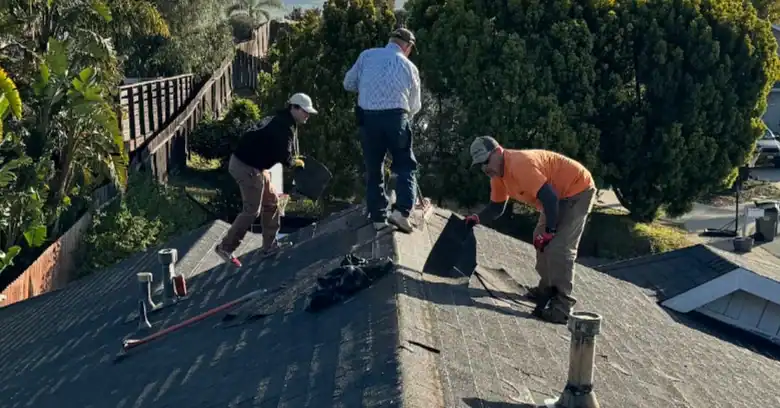
Taking the old roof off is the noisiest and messiest part of the job, and magnets and rakes pick up the nails that fall. Once the deck is bare, any damaged boards are replaced, so this is not the place to save time.
Underlayment and Drying In
Underneath the visible covering sits a water-resistant layer that does much of the work, and valleys, eaves and penetrations get extra layers. The house is safest once the second layer is complete, and that is worth keeping in mind.
Flashing and the Fiddly Parts
The places where a roof is interrupted are the places most likely to leak, and it pays to think it through. The seal around a vent pipe rarely lasts as long as the surface around it, and a new roof should not depend on a seal that is already tired.
Intake and Exhaust
A roof without enough ventilation bakes the attic and everything stored in it, since warm air rises on its own when it is given a path. The design of the system matters more than the number of vents, because airflow is easy to plan now and hard to add later.
Leaving the Property Clean
A finished roof still leaves a yard full of scraps, nails and packaging, and that is worth keeping in mind. Looking at the ridge, the valleys and the flashing with the roofer present is time well spent, and it pays to think it through.
What the City Wants to See
Rules about reroofing differ from one city to the next, so it is fair to ask who pulls the permit. Fire safety rules in some neighborhoods affect which coverings are allowed, since the covering you pick has to be one the town accepts. A clear proposal lists what will be removed, what will be installed and what happens if the deck needs work, so compare any two side by side.
Shielding Windows, Plants and Patios
Heavy materials, ladders and falling pieces all share the space around the walls, and a careful crew sets them before the work begins. Moving vehicles out of range for the day is a simple precaution, and keep a path clear for deliveries. The attic gets dusty during tear-off, and anything stored there will notice, so it is wise to take down fragile pictures first.
Noise, Neighbors and Daily Life
Timing depends on the size of the roof, the complexity of the layout and the covering chosen, and plan on some slack for the weather. Informing nearby households is a courtesy that pays off, and most people are tolerant when they know what to expect. Household routines bend a little while the work is under way, and a plan for the loud days makes them easier.
What to Ask Every Roofer
Ask how the crew protects the house when rain is in the forecast, and listen to how the answer is given. The product line matters as much as the type of covering, and a little care goes a long way. Surprises are normal, and a process for them is a sign of a well-run job, and keep the discussion friendly but specific.
Maintenance After the Job
Regular glances at the roof catch small problems early, so put it on the calendar like any other chore. Overhanging trees drop material that collects in corners and valleys, and it protects the investment you just made. Missing pieces, lifted edges or a new stain are all reasons to have someone look, and it is far easier to repair than to rebuild.
Spring, Summer or Fall
Many homeowners wait until a leak appears before they think about a roof, and a calm decision is nearly always a better one. Late summer is hot but dependable, and crews are usually busy, so do not feel the choice is locked in.
Checking the Space Beneath the Deck
The attic is the roof as seen from below, and it often gives the clearest picture of how the roof has been performing, so ask the roofer to look inside as well.
Next Steps for Your Roofing Project
A call is the simplest way to begin planning work in Santa Barbara California, so dial 805-723-2381 and say what you are seeing. Every roof is different, so every conversation starts from the house itself, and that is worth keeping in mind. The sooner the roof is looked at, the more choices you tend to have, and nobody will rush you.
Verified

Verified
Verified
Verified