
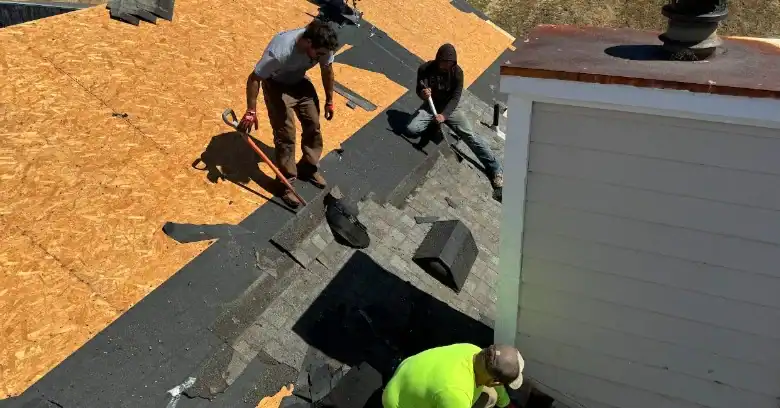
Searching for Residential Roofing Installation for a Home in Santa Barbara California?
Creative Roofing stays with a roofing project from the first walk-around to the final check, serving Santa Barbara California and the places close by.
Reach out at 805-723-2381 and describe the project you have in mind.
Where a Roofing Job Begins
Every roofing job starts with someone climbing up to see what is actually there, because the rest of the plan rests on the findings from that look. Loose granules, lifted edges, cracked flashing and soft spots all say something about the layers below, and that is the evidence a sensible plan is built on.
Sun and heat age a roof in ways that rain alone never would, and the sunniest side is usually the oldest-looking side.
Setting the Scope of Work
Some roofs need a patch, some need a section redone, and some have reached the end of the road, and an honest roofer will say which one applies. Findings that cannot be pointed to are findings worth questioning, and a good roofer expects the question.
Rotted or soft sheathing changes the plan and often the schedule, and it is easy to overlook.
Material Decisions
The common choices are shingle, tile and metal, and each suits some houses better than others, and the style of the neighborhood often plays a part. Color deserves more thought than it usually gets, so do not settle the question from a photograph.
The Calendar and the Forecast
Roofing here follows the weather more than the calendar, and crews watch the forecast closely. The temperature on the roof can run well above the temperature in the shade, so an early knock on the door is nothing to worry about.
Getting to a Clean Surface
Taking the old roof off is the noisiest and messiest part of the job, and magnets and rakes pick up the nails that fall. Sound wood is the base everything else depends on, so this is not the place to save time.
Waterproofing Beneath the Surface
Beneath every roof is a membrane that catches whatever the surface lets through, so self-adhering membrane goes where leaks tend to begin. With the barrier in place the roof can shed rain even before the covering is finished, and the finished surface is installed over a sound base.
Penetrations and Edges
Wherever the roof surface stops, a metal detail has to take over, since worn metal under new material becomes the weak link. Plumbing vents are among the most common sources of small leaks, so this is an easy step to ask about.
Intake and Exhaust
Attic heat is behind many worn roofs and many large cooling bills, and vents at the eaves let cooler air in. More vents are not always better, because intake and exhaust have to be balanced, and a roofer should be able to describe it simply.
Leaving the Property Clean
When the last piece is installed, the cleanup begins, and that is worth keeping in mind. Questions are easier to settle while the crew is still on site, and a saved record answers questions nobody has thought to ask yet.
The Paperwork Side of a Roof
Municipal offices have their own expectations for roof work, and a little care goes a long way. Fire safety rules in some neighborhoods affect which coverings are allowed, so ask how the plan meets the rules for your street. A proposal that names its materials and steps is easier to compare, and it is worth reading it slowly.
Protecting the House and Yard
The ground around a house takes a beating during a roof project, so tarps and plywood go down where debris will land. Pets, children and cars are best kept away from the work area, and it pays to think it through. Hammering on the deck above can rattle a ceiling and drop dust into the rooms below, and covering belongings is a sensible precaution.
Disruption and How to Manage It
The calendar for a job is set by the roof, not by the wish list, so ask for the expected start and finish up front. Neighbors appreciate a heads-up before the noise begins, so a friendly note goes a long way. Remote workers may want a quiet spot elsewhere for a day or two, and everything returns to normal once the crew packs up.
A Short List for Comparing Proposals
A sensible first question is what exactly is included in the scope, and listen to how the answer is given. Ask for the materials by name and manufacturer so you can look them up, and a good roofer will be glad you asked. The way a roofer handles the unexpected says a lot about the whole operation, and it is better to know in advance.
Keeping a Roof in Good Shape
Regular glances at the roof catch small problems early, and it is easy to overlook. Overhanging trees drop material that collects in corners and valleys, and it protects the investment you just made. Call a roofer after a major wind event or if you see a stain on a ceiling, and a photograph helps explain what you saw.
Timing a Roof Project Through the Year
Booking early in the dry season leaves time to compare more than one proposal, so a few weeks of lead time is common. Any month can work with the right planning and a willingness to move a day, so do not feel the choice is locked in.
What the Crew Sees Inside the House
Insulation in the attic that is compressed, wet or missing should be noted, since a new roof is a good time to fix the whole assembly, and bring a flashlight if you can.
Start the Conversation
Anyone researching Residential Roofing Installation in Santa Barbara California is one call away from a straight answer, and the number is 805-723-2381. A modest repair and a full re-roof both begin with an honest look at the roof, and the roof will tell the story once someone looks. The decision often feels bigger before the call than it turns out to be, and it pays to think it through.
Verified

Verified
Verified
Verified
Verified






















