
Planning Residential Roofing Repair Around Santa Barbara California?
Creative Roofing takes a roofing job from the first look to the last sweep of the yard, working in Santa Barbara California and nearby.
Phone 805-723-2381 and describe the project you have in mind.
Where a Roofing Job Begins
A roofing project begins with a close look at the surface, the edges and the pipes, because the rest of the plan rests on the findings from that look. Photographs taken on that first visit become the record for everything that follows, and each one goes into the notes.
Heat is the quiet cause behind much of the wear seen on roofs here, and a little care goes a long way.
Choosing How Far to Go
Some roofs need a patch, some need a section redone, and some have reached the end of the road, and the reasons should be easy to follow. Pictures of the trouble spots take the guesswork out of the decision, and a good roofer expects the question.
Hidden damage found during tear-off is the usual reason a project grows beyond its first outline, and it helps to know that before the work begins.
Shingle, Tile or Metal
The common choices are shingle, tile and metal, and each suits some houses better than others, and the style of the neighborhood often plays a part. A roof that faces strong sun all afternoon behaves differently depending on its shade, and a full-size piece seen outdoors beats a catalog picture.
Planning for Rain and Heat
Dry months are the busy season for roofing, since an open roof and rain do not mix, and crews watch the forecast closely. Heat affects the work as well, so the day usually begins at sunrise.
What Happens on Demolition Day
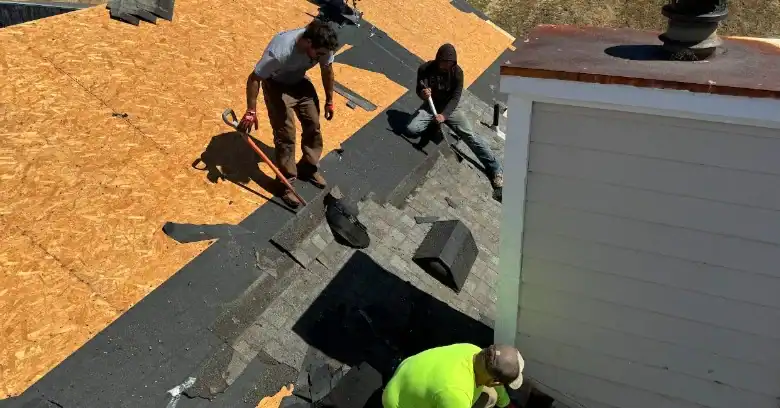
Taking the old roof off is the noisiest and messiest part of the job, so landscaping and windows are covered before the first piece comes up. Sound wood is the base everything else depends on, because new material is only as good as what it is fastened to.
Underlayment and Drying In
Beneath every roof is a membrane that catches whatever the surface lets through, and it is easy to overlook. Once the underlayment is down, the house is considered dried in, and rows are laid from the eave upward, each lapping the last.
Where Roofs Meet Walls and Pipes
Water finds the joints first, so flashing matters, and the cost is small next to the roof it protects. Sun dries and cracks the flexible parts over time, and a little care goes a long way.
Keeping the Attic Cooler
Heat collects in the space beneath the roof deck unless it has somewhere to go, since warm air rises on its own when it is given a path. Adding vents at random may do little more than cut holes in the roof, and it is easy to overlook.
Cleanup and the Final Walk-Through
Once the roofing is done, the property has to be put back in order, and that is part of the work, not an extra. Keeping a short record of the materials used helps with later maintenance, and it makes future repairs and sales smoother.
What the City Wants to See
Rules about reroofing differ from one city to the next, and the answer should be clear from the start. Fire safety rules in some neighborhoods affect which coverings are allowed, and the details are worth a closer look. Written proposals should describe the materials, the scope and the cleanup in plain words, and it is worth reading it slowly.
Looking After Your Property During the Work
Heavy materials, ladders and falling pieces all share the space around the walls, and that is worth keeping in mind. Moving vehicles out of range for the day is a simple precaution, so tell the crew about anything fragile or valuable. Attic contents are best covered or moved before the work starts, and a sheet over stored boxes keeps the grit off.
The Few Days of Commotion
Most residential projects are finished within days, not weeks, and the crew should give you a realistic window. A quick word with the people next door can head off complaints, and early starts mean early noise. Household routines bend a little while the work is under way, and that is worth keeping in mind.
Questions That Reveal the Difference
A sensible first question is what exactly is included in the scope, and listen to how the answer is given. A proposal that only says shingles or tile is not specific enough, and take your time reading it. A change in scope should be written down and approved before the work continues, and the details are worth a closer look.
Keeping a Roof in Good Shape
Regular glances at the roof catch small problems early, and the best times are before the rainy season and after the first big storm. Sweeping leaves off the roof and out of valleys prevents trouble, and a small broom is often enough. Waiting on a small problem usually makes it more expensive, and it pays to think it through.
Spring, Summer or Fall
Many homeowners wait until a leak appears before they think about a roof, and a little care goes a long way. Early fall is popular because the weather is still dry and the heat has eased, so do not feel the choice is locked in.
What the Crew Sees Inside the House
Rust on the points of roofing nails and dark patches on the sheathing are signs that moisture has been present for some time, so ask the roofer to look inside as well.
Next Steps for Your Roofing Project
Sorting out Residential Roofing Repair in Santa Barbara California is easier with someone who can look at the house, so dial 805-723-2381 and say what you are seeing. The size of the project changes the schedule but not the principle, so there is no harm in asking questions first. Putting off a roof question rarely makes it easier to answer, and nobody will rush you.
Verified

Verified
Verified
Verified
Verified






















