Ready for Shingle Roofing Maintenance Close to Santa Barbara California?
Creative Roofing works with layered shingles, starter strips, underlayment and ridge caps, serving homeowners in Santa Barbara California and beyond.
Dial 805-723-2381 and describe the roof you are weighing.
Layers You Cannot See From the Street
Most roofs on houses here wear shingles built from a glass-fiber core with an asphalt skin, so the whole shingle depends on all of them. Without a surface of mineral granules, the asphalt beneath would dry and crack in a short time, so a handful of grit in a downspout tells a story.
Shingle Grades Explained
A three-tab shingle has a flat, uniform look and the thinnest profile of any common type, and a little care goes a long way. Dimensional shingles imitate the look of shake or slate at a modest cost, and the details are worth a closer look. Premium and luxury lines go further, with thicker laminates, deeper shadow lines and designer shapes, so the roof feels more substantial.
Why Sunny Slopes Age First
Heat, ultraviolet light and temperature swings wear the surface steadily, so those slopes make a useful gauge of overall condition. A shingle that has begun to curl no longer lies flat against the roof, so they deserve attention before the rainy season.
Picking a Shade That Works in the Sun
A pale shade reflects more sunlight than a dark one, which can reduce heat entering the attic, and nearby roofs offer a useful preview. Cool shingle lines are designed to lower roof temperatures without changing the look much, and the details are worth a closer look.
Nails, Courses and Starter Strips
Fastening is the quiet detail that separates a durable roof from a poor one, and a crew that cuts corners here causes trouble later. Offsetting the seams from row to row keeps leaks from lining up, and that is worth keeping in mind. Ridge caps finish the roof where two slopes meet and shed water over the crest, and a sloppy ridge is a common weak spot.
Seal Strips and Warm Weather
Seal strips need warmth to activate, which is why roofs installed in cool weather may take longer to bond, and a little care goes a long way. Wind rarely harms a well-sealed roof, but it finds every weak spot on an old one, and the details are worth a closer look.
Keeping the Attic Breathing
Poor ventilation is one of the quietest causes of early shingle failure, so check that the soffit openings are not blocked by insulation. More vents is not better, and mixing types can short-circuit the flow, and that is worth keeping in mind.
Where Shingles Meet Everything Else
Modern synthetic underlayments resist tearing and last better in strong sun, so ask which product is going on. Valleys are the crossing channels where two slopes meet, and they carry the most water on the roof, and replacing flashing during a re-roof is standard practice.
Signs of Wear and Choosing Repair or Replacement
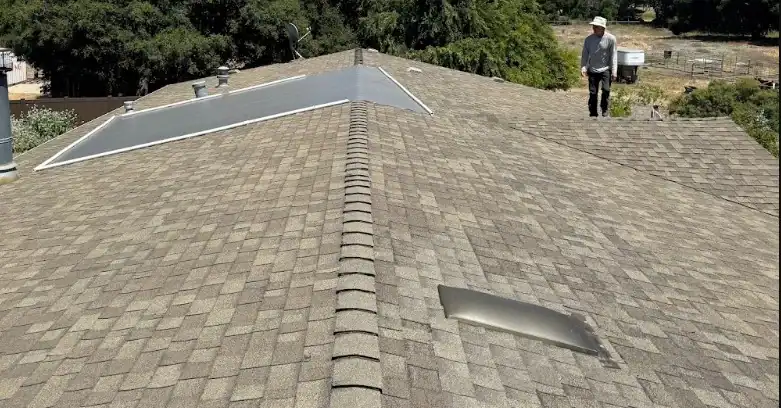
Granules in the gutters, curling edges and bald spots are the most reliable signs of an aging shingle roof, and a roofer can sort the serious from the cosmetic. Patching makes sense when the damage is limited and the shingles are otherwise healthy, and a good roofer will tell you when a repair is enough. When the whole roof is brittle, curling and shedding granules, repairs become a losing game, and choose the new shingles with care.
Taking Off the Old Shingles
Down to bare wood is how a careful crew starts, because new shingles are only as sound as the surface they are nailed to, and soft spots are cut out and replaced with new panels. Overlaying is a shortcut that a careful roofer will explain before agreeing to it, and the savings are usually smaller than they seem. Sheathing that crumbles or feels spongy underfoot must be replaced before shingles can hold, so ask how surprises will be handled.
Keeping the Yard Safe During a Shingle Job
Protecting the house is part of the work, not an extra, and the plan should say how landscaping and windows will be shielded, and move vehicles and furniture the night before. Nails are the main hazard left behind after any roofing job, and a magnetic sweep of the yard and driveway is standard practice, and it is reasonable to inspect it together. Checking the gutters after the first big rain is a good habit, and it takes only a few minutes, and the new roof will thank you.
Choosing the Right Season for Shingles
A roof installed in warm weather bonds sooner than one finished in cool, damp conditions, and that early bond helps in wind, and the busiest months fill up quickly. Shade, water and early starts are the usual ways of coping with the heat on a dark roof, and patience pays off in the finished roof.
Rooftop Additions and Shingle Work
Each opening in a shingle roof needs flashing built in layers with the courses, and the work is easier when the roof is already open, and mention any plans to add more later. Anyone considering rooftop solar should have the age and condition of the shingles assessed first, so ask both contractors how they would proceed.
Matching Shingles After a Repair
A roofer can often borrow shingles from a hidden slope or the back of the house to repair a more visible area, which gives the best match, and a small color difference is not a defect.
Carrying Water Away From the House
The roofline is where the roof and the rest of the house meet, and it deserves attention during any replacement, and ask the roofer to flag any rot.
Apples to Apples
A proposal that only says new shingles leaves out the details that matter, so ask for details in writing. Ask how many layers of old roofing will be removed and how the deck will be inspected, and the answers are worth writing down.
Start the Conversation
Those comparing Shingle Roofing Maintenance in Santa Barbara California can reach us by phone, with 805-723-2381 ready whenever you want to talk. Even a quick call can clear up questions about shingle grades, colors and timing, and the roof will tell the story once someone looks.
Verified

Verified
Verified
Verified