
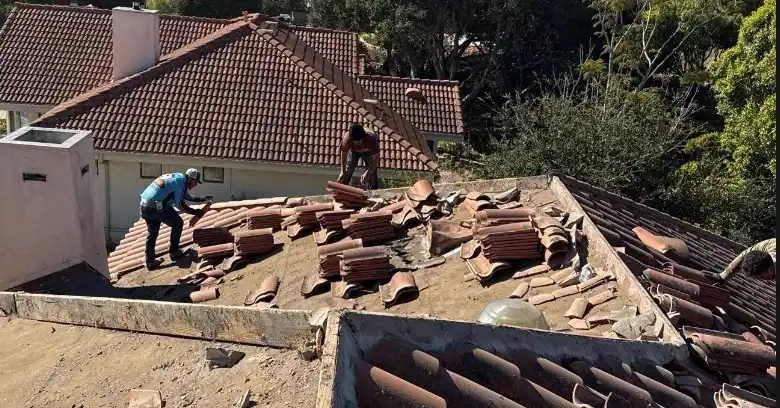
Thinking About Tile Roofer Contractors in Santa Barbara California?
Creative Roofing keeps barrel, flat and interlocking roofs weathertight from the deck up, serving homeowners in Santa Barbara California and beyond.
Call 805-723-2381 and ask about the roof over your house.
A Heavy Covering With a Long History
Fired clay and molded concrete are the two materials used for the heavy, durable coverings found across the region, so the layers below matter more than most people expect. Clay is formed and fired in a kiln, which gives it a rich natural color that does not fade, and the weight differs between materials.
Weight, Framing and What the House Can Carry
Heavy coverings put real stress on rafters, trusses and walls, which is why the structure is checked first, and it should happen before materials are ordered. Replacing a lighter covering with a heavier one without checking the structure is a serious mistake, and a casual answer should give you pause.
Underlayment Is the Real Waterproofing
Beneath the visible surface lies a waterproof membrane that does the hard work, and it is easy to overlook. The felt paper on older roofs becomes brittle and breaks when the pieces are lifted, and that is why age matters as much as appearance.
How Heat Behaves Under the Pieces
Air circulating under the curved shapes helps keep the house cooler in summer, and the weight helps with wind as well. Cosmetic wear is common and does not usually affect performance, and it fades or washes off with time.
Cracks, Slips and Broken Pieces
A cracked unit lets water reach the underlayment, which is meant for backup rather than constant exposure, and the details are worth a closer look. Roofers who work on fragile coverings place their feet on the lower part of the unit where it is supported, and a good roofer will always carry a supply.
Hand-Shaped Metal and Mortar
Details where the pieces meet something else are the places most likely to leak, and sealant alone is never a lasting answer. Ridge and hip pieces are bedded in mortar or fastened with mechanical systems, and the old mortar often fails before the roof does, and it pays to think it through.
Holding Heavy Pieces in Place
Some systems use a mechanical clip at every piece, while others rely on adhesive along the edges, and local rules in windy areas may require specific fastening. A tight installation with proper closures resists embers better than a loose one, so ask how gaps will be kept closed.
Repair, Re-Lay or Replace
Many of these roofs are restored two or three times over the life of the building, and it is easy to overlook. If the pieces are worn out, a re-lay would only reuse tired material, and a good roofer will lay them out plainly.
Adhesives, Clips and Mortar
Modern installations often replace mortar with clips, screws or flexible adhesive that tolerate movement without failing, and the best answer is specific to your roof. Eave closures and bird stops fill the gap beneath the lowest course, keeping out birds, rodents, leaves and windblown embers, and a little care goes a long way.
Cleaning a Heavy Roof Without Damaging It
Surface growth tends to be slower in dry summers, though shaded areas may still collect some, so consider it before deciding to replace. Cleaning is not a substitute for repairs, but it often reveals cracked pieces that were hidden by grime, and the roof will look and perform better.
Felt, Synthetic and Self-Adhering Options
Choosing a durable underlayment is one of the best investments in a long-lived roof, since it is the layer that has to outlast the rest, and a thoughtful answer is a good sign. A sticky rubberized sheet seals around fasteners and clings to the deck, providing waterproofing even if the surface layer is breached, and good detailing here pays off for decades.
Solar Panels, Skylights and Heavy Roofs
Each penetration through the covering is a place where a unit must be cut, and cut pieces are more likely to crack later, and the answer should be written down. Every person who climbs onto a roof of this kind risks cracking something, so access should be limited to those who know how to walk it, and a short sign near the hatch helps. Clearing debris from valleys before the rainy season is the simplest way to protect the underlayment beneath them, so make valleys the first stop on any check.
Picking the Right Unit for the House
Natural clay generally keeps its color for a very long time, while a coated concrete surface can fade or chalk and may need refreshing, and compare how they look in daylight. Barrel tiles are laid in alternating channels and caps, while interlocking units are single pieces that lock together along their edges, and a good supplier will lend a few.
How to Weigh Two Bids
A thorough proposal names the material, the underlayment, the flashing and the method of attachment, and a clear proposal reflects a careful crew. Questions about experience are reasonable, and the answers say a great deal, and the details are worth a closer look.
Planning a Re-Lay Step by Step
Each section of the roof is stripped down to the underlayment, repaired and covered with fresh waterproofing before the units go back, and the crew has to be careful with every piece.
Wildfire Season and Heavy Roofs
Clearing leaves and needles from valleys, gutters and the back of chimneys removes fuel that could ignite from a flying ember, and that is worth keeping in mind.
What to Save After a Restoration
A note of the underlayment type, the flashing metal and the fastening method helps any roofer who works on the roof later, and a clear record makes repairs simpler.
Talk to Us About Your Roof
Homeowners weighing Tile Roofer Contractors in Santa Barbara California can begin by describing the house and the roof they have, so dial 805-723-2381 when it suits you. Whether the roof is leaking now or you are planning ahead, an early conversation keeps your options open, and the first step is just a phone call.
Verified

Verified
Verified
Verified
Verified






















