
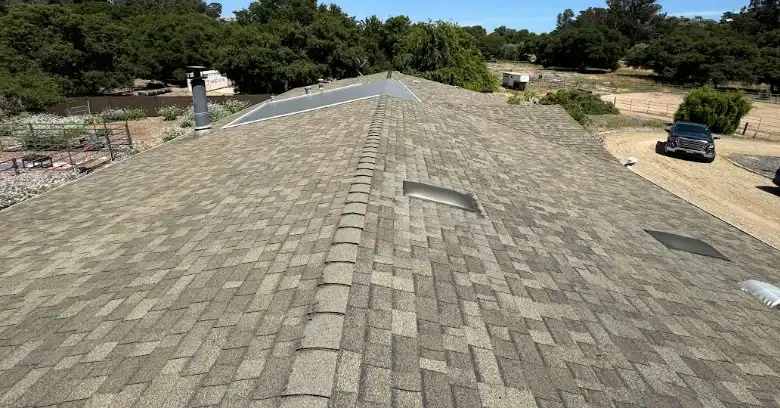
Comparing Architectural Shingle Roofs Close to Santa Maria California?
Creative Roofing lays asphalt, architectural and designer shingles over carefully prepared decks, throughout Santa Maria California and the neighboring communities.
Phone 805-723-2381 to set up a visit to look at your shingles.
What a Shingle Roof Is Made Of
Behind the familiar look is a layered construction, and that is worth keeping in mind. Stone granules reflect part of the sun and keep the asphalt from baking, and bare patches show up as dark spots.
Basic, Laminated and Premium
Traditional three-tab shingles are a single flat layer cut into three tabs, and they are the lightest and plainest option, so many homeowners compare it with thicker lines. Architectural shingles are made of two or more laminated layers that give the roof depth and shadow, and colors come in a wide range. Designer shingles are heavier and carefully styled to resemble natural slate or cedar, and the framing should be checked before choosing the heaviest types.
Sun, Heat and Aging
Long dry summers bake a shingle roof for months with very little relief from rain, and the shaded side tells a different story. A shingle that has begun to curl no longer lies flat against the roof, and it pays to think it through.
Cool Shingles and Heat Gain
A pale shade reflects more sunlight than a dark one, which can reduce heat entering the attic, and the effect is easiest to see on a hot day. Cool shingle lines are designed to lower roof temperatures without changing the look much, and the actual benefit depends on the house.
How Shingles Are Laid
Fastening is the quiet detail that separates a durable roof from a poor one, and it is easy to overlook. Each course overlaps the one below so that water always sheds over a solid layer, so a good crew follows the layout exactly. Ridge caps finish the roof where two slopes meet and shed water over the crest, and it pays to think it through.
Gusts and Loose Tabs
The adhesive bond is what keeps tabs flat against the roof in a strong wind, and checking for lifted tabs after a windy spell is a good habit. Pieces that blow off expose the underlayment, which is not meant to sit in the sun, and a roofer can reseal tabs with a dab of roofing cement.
Balanced Intake and Exhaust
A balanced system of intake and exhaust keeps the temperature under the roof closer to the air outside, and ridge vents work well with soffit intake. Attic fans, gable vents and ridge vents each work differently and should not fight each other, and that is worth keeping in mind.
Waterproofing Layers and Metal Pieces
Modern synthetic underlayments resist tearing and last better in strong sun, and it matters most when the roof is open to weather. Chimneys, walls and skylights need step flashing and counterflashing worked into the shingle courses, and these details cause most leaks on shingle roofs.
Reading the Roof
Cracks, missing pieces and exposed nails are all signals worth acting on, and one sign alone may not mean much. Patching makes sense when the damage is limited and the shingles are otherwise healthy, and it is easy to overlook. Matching old shingles is difficult, so large repairs often look patchy, and the new roof will perform better than a patched old one.
Stripping Down Before Building Up
Most shingle replacements begin with a full tear-off, in which the old layers are stripped away and the plywood or boards beneath are laid bare, and soft spots are cut out and replaced with new panels. Laying new shingles over old ones is sometimes allowed, but it hides the deck and adds weight to the structure, and the savings are usually smaller than they seem. Sheathing that crumbles or feels spongy underfoot must be replaced before shingles can hold, and the cost of a few sheets is rarely large.
What the Site Should Look Like at the End
Planning where the dumpster, the ladders and the materials will go avoids damage to lawns, driveways and sprinklers, and the crew returns it to normal when finished. A professional crew checks the ground more than once, including the gutters, where granules and nails often collect, and that is worth keeping in mind. A new shingle roof sheds a little loose grit in its first months, and some of it ends up in the gutters, and it pays to think it through.
Choosing the Right Season for Shingles
A roof installed in warm weather bonds sooner than one finished in cool, damp conditions, and that early bond helps in wind, and a little care goes a long way. On a scorching day the surface of a roof becomes too hot to handle, and the asphalt softens enough to mark if walked on carelessly, and patience pays off in the finished roof.
Skylights, Chimneys and Solar Panels
Each opening in a shingle roof needs flashing built in layers with the courses, and the work is easier when the roof is already open, and it is easy to overlook. Replacing a roof beneath an existing array is a coordination job involving the roofer and the solar company, and get the plan in writing.
Blending New Shingles Into an Older Roof
Older shingles lose color and granules in the sun, so a few fresh ones will stand out until the surrounding roof catches up, so ask the roofer what to expect.
The Edge Details That Finish a Shingle Roof
Metal edging installed under the underlayment at the eave and over it at the rake is the correct order, and it makes a visible difference to the durability of the edge, and ask the roofer to flag any rot.
Getting Specific About the Product
The written scope should list tear-off, deck repair, ventilation and cleanup, and the line items let you compare two bids fairly. Ask how many layers of old roofing will be removed and how the deck will be inspected, and it is easy to overlook.
Ready to Compare Options
People researching Architectural Shingle Roofs in Santa Maria California are welcome to call with questions, so dial 805-723-2381 when it suits you. Planning ahead usually leads to better choices than reacting to an emergency, so reach out whenever you are ready.
Verified

Verified
Verified
Verified
Verified






















