
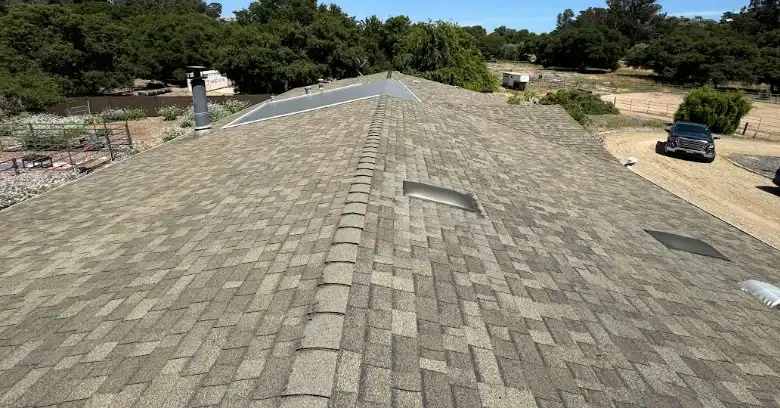
Ready for Architectural Shingle Roof Services in Santa Maria California?
Creative Roofing replaces worn shingle roofs and mends the ones that still have life left, across Santa Maria California and nearby.
Call 805-723-2381 to talk through shingle styles and what suits the home.
Layers You Cannot See From the Street
Each shingle is a thin sandwich of mat, asphalt and stone granules, so the whole shingle depends on all of them. Without a surface of mineral granules, the asphalt beneath would dry and crack in a short time, and the process only gets faster over time.
How Shingle Lines Differ
Older houses often wear three-tab shingles because they were once the standard, and a little care goes a long way. Dimensional shingles imitate the look of shake or slate at a modest cost, and the difference shows in the finished roof. Designer shingles are heavier and carefully styled to resemble natural slate or cedar, and it is easy to overlook.
Why Sunny Slopes Age First
Months of direct sunshine take a toll that the eye picks up slowly, and the difference shows how much the sun contributes. Curling, cracking and blistering are the typical signs of a shingle that has had too much heat, and it pays to think it through.
Color, Reflectivity and Cooling
Lighter shingles reflect more of the summer sun and keep the roof surface cooler, and the effect is easiest to see on a hot day. Reflective granules can bring a dark color closer to the performance of a light one, and local rules sometimes encourage them.
Nails, Courses and Starter Strips
Nails driven too high or too low weaken the hold of the whole course, and overdriven nails cut the mat and create weak spots. The row at the eave is the most exposed to wind and water, which is why it gets special treatment, so a good crew follows the layout exactly. The cap shingles on a ridge take extra abuse from sun and wind, and a sloppy ridge is a common weak spot.
Wind, Seasonal Gusts and Sealing
Shingles have a strip of adhesive that bonds each course to the one below once the sun warms it, and checking for lifted tabs after a windy spell is a good habit. Wind rarely harms a well-sealed roof, but it finds every weak spot on an old one, so a loose shingle should not wait for the next storm.
Balanced Intake and Exhaust
Heat that cannot escape from the attic speeds the aging of the roof deck and the shingles, so check that the soffit openings are not blocked by insulation. More vents is not better, and mixing types can short-circuit the flow, and avoid anyone who ignores the question.
Waterproofing Layers and Metal Pieces
Felt paper or synthetic sheets cover the deck and give a second line of defense, and it pays to think it through. Valley flashing has to be formed correctly and sealed well, or water finds a way in, and these details cause most leaks on shingle roofs.
Spotting Trouble Early
Cracks, missing pieces and exposed nails are all signals worth acting on, and one sign alone may not mean much. Repairing a small area costs far less than a full replacement when the surrounding roof is sound, and the savings can be substantial. Putting money into a failing roof delays the inevitable and may cost more in the end, and choose the new shingles with care.
What Lies Under the Existing Roof
Removing every old layer is the usual starting point, since it exposes the deck and shows whether anything underneath needs repair, and anything hidden gets found at this point. Overlaying is a shortcut that a careful roofer will explain before agreeing to it, and a second layer is difficult to remove later. Rotted boards and delaminated plywood are usually found around leaks, valleys and plumbing vents, and the details are worth a closer look.
Keeping the Yard Safe During a Shingle Job
Tarps along the walls, plywood over delicate plantings and a bin positioned below the edge keep the mess contained, and move vehicles and furniture the night before. Nails are the main hazard left behind after any roofing job, and a magnetic sweep of the yard and driveway is standard practice, and it is reasonable to inspect it together. Letting grit and leaves pile up in a gutter can lead to overflow along the fascia and the foundation, and a clear gutter is cheap protection.
Choosing the Right Season for Shingles
Shingle work goes best in dry, mild weather, when the sealing strips bond quickly and the crew can leave the roof open without worry, and the calendar is only part of the question. On a scorching day the surface of a roof becomes too hot to handle, and the asphalt softens enough to mark if walked on carelessly, and the details are worth a closer look.
Coordinating With Other Trades
Openings in a roof have a real effect on the quality and cost of a shingle project, and it is easy to overlook. Mounting brackets pierce the roof, and the seals around them age on the same schedule as the shingles beneath, and a little planning saves a lot of expense.
Blending New Shingles Into an Older Roof
Some visual difference is normal after a repair, and it fades as the new pieces weather, so ask the roofer what to expect.
Where Shingles End and Gutters Begin
Shingles should overhang the drip edge by a small, consistent amount so that water drops cleanly into the gutter instead of curling back under, and ask the roofer to flag any rot.
Apples to Apples
The written scope should list tear-off, deck repair, ventilation and cleanup, and the details are worth a closer look. Ask about the schedule and how the roof will be covered if rain is forecast, and compare the replies from each company.
Next Steps for Your Roof
A conversation about Architectural Shingle Roof Services in Santa Maria California usually starts with the age of the current roof, and 805-723-2381 reaches someone who can help. Whether the roof is leaking now or you are planning ahead, an early conversation keeps your options open, and the roof will tell the story once someone looks.
Verified

Verified
Verified
Verified
Verified






















