
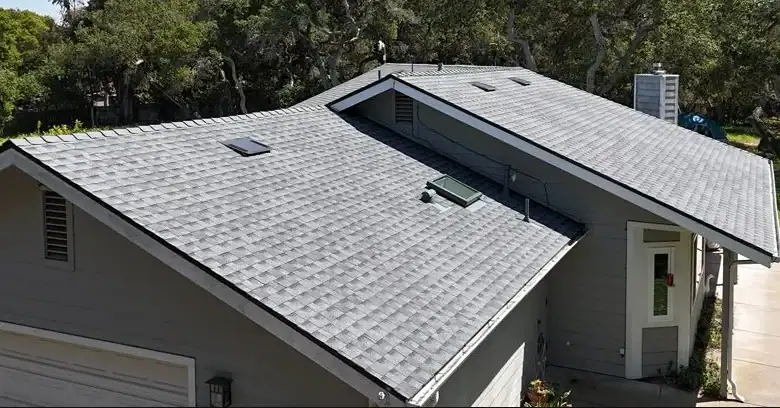
Ready for Asphalt Shingle Roof Installations for a Home in Santa Maria California?
Creative Roofing works with layered shingles, starter strips, underlayment and ridge caps, throughout Santa Maria California and the neighboring communities.
Dial 805-723-2381 and ask about a shingle roof for your house.
Layers You Cannot See From the Street
Most roofs on houses here wear shingles built from a glass-fiber core with an asphalt skin, and that is worth keeping in mind. Granule loss is the clearest sign that a shingle is wearing out, and the process only gets faster over time.
Basic, Laminated and Premium
A three-tab shingle has a flat, uniform look and the thinnest profile of any common type, and fewer new roofs use it today. Architectural shingles are made of two or more laminated layers that give the roof depth and shadow, and the details are worth a closer look. Higher grades cost more, and the look is the main reason to pay for them, so the roof feels more substantial.
Heat Is the Slow Enemy
The sun does more to age a shingle roof in this region than any other force, and the difference shows how much the sun contributes. Blisters appear when trapped moisture or heat pushes up the surface, and the pattern across the roof shows how far the wear has gone.
Light Versus Dark
Color is a practical decision as much as a matter of taste, so consider how the house sits in the sun. A reflective product can ease the burden on air conditioning, and local rules sometimes encourage them.
The Craft Behind a Good Install
Nails driven too high or too low weaken the hold of the whole course, and it is easy to overlook. The row at the eave is the most exposed to wind and water, which is why it gets special treatment, so a good crew follows the layout exactly. Hips and ridges are capped with special pieces that bend over the peak and seal the top of the roof, and replacing a ridge is simple when done in time.
Wind, Seasonal Gusts and Sealing
Seal strips need warmth to activate, which is why roofs installed in cool weather may take longer to bond, and checking for lifted tabs after a windy spell is a good habit. Wind rarely harms a well-sealed roof, but it finds every weak spot on an old one, and a roofer can reseal tabs with a dab of roofing cement.
Air Movement Under the Deck
Airflow under the deck helps a shingle roof reach its full useful life, and the eaves and the ridge are where the vents belong. Blocking the soffit vents with insulation is a common mistake that undermines the whole system, and fixing ventilation is far easier during a re-roof.
Valleys, Walls and Pipes
Self-adhering membranes at the eaves and valleys give extra protection where leaks start, and it matters most when the roof is open to weather. Every pipe and vent through the deck needs a boot or collar that is sealed and replaced with the roof, and replacing flashing during a re-roof is standard practice.
When a Shingle Roof Is Telling You Something
Look for lines of shadow where shingles have lifted and for stains inside the house, and a roofer can sort the serious from the cosmetic. Spot repairs are a good choice when most of the roof still has plenty of life left, and a good roofer will tell you when a repair is enough. Replacement is the sensible answer once the field of shingles has lost its protective surface, and that is worth keeping in mind.
What Lies Under the Existing Roof
Down to bare wood is how a careful crew starts, because new shingles are only as sound as the surface they are nailed to, so the plan should allow for repairs to the wood. A roof-over saves effort in the short run, yet it prevents any look at what the old roof has been hiding, and a second layer is difficult to remove later. Agreeing on how replacement boards are measured and charged prevents a dispute halfway through the job, and good communication keeps everyone calm.
Cleanup, Nails and Protecting the Property
Protecting the house is part of the work, not an extra, and the plan should say how landscaping and windows will be shielded, so ask how the yard will be protected. Tires and bare feet find stray nails more often than anyone expects, so a thorough pickup at the end is essential, and it is reasonable to inspect it together. Downspouts that carry water well away from the house protect both the new roof and the walls beneath it, so make it part of the routine.
Planning Around Rain and Heat
A roof installed in warm weather bonds sooner than one finished in cool, damp conditions, and that early bond helps in wind, and the busiest months fill up quickly. On a scorching day the surface of a roof becomes too hot to handle, and the asphalt softens enough to mark if walked on carelessly, and a rushed job in extreme heat is a poor bargain.
Working Around Things That Share the Roof
Each opening in a shingle roof needs flashing built in layers with the courses, and the work is easier when the roof is already open, and replacing them together saves money. Anyone considering rooftop solar should have the age and condition of the shingles assessed first, so ask both contractors how they would proceed.
Making a Repair Look Right
A roofer can often borrow shingles from a hidden slope or the back of the house to repair a more visible area, which gives the best match, and place the repair where it is least visible.
Gutters, Drip Edge and the Roofline
A drip edge along the eave and the rake guides water into the gutter and keeps it from running behind the fascia, where it would rot the wood, and fixing it now costs less than later.
Getting Specific About the Product
A proposal that only says new shingles leaves out the details that matter, and read them slowly. Check what happens if damaged sheathing is found once the old roof is off, and it is easy to overlook.
Next Steps for Your Roof
People researching Asphalt Shingle Roof Installations in Santa Maria California are welcome to call with questions, so dial 805-723-2381 when it suits you. Even a quick call can clear up questions about shingle grades, colors and timing, and the roof will tell the story once someone looks.
Verified

Verified
Verified
Verified
Verified






















