
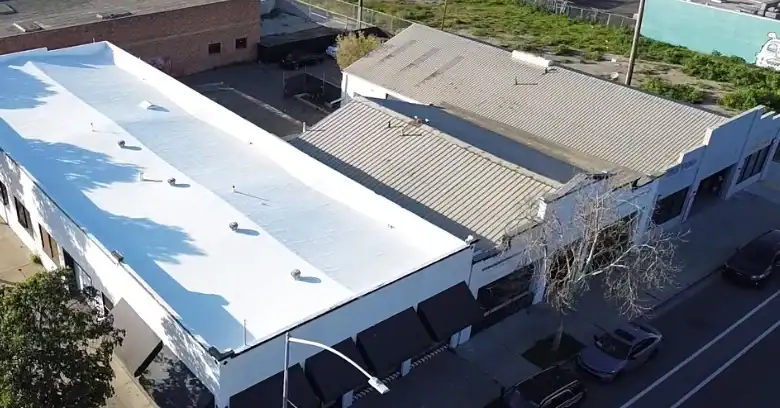
Researching Commercial Roofing Installation Across Santa Maria California?
Creative Roofing handles building roofs with an eye on drainage, access and daily operations, wherever a building needs a sound roof around Santa Maria California.
Call 805-723-2381 to talk through a commercial roof question.
How Building Roofs Differ
Most commercial buildings have low-slope roofs, which shed water slowly and carry equipment, and the tradesmen who work on them need specific experience. Waterproofing on a low slope comes from the sheet itself rather than from the angle, so installation craft counts for a great deal.
The cost of a failed roof is often higher inside the building than on top of it, so planning ahead is the practical approach.
Common Low-Slope Roof Systems
Single-ply roofing arrives in large rolls and is joined at the seams on site, so the choice affects how repairs are done later. Built-up roofs use alternating layers of asphalt and reinforcing fabric, finished with a surface of gravel or a cap sheet, and they suit many situations where traffic and equipment are heavy. Standing seam metal panels cover warehouses, schools and retail buildings, and an honest contractor will explain the limits.
How Water Leaves a Building Roof
Water that sits on a membrane ages it faster than water that runs off, and a small amount of tapered insulation can fix ponding. Drains, scuppers and gutters collect water and carry it away from the building, and an overflow scupper is a backup that should never be blocked.
What Sits on the Roof
Pipes, conduits and curbs interrupt the membrane in many spots, and many leaks start there rather than in the open field. Repeated traffic on an unprotected membrane leaves it thin and scuffed, and a contractor can mark them on the roof.
Strong Sun on a Flat Surface
Long dry summers expose a membrane to strong ultraviolet light month after month, and reflective surfaces stay cooler. A cooler roof surface lowers the strain on air conditioning in hot months, and local rules may favor reflective surfaces on some projects.
Maintenance Programs
Roof maintenance is a habit more than a project, so owners often tie visits to the seasons. Maintenance work is mostly cleaning, tightening and resealing, and most items take only a short time.
Deciding What to Do With an Aging Roof
The right answer depends on how much of the system is still dry and sound, and it is easy to overlook. Once water has spread through the layers, replacement is the honest answer, and that is worth keeping in mind.
Working in an Occupied Building
Roof work above an operating business needs planning so that normal activity can continue, and communication with tenants is part of the job. Fall protection is required on commercial roofs, and a professional crew uses it, so ask how the site will be protected.
Comparing Commercial Roofing Proposals
The scope of work should list drains, flashing, curbs and any insulation to be added, and the cheapest-looking option may leave things out. Photographs and written records of the installation are useful for the owner, and a future owner will thank you.
Leak Detection on a Flat Roof
Water travels along decking, insulation and ductwork before it shows up on a ceiling, and that is worth keeping in mind. Most leaks start at a detail, not in the broad flat area of the membrane, and it pays to think it through. Testing helps decide whether a repair will hold or the roof needs more extensive work, and the cost is small next to a wrong decision.
Edges Are Where Roofs Let Go
A roof that is poorly attached shows the problem at its edges, and the details are worth a closer look. Perimeter metal is the first line of defense against uplift, so it deserves a look after any windy spell.
The Seams That Join Roof to Wall
Parapets are the short walls that rise around the edge of many commercial roofs, and a gap at the top lets water run down behind the membrane. Sealants at the top of a flashing dry out in strong sun and need redoing, and it pays to think it through.
Coatings Explained
A coating can seal small cracks, reflect sunlight and slow the aging of the surface, and the preparation matters as much as the product. Surface treatments help sound roofs, not ones that are failing underneath, and the follow-up inspections matter too.
When the Roof Covers an Acre
A roof covering a very large area has special needs for drainage, access and safety, and the roof can be done in sections. Shared roofs raise questions about who is responsible and who pays, and tenants appreciate being kept informed. Apartment and multifamily buildings add residents, balconies and shared walkways to the mix, and it pays to think it through.
Thinking About Cost Over the Life of the Roof
Treating the roof as an asset with a lifespan is the smart approach, and a little care goes a long way. The cheapest proposal is not always the best value, and ask about the expected service life of each option.
The Layers Below the Surface
Thick boards of insulation do much of the work of holding heat in or out, so keeping them dry is essential. Cover boards add a firm surface that protects insulation from foot traffic and hail-free impacts, and the result is a tougher roof. Slope built into the insulation is one of the cleanest ways to fix drainage problems, and it is a good time to ask about it.
Getting a Roof Ready Before the Rains
Rooftop units should be examined for loose panels, failed seals and missing fasteners, since a stray panel can let rain into the system, and a dry building is the reward.
Let Us Know What You Are Dealing With
Anyone sorting out Commercial Roofing Installation in Santa Maria California is one call away from a straight answer, and the number is 805-723-2381. There is no pressure in asking questions about a roof, and the first step is a simple phone call. Putting off a roof decision seldom makes it simpler, so call when you have a moment. Property managers often juggle many buildings and appreciate clear, written answers, and the paperwork can be kept with the building file.
Verified

Verified
Verified
Verified
Verified






















