
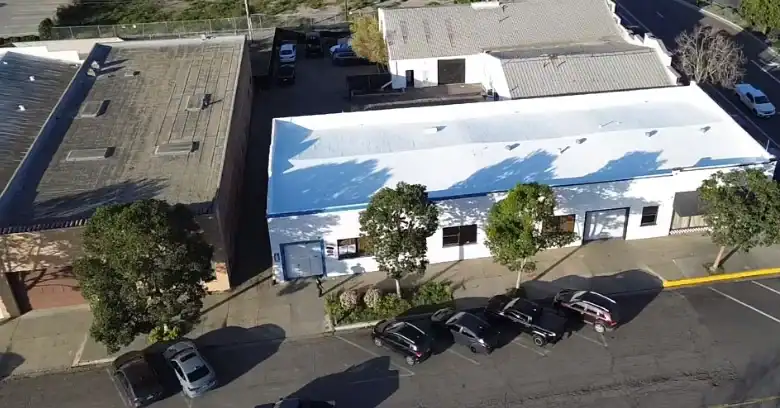
Researching Flat Roofing Contractors in Santa Maria California?
Creative Roofing deals with flat and low-slope roofs on houses, additions, garages and small buildings, from Santa Maria California out to the surrounding area.
Phone 805-723-2381 and tell us about the flat roof you have.
The Challenge of a Level Surface
A flat roof is never truly flat, but its slope is so slight that water drains slowly and lingers, and the quality of the seams decides everything. Because water stays on the surface, small flaws that a pitched roof would forgive become leaks on a flat one, and it pays to think it through.
What Goes on a Low-Slope Roof
TPO and PVC are single-ply sheets that are welded at the seams with hot air, creating a continuous waterproof surface, and repairs are made by welding on a patch. Black EPDM absorbs heat, while a white version reflects more of the sun, and punctures can be patched with the same materials. Modified bitumen sheets are rolled out and torched or adhered in overlapping courses for a durable surface, and the gravel hides the condition of the membrane.
Details That Fail First
Most flat roof leaks start at a detail rather than in the middle of the roof, and the field is checked last. Cracked sealant at the top of a wall flashing is one of the most common sources of leaks, and redoing sealant is routine upkeep.
When Water Will Not Leave
A roof that holds puddles is telling you about a low spot or a blocked drain, and clear leaves and debris from scuppers. Angled boards under a new membrane direct water toward the drains and eliminate low spots, and the improvement is permanent.
Strong Sun on a Flat Surface
A flat roof faces the sky all day, and the sun heats it far more than a steep roof ever experiences, and it is easy to overlook. Silicone, acrylic and elastomeric coatings are the main families used on flat roofs, and the benefit depends on the existing roof.
Protecting the Surface From Wear
Skylights and hatches add edges that need careful flashing, and it pays to think it through. Roof-mounted air conditioners and other equipment bring service people who walk on the membrane, and a plan for traffic keeps the roof sound.
Choosing How Far to Go
A flat roof with a few leaks and a sound membrane can often be repaired for a fraction of the cost of replacing it, and the key is an accurate diagnosis. A restoration coat is a good choice for a roof that is dry beneath and sound in the field, and wet insulation rules out a quick fix. A new roof is also a chance to improve slope, drains and edges, and that is worth keeping in mind.
Small Flat Roofs With Big Responsibilities
Owners of older homes often discover that an addition from a previous decade was finished with a membrane that has long since worn out, and the wrong material on a flat roof will leak. Where a flat porch roof meets the wall of the main house, the membrane has to climb the wall and be capped so that water cannot run behind it, so look at the wall as well as the roof. Pavers, decking and planters laid over a membrane protect it from the sun but hide it from view, and ask about drains and overflows.
What Sits Between the Roof and the Ceiling
Because there is often little or no open space under the deck, heat from a hot summer day passes quickly into the rooms below unless the roof is well insulated, and it is easy to overlook. Water that gets into the insulation layer spreads sideways, so the damp area can be much larger than the visible stain on the ceiling, and that is often cheaper than a full tear-off.
Small Habits That Prevent Big Leaks
The best time to look at a flat roof is at the end of the dry season, when leaves and debris have piled up and the rains are about to test every drain, and the work is quick. A stain on a ceiling after a storm is a clear signal to have the roof inspected before the next one arrives, and acting quickly limits the damage.
Securing the Roof Against the Wind
Seasonal gusts pull hardest at the perimeter of a low-slope roof, so the fastening pattern is tighter along the edges than in the middle of the field, so ask how the edges will be attached. Ballasted roofs hold the membrane down with a layer of smooth stone or pavers instead of glue or fasteners, and the weight is part of the design, and the details are worth a closer look. The more complicated the roof, the more a clear written scope matters, since each detail represents a possible source of dispute, and a thorough walk-through prevents them.
Openings That Need Their Own Waterproofing
A curb lifts the opening above the level of standing water, which is the main reason it exists, and the membrane must climb it and be sealed at the top, so ask how every opening will be handled. Gathering the pipes and conduits into fewer penetrations reduces the number of places where leaks can begin, so ask about consolidating them. Drains and scuppers are also penetrations, and the flashing around them has to be watertight while still letting the water through quickly, and a blocked outlet loads a roof beyond its design.
Reading Competing Bids
The written scope should list the flashing details, the edge metal and the drainage work, and the details are worth a closer look. The answers tell you more than a brochure or a website ever could, and it is easy to overlook.
What to Expect on the Days of the Work
The crew needs clear access to the roof, a place to set up the equipment and a path for removing old material without crossing living areas, and a short conversation beforehand covers the details.
Clearing Up a Few Misconceptions
A roof with no visible slope is not necessarily failing, since most are designed with a gentle fall toward the drains, and an honest opinion is the goal.
Next Steps for Your Roof
Those comparing Flat Roofing Contractors in Santa Maria California can reach us by phone, with 805-723-2381 ready whenever you want to talk. Even a quick call can clear up questions about membranes, coatings and timing, so reach out whenever you are ready.
Verified

Verified
Verified
Verified
Verified






















