
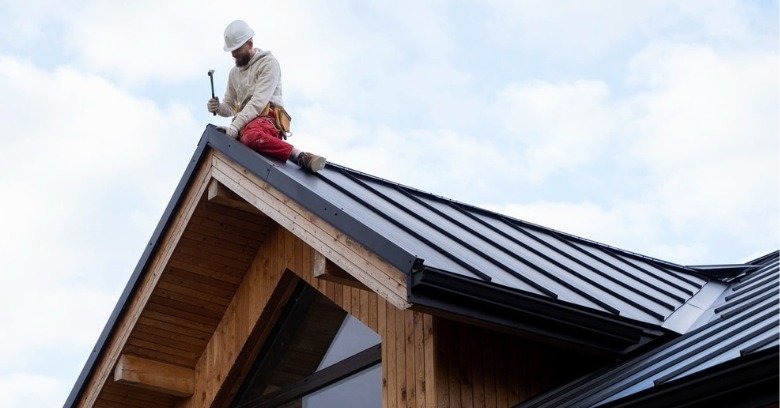
Ready for Metal Shingle Roofers Around Santa Maria California?
Creative Roofing works with metal panels, clips, trim and the details that hold them together, from Santa Maria California out to the surrounding area.
Call 805-723-2381 to talk through the panel styles and what would suit the house.
The Basics of a Metal Covering
Metal roofing means coated steel or aluminum panels fastened over a solid deck and a protective underlayment, and the choices interact with one another. Copper and zinc are used on special projects and age with a distinctive patina, and your roofer can compare them for you.
Metal Roof Styles Compared
The raised seams give the roof its clean, linear look and shed water well, and snap-lock and mechanical-lock versions differ in how the seams close. Screw-down panels cover large areas economically and quickly, and the fasteners are the point to watch over time. Stone-coated steel panels have a granular finish fused to a formed steel base, and it is easy to overlook.
Heat and Light Over Time
Long dry summers put a metal roof under strong sun for months at a stretch, and quality finishes are made for that exposure. Reflective and light-colored finishes send more sunlight away and keep the roof surface cooler, and ventilation underneath still matters.
Metal Grows and Shrinks Every Day
Metal expands when it warms and contracts when it cools, and a long panel moves noticeably over a day, and good detailing allows for it. Fasteners are the most common maintenance item on screw-down roofs, and replacement screws are cheap.
Edge Details That Matter
Edge trim is the part of a metal roof that the wind tests first, and a loose piece of edge metal is a warning. Closures at the eave and the ridge are small parts with a big job, and they are easy to overlook.
Ember-Resistant Details
Panels made of steel or aluminum do not ignite from windblown embers, and it pays to think it through. Gutters, vents and the roof edge are where embers tend to collect and ignite materials, and trim trees back from the house.
The Real Story on Metal Roof Noise
People often worry that rain on a metal roof will be loud inside the house, and the deck and underlayment absorb most of it. Attic comfort is a matter of ventilation, insulation and surface working together, and a good answer is specific.
Preparing the Deck for Panels
Metal panels need a flat, solid deck, and any damaged sheathing is replaced before the panels go on, so ask which product will be used. Flashing around chimneys, skylights, walls and pipes is custom bent from the same type of metal, and the quality of the craft shows at these points. Measuring twice and laying out chalk lines pays off on a metal job, and metal does not forgive careless starts.
What a Metal Roof Needs From You
Scratches should be touched up before bare metal is left exposed, and clear leaves from valleys and gutters. Dissimilar metals can cause corrosion when they touch in the presence of moisture, and the roofer should know the rules.
Where the Water Goes
The first big rain of the season tests every drainage detail on a house, and valleys need to be wide and clean. A system that ignores the speed of runoff will overflow, so ask how the gutters will be positioned.
Deciding Whether to Strip the Old Roof
In some cases metal panels can be installed over an existing shingle roof, which saves the cost and mess of tear-off, and a little care goes a long way. A full tear-off adds work, but it gives the best view of the structure, and there is no single right answer.
Low Slopes and Steep Pitches
Steep roofs can use almost any panel, but low slopes need seams that lock tight, and the specification sheet settles the matter. Porches, patios and additions often have lower slopes than the main roof, so ask to see examples.
Thinking Beyond the First Installation
The material itself does not rot, crack or curl the way other coverings can, and it is worth paying for good installation. A clean, well-documented roof makes a persuasive case, and that is worth thinking about early.
Mistakes to Avoid With Metal
Noise from movement usually means the panels were pinned down where they should have been free to slide, and asking for references is reasonable. Scratches that go through the paint start corrosion in the metal below, and it is easy to overlook.
Questions for a Metal Contractor
Panel thickness is measured in gauge, and a lower number means thicker metal, and a thorough contractor will welcome the questions. A contractor with experience can explain problems before they happen, and trust your sense of the conversation.
Picking a Color That Lasts
Most residential panels carry a factory-applied finish that is cured onto the metal in a controlled process, and the quality of the paint varies between makers. Samples held up against the siding and the trim reveal how colors work together, and the details are worth a closer look. Asking the roofer about local requirements is a sensible first step, and it is easy to overlook.
The Parts That Frame the Panels
A clean edge detail matters on a smooth metal surface, where every line shows from the street, so ask how the edges will be finished. Debris that collects at the valley can block the flow and force water under the panels, so schedule a check at the end of summer.
Lead Times and Custom-Formed Panels
The wait between choosing a color and receiving the material is a normal part of a metal job, and ask for an honest estimate of the wait.
Tell Us What You Have in Mind
Homeowners weighing Metal Shingle Roofers in Santa Maria California can begin by describing the house and the look they want, and the number is 805-723-2381. Planning ahead usually leads to better choices than reacting to an emergency, and we are glad to help you sort it out.
Verified

Verified
Verified
Verified
Verified






















