
Thinking About Residential Roofing Companies in Santa Maria California?
Creative Roofing takes a roofing job from the first look to the last sweep of the yard, across Santa Maria California and the neighboring communities.
Reach out at 805-723-2381 and tell us what has you thinking about the roof.
Day One of a Roof Project
A roofing project begins with a close look at the surface, the edges and the pipes, and that is worth keeping in mind. Photographs taken on that first visit become the record for everything that follows, and that is the evidence a sensible plan is built on.
Long dry summers and strong sun leave their mark on nearly every roof in California, so the south and west slopes get the closest attention.
Repair, Patch or Replace
The right answer depends on how much sound material is left on the house, so a clear explanation matters more than a quick quote. A roofer who explains the reasoning in plain terms is easier to trust with the work, and the answer tells you a lot.
When the decking underneath is damaged, the scope of the job grows, and nobody should be surprised when it happens.
Material Decisions
Most houses here wear one of three coverings, and the choice shapes everything else, but the framing and the slope decide more than preference does. Color deserves more thought than it usually gets, so do not settle the question from a photograph.
The Calendar and the Forecast
Dry months are the busy season for roofing, since an open roof and rain do not mix, and temporary dry-in layers keep the house safe overnight. Roof surfaces get hot enough in July to change how materials behave, and the plan bends to the heat rather than the other way around.
Removing the Old Roof
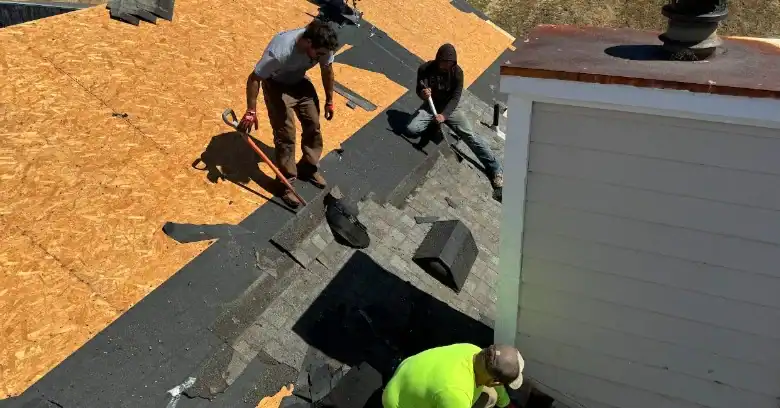
The existing covering is stripped away and the deck is left exposed for inspection, and the details are worth a closer look. Sound wood is the base everything else depends on, so this is not the place to save time.
Underlayment and Drying In
The surface you see is only the outer layer of a roof, and chimneys get particular care. With the barrier in place the roof can shed rain even before the covering is finished, and rows are laid from the eave upward, each lapping the last.
Where Roofs Meet Walls and Pipes
The places where a roof is interrupted are the places most likely to leak, since worn metal under new material becomes the weak link. Vent boots and pipe collars are rubber or lead pieces that wear out before the roof does, and a little care goes a long way.
Ventilation in a Warm Climate
Heat collects in the space beneath the roof deck unless it has somewhere to go, so vents near the ridge give the hot air a way out. Adding vents at random may do little more than cut holes in the roof, and a roofer should be able to describe it simply.
The Last Day on Site
Once the roofing is done, the property has to be put back in order, and that is part of the work, not an extra. Looking at the ridge, the valleys and the flashing with the roofer present is time well spent, so keep the paperwork and pictures together.
Approvals Before the Work Starts
Local requirements shape the job before the first shingle is touched, and the process is easier when someone handles it for you. Certain hillside and edge-of-town areas follow stricter material rules than the valley floor, and a roofer working in the area should already know them. A proposal that names its materials and steps is easier to compare, and it is worth reading it slowly.
Keeping the Property Safe
A roofing job puts a lot of weight, noise and debris around a house, so tarps and plywood go down where debris will land. Children and animals should stay clear of the yard while the work is underway, and keep a path clear for deliveries. Inside the house, vibration can shake items from shelves and loosen attic insulation, and it is best done the night before.
Noise, Neighbors and Daily Life
Timing depends on the size of the roof, the complexity of the layout and the covering chosen, and nobody can promise a date through a rain delay. A quick word with the people next door can head off complaints, and it is easy to overlook. The loudest stretch is the tear-off, and it passes quickly, and a plan for the loud days makes them easier.
Getting Clear Before the Work Begins
A sensible first question is what exactly is included in the scope, and write the answers down. The product line matters as much as the type of covering, and take your time reading it. Ask what happens if something unexpected turns up under the old roof, and you will have a clear record.
Keeping a Roof in Good Shape
Even a new roof benefits from an occasional look from the ground, and it is easy to overlook. Debris on the roof holds moisture and wears the surface, and it protects the investment you just made. Waiting on a small problem usually makes it more expensive, and it is far easier to repair than to rebuild.
Timing a Roof Project Through the Year
Many homeowners wait until a leak appears before they think about a roof, and calling in spring avoids the rush. Late summer is hot but dependable, and crews are usually busy, and the covering you choose affects the timing as well.
Roof Work and Your Attic
The attic is the roof as seen from below, and it often gives the clearest picture of how the roof has been performing, and attic problems are cheaper to deal with during a re-roof.
Getting Started in Santa Maria California
A call is the simplest way to begin planning work in Santa Maria California, so use 805-723-2381 to talk through the roof and the next step. Whether the job is a small section or a whole house, the questions are much the same, and we are glad to talk through the options. Putting off a roof question rarely makes it easier to answer, and the next step becomes obvious.
Verified

Verified
Verified
Verified
Verified






















