
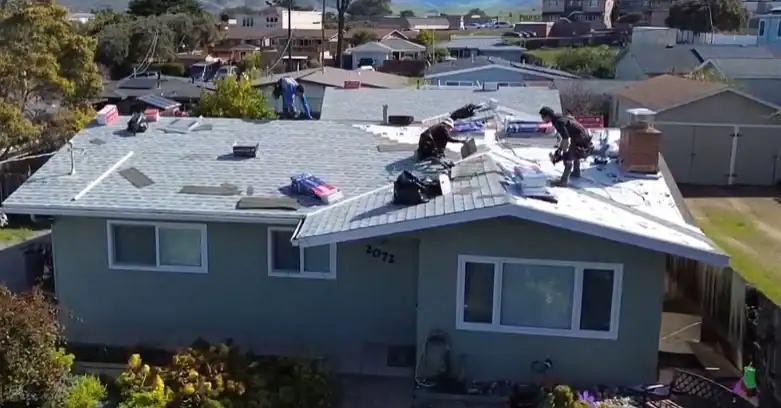
Thinking About Roofing Installation for a Home in Santa Maria California?
Creative Roofing covers each step of putting a new roof on a house, working in Santa Maria California and nearby.
Call 805-723-2381 and we will talk through what the roof needs.
The First Step in a Roofing Project
Before any material is chosen, the existing roof has to be understood, since guessing from the ground leads to surprises later. A proper look covers the slopes seen from the yard and the ones that are not, and each one goes into the notes.
Sun and heat age a roof in ways that rain alone never would, so the wear is rarely even from one side to the next.
Repair, Patch or Replace
A roof can be repaired, partly rebuilt or removed entirely, and the evidence decides what is done, and an honest roofer will say which one applies. Damage should be shown rather than only described, since the plan should make sense to the person paying for it.
Hidden damage found during tear-off is the usual reason a project grows beyond its first outline, and agreeing on the approach in advance beats debating it with the roof open.
Choosing Materials for Your Home
Three families of material cover most residential roofs in this region, but the framing and the slope decide more than preference does. A roof that faces strong sun all afternoon behaves differently depending on its shade, so hold a sample against the house in daylight.
Planning for Rain and Heat
Rain arrives in bursts, and a roof that is open when one comes needs protection, and crews watch the forecast closely. On very hot afternoons shingles soften and workers slow down, and the plan bends to the heat rather than the other way around.
Stripping Down to the Deck
Removal of the old material is where the project gets loud, and magnets and rakes pick up the nails that fall. The deck is checked, mended and made flat for the next layer, and it is easier to fix now than after the roof is finished.
Waterproofing Beneath the Surface
Much of the protection a roof offers is out of sight, and chimneys get particular care. Reaching this stage quickly is a sensible way to protect the interior, and that is worth keeping in mind.
Penetrations and Edges
The places where a roof is interrupted are the places most likely to leak, and reusing old flashing under a new roof often comes back to bite. Vent boots and pipe collars are rubber or lead pieces that wear out before the roof does, and putting in new boots costs little when the roof is already open.
Air Under the Roof
An attic under a hot roof can reach extreme temperatures in summer, and vents at the eaves let cooler air in. Adding vents at random may do little more than cut holes in the roof, and a roofer should be able to describe it simply.
The Last Day on Site
Final cleanup means more than a quick sweep, and that is part of the work, not an extra. Questions are easier to settle while the crew is still on site, and a saved record answers questions nobody has thought to ask yet.
Permits and Paperwork
Depending on the town, a re-roof may need a permit before any material is ordered, and the process is easier when someone handles it for you. Certain hillside and edge-of-town areas follow stricter material rules than the valley floor, so ask how the plan meets the rules for your street. The best paperwork leaves little room for misunderstanding, and it is worth reading it slowly.
Shielding Windows, Plants and Patios
Roof work is hard on landscaping unless it is planned for, and a careful crew sets them before the work begins. Cars parked in the driveway can be struck by falling nails or pieces of shingle, and a little planning prevents most accidents. Inside the house, vibration can shake items from shelves and loosen attic insulation, and a sheet over stored boxes keeps the grit off.
Noise, Neighbors and Daily Life
Timing depends on the size of the roof, the complexity of the layout and the covering chosen, and plan on some slack for the weather. Neighbors appreciate a heads-up before the noise begins, and it is easy to overlook. Household routines bend a little while the work is under way, and that is worth keeping in mind.
A Short List for Comparing Proposals
A sensible first question is what exactly is included in the scope, and anything left vague deserves a follow-up. A proposal that only says shingles or tile is not specific enough, and a good roofer will be glad you asked. A change in scope should be written down and approved before the work continues, and keep the discussion friendly but specific.
Small Habits That Extend Roof Life
A roof needs less attention than most parts of a house, but it needs some, and the best times are before the rainy season and after the first big storm. Overhanging trees drop material that collects in corners and valleys, and it protects the investment you just made. A prompt visit after damage keeps a minor repair minor, and it is far easier to repair than to rebuild.
Choosing the Right Season
A roof replaced on purpose goes better than one replaced in a panic, so a few weeks of lead time is common. Winter work happens too, with crews watching the forecast closely, so do not feel the choice is locked in.
Insulation, Ducts and Cables Under the Roof
The attic is the roof as seen from below, and it often gives the clearest picture of how the roof has been performing, so ask the roofer to look inside as well.
Getting Started in Santa Maria California
Questions about Roofing Installation in Santa Maria California begin with a short phone call, so dial 805-723-2381 and say what you are seeing. The size of the project changes the schedule but not the principle, and that is worth keeping in mind. The decision often feels bigger before the call than it turns out to be, and that is a good place to begin.
Verified

Verified
Verified
Verified
Verified






















