
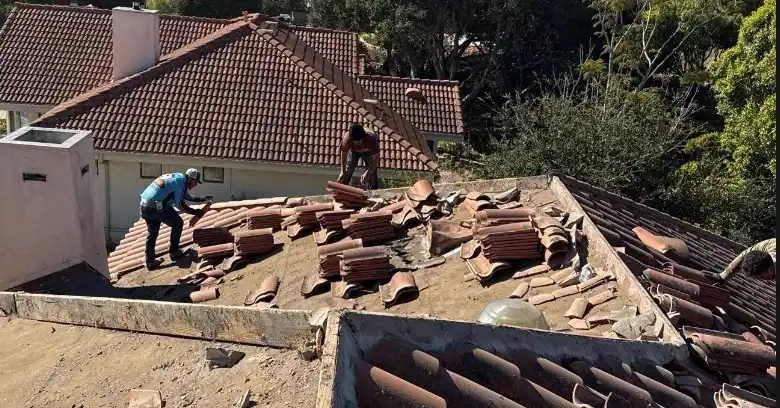
Researching Tile Roofers Throughout Santa Maria California?
Creative Roofing installs, repairs and re-sets the heavy, long-lived coverings found on many homes in the region, serving homeowners in Santa Maria California and beyond.
Reach us at 805-723-2381 and describe the roof and what you are seeing.
What Makes a Roof Out of Fired Clay or Molded Concrete Different
Clay and concrete units are individual pieces hung on a roof, overlapping like fish scales to shed water, and the system works only when every piece is in place. Natural clay holds its color for a very long time, while concrete may need more attention to its finish, and it pays to think it through.
Structure First, Style Second
The framing is the foundation of any heavy roof, and a sagging ridge is a sign of trouble. Replacing a lighter covering with a heavier one without checking the structure is a serious mistake, and a casual answer should give you pause.
Felt, Membranes and Battens
The membrane is out of sight, which is why it is easy to forget, and it ages in the heat trapped under the pieces. Sun and heat trapped under the units bake the underlayment for years, until it dries, cracks and fails, and that is worth keeping in mind.
Sun, Heat and Dry Summers
Long dry summers are easy on the material itself, though the layers underneath age in the heat, so the look holds up. Concrete may chalk or fade after long exposure, and a clean surface may need a sealer or fresh paint, and a little care goes a long way.
Walking on a Fragile Roof
A piece cracks when someone steps on the wrong spot, and many are broken by workers on the roof for other reasons, and replacing a broken piece is a quick job. A short inspection after any work on the roof catches damage early, and the cost of a few replacements is small.
Edges and Intersections
Details where the pieces meet something else are the places most likely to leak, so look at how the work is finished. Repointing or replacing the ridge bedding is a routine part of keeping the roof in good shape, and the repair is far less costly than water damage.
Wind, Fire and the Fastening Question
Though heavy, individual pieces must be fastened properly or they can slide or lift in strong gusts, and edges and ridges deserve the most attention. Keeping the roof and gutters clear of leaves and needles is part of staying safe, and local rules may set requirements for roof assemblies.
Options for a Tired Roof
Re-laying saves the cost of new material and keeps the original look of the house, and a careful inspection answers both questions. Replacing the whole roof is the right call when the pieces themselves are failing, the framing is damaged or the style no longer suits the house, and the structure should be reviewed first.
Ridge Bedding and Edge Details
Foam adhesives are widely used to secure units, particularly in areas where wind is a concern, because they bond quickly and resist uplift, and the best answer is specific to your roof. Replacing these strips during a re-lay is inexpensive, and it improves both fire resistance and cleanliness, and they are often forgotten.
Cleaning a Heavy Roof Without Damaging It
Dark streaks and patches of lichen are common on north faces and under trees, and they are mostly a cosmetic issue, and a clean roof looks years younger. A professional cleaner will explain the method and protect the plants and walls below, and fix any breakage before the rains.
Specifying the Hidden Layer
Basic and premium underlayment differ little in cost when set against the cost of the roof, and why. Self-adhering membrane is often used in valleys, around penetrations and along the eaves, where leaks are most likely to begin, and it pays to think it through.
Planning Equipment Around the Units
Special hooks and flashing kits exist for these roofs, and an installer who uses them keeps the surface watertight, and the answer should be written down. Every person who climbs onto a roof of this kind risks cracking something, so access should be limited to those who know how to walk it, and replacing a unit is far cheaper than repairing the leak. A valley that is clogged with leaves and needles can send water sideways under the units, which they are not designed to handle, and a ladder and a soft broom are often all you need.
Two Materials, Two Personalities
Between the two, concrete is usually the more economical, while clay is prized for its authentic look and its long record of service, and that is worth keeping in mind. Flat profiles give a contemporary look and are often used on modern houses, while barrel shapes suit traditional architecture, and a good supplier will lend a few.
What Should Be Written Down
A thorough proposal names the material, the underlayment, the flashing and the method of attachment, and the details are what you are really buying. A roofer who has re-laid many roofs knows the pitfalls and can describe them without hesitation, and keep notes to compare later.
Planning a Re-Lay Step by Step
A re-lay begins with the units being lifted in sections, stacked carefully and sorted so that sound pieces are kept and broken ones are set aside for replacement, and the whole process takes patience.
Preparing for Dry Winds and Embers
Clearing leaves and needles from valleys, gutters and the back of chimneys removes fuel that could ignite from a flying ember, and a tidy roof is a safer roof.
Documenting the Work for the Future
A note of the underlayment type, the flashing metal and the fastening method helps any roofer who works on the roof later, and store them with the house papers.
Next Steps for Your Roof
A conversation about Tile Roofers in Santa Maria California usually starts with the age and condition of the roof, so dial 805-723-2381 when it suits you. Planning ahead usually leads to better choices than reacting to an emergency, and the roof will tell the story once someone looks.
Verified

Verified
Verified
Verified
Verified






















