
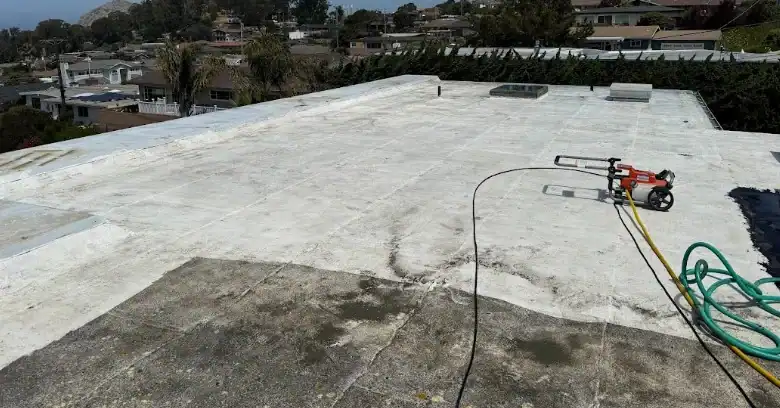
Thinking About TPO Membrane Roofing Installation Around Santa Maria California?
Creative Roofing installs membranes, coatings and built-up layers on roofs that barely shed water on their own, from Santa Maria California out to the surrounding area.
Ring 805-723-2381 to arrange a visit to look at the roof.
Why Flat Roofs Need Special Care
Where a pitched roof sheds rain in seconds, a level roof holds it for hours or days, and the quality of the seams decides everything. A pinhole in a membrane or a gap in a seam lets in water that sits and keeps seeping, and the cost of a mistake is paid in repairs.
Membranes, Built-Up Layers and Coatings
Thermoplastic membranes are light-colored, reflective and joined by heat into one watertight skin, so a damaged area can be fixed cleanly. Rubber membranes are black or white, and the seams are joined with tapes or adhesives, and the seam tape is a point to watch over time. The multiple plies mean that a flaw in one layer is backed up by the next, and the system is heavy compared with single-ply.
Seams, Edges and Where Leaks Start
The open field of a membrane is usually the toughest part of the whole system, so the inspection follows a set order. Parapet caps and copings protect the top of the wall and must be sound, and it pays to think it through.
Ponding, Drains and Rain Bursts
Rain here often comes in sudden bursts that test every flat roof drain, and a clogged outlet can overload a roof. Adding drains or enlarging scuppers helps when the old ones were undersized, and the improvement is permanent.
Sun, Heat and Reflective Surfaces
Dark surfaces can reach temperatures much higher than the surrounding air, and it is easy to overlook. A white or reflective coating can lower the surface temperature and protect the membrane beneath, and the benefit depends on the existing roof.
Anything That Pokes Through or Sits on Top
Every pipe, vent and curb through a flat roof is a place where the membrane has to be cut and sealed, and replacing a worn collar is a quick job. A roof used as a patio or deck needs a protective layer or pavers, and a little care goes a long way.
Options for an Aging Flat Roof
A flat roof with a few leaks and a sound membrane can often be repaired for a fraction of the cost of replacing it, and temporary fixes should be called what they are. Testing for moisture shows what the roof can accept, and wet insulation rules out a quick fix. Removing the old layers lets the deck be inspected and any damaged wood replaced, and compare more than one proposal.
Residential Low-Slope Roofing
Many homes combine a pitched main roof with flat sections at the back or the sides, and the two meet in a joint that needs careful flashing, and the wrong material on a flat roof will leak. Leaks that appear in the room next to an addition often trace back to this single joint, and describe where the stain appears. Pavers, decking and planters laid over a membrane protect it from the sun but hide it from view, so involve the roofer early.
What Sits Between the Roof and the Ceiling
Insulation values and reflective finishes work together to keep the space below comfortable, and it is easy to overlook. Cutting a small test square is another way to check, and it is sealed again as part of the same visit, and the map is a useful record.
Keeping a Flat Roof in Shape Through the Year
The best time to look at a flat roof is at the end of the dry season, when leaves and debris have piled up and the rains are about to test every drain, and call a roofer if anything looks suspicious. Noting the date and the weather when a leak appears helps the roofer find the cause, and cover furniture beneath a drip.
Perimeter Details and Uplift
After a windy spell it is worth checking the perimeter from a ladder for loose trim, lifted seams and curling edges, and a little care goes a long way. Ballasted roofs hold the membrane down with a layer of smooth stone or pavers instead of glue or fasteners, and the weight is part of the design, and replace what has blown away. Walkways, curbs and equipment supports need to be flashed and fastened as part of the membrane, and the details on a crowded roof take real time to do properly, so be there for the visit if you can.
Openings That Need Their Own Waterproofing
Skylights and roof hatches sit on raised curbs that are flashed into the membrane, and the quality of that flashing decides whether they leak, and no skylight should be roofed over without a plan. Flexible parts crack in strong sun over a few seasons, which is why penetrations leak long before the membrane does, and every opening is one more detail to watch. Overflow scuppers set slightly higher than the main drains act as a safety valve when the primary outlet is blocked, so check them often in the rainy months.
What the Paperwork Should Say
The written scope should list the flashing details, the edge metal and the drainage work, and the details are worth a closer look. Find out how drainage will be addressed and whether tapered insulation is included, and notes help you compare.
Keeping Disruption Small
Workers on a low-slope roof often arrive early, because the surface heats up quickly and some products behave better in the cool of the morning, and that is worth keeping in mind.
Common Worries Before a Flat Roof Project
The idea that level roofs always give trouble comes from poorly detailed examples, because careful work on seams and drains makes a real difference, so do not hesitate to ask.
Tell Us What You Are Dealing With
A conversation about TPO Membrane Roofing Installation in Santa Maria California usually starts with the type and age of the roof, so dial 805-723-2381 when it suits you. Planning ahead usually leads to better choices than reacting to an emergency, and the first step is just a phone call.
Verified

Verified
Verified
Verified
Verified






















