
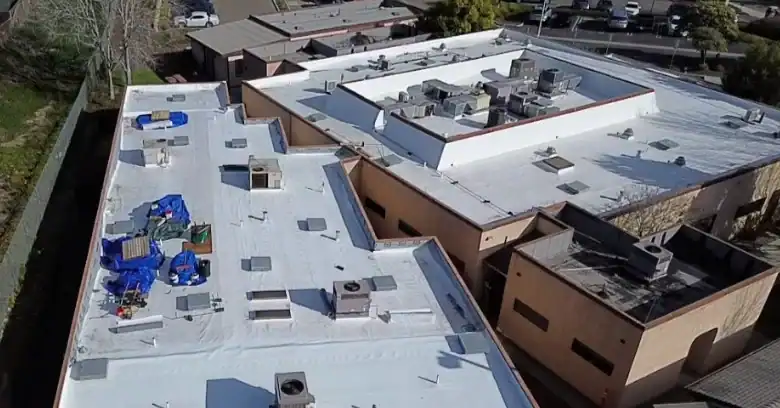
Looking Into TPO Membrane Roofs Near Santa Maria California?
Creative Roofing installs membranes, coatings and built-up layers on roofs that barely shed water on their own, throughout Santa Maria California and the neighboring communities.
Call 805-723-2381 to talk through repair, coating or replacement.
How a Flat Roof Differs From a Pitched One
Where a pitched roof sheds rain in seconds, a level roof holds it for hours or days, so shingles are never the answer. A pinhole in a membrane or a gap in a seam lets in water that sits and keeps seeping, and it pays to think it through.
Types of Flat Roofing
Heat-welded sheets such as TPO are among the most popular choices for new flat roofs, and a little care goes a long way. EPDM is a synthetic rubber sheet that is glued or mechanically fastened and has a long record on flat roofs, and the system suits many residential flat roofs. Built-up roofing, often called BUR, layers hot or cold asphalt with reinforcing fabric and finishes with gravel or a cap sheet, and repairs can be made in place.
Seams, Corners and Terminations
The open field of a membrane is usually the toughest part of the whole system, and that is worth keeping in mind. Termination bars and sealant hold the top edge of the membrane against the wall, and a small bead of sealant in time prevents a big repair.
Standing Water Is a Warning
A roof that holds puddles is telling you about a low spot or a blocked drain, and a little care goes a long way. Adding drains or enlarging scuppers helps when the old ones were undersized, and a roofer can map the low areas.
Sunshine, Heat and Aging
A flat roof faces the sky all day, and the sun heats it far more than a steep roof ever experiences, and the movement stresses seams and fasteners. A white or reflective coating can lower the surface temperature and protect the membrane beneath, and a coating cannot rescue a roof that is wet inside.
What Happens Around Machinery
Skylights and hatches add edges that need careful flashing, and plugging with caulk is only a stopgap. Tools, ladders and dropped objects can cut a sheet, so care is required, and a little care goes a long way.
Matching the Work to the Roof
A flat roof with a few leaks and a sound membrane can often be repaired for a fraction of the cost of replacing it, and photographs help. When the surface is simply worn, a coating or an overlay can refresh it without a full tear-off, and an honest answer starts with a survey. Starting fresh gives the best foundation for another long stretch of service, and compare more than one proposal.
Residential Low-Slope Roofing
Residential low-slope roofs turn up over additions, covered patios, carports and contemporary houses designed with clean horizontal lines, and it pays to think it through. Leaks that appear in the room next to an addition often trace back to this single joint, and a little care goes a long way. Roof decks and patios built over living space need a waterproofing layer under the finished surface, and a failure there can be expensive to reach, and avoid fastening anything through the membrane.
Insulation, Slope and Comfort Under a Level Roof
Rooms beneath a flat roof often feel warmest in late afternoon, when the surface has soaked up a full day of sun, and the combination is worth planning. Replacing only the saturated sections can restore performance while leaving the dry parts in place, and that is often cheaper than a full tear-off.
A Simple Maintenance Calendar
Drains, scuppers and gutters should be cleared first, since blocked outlets cause more damage than any other single fault, and call a roofer if anything looks suspicious. Standing water that remains for days after rain is worth reporting, even if no leak has appeared yet, and it pays to think it through.
Edges Take the Brunt
Seasonal gusts pull hardest at the perimeter of a low-slope roof, so the fastening pattern is tighter along the edges than in the middle of the field, so ask how the edges will be attached. Raking the gravel back into an even layer is a routine job that keeps the protection continuous, and the stone should be kept out of the drains. A careful roofer walks the roof beforehand and counts every penetration, then includes them all in the proposal, and write everything down.
Everything That Breaks the Surface
A curb lifts the opening above the level of standing water, which is the main reason it exists, and the membrane must climb it and be sealed at the top, and expect specific answers. A roofer who plans the layout of penetrations before the work starts usually delivers a drier roof, and it pays to think it through. Drains and scuppers are also penetrations, and the flashing around them has to be watertight while still letting the water through quickly, and clear them after storms.
What the Paperwork Should Say
Look for the manufacturer system and the type of seam, whether welded, glued or taped, so ask for the details in writing. Ask how the crew will test the seams, how the old roof will be disposed of and how the interior will be protected, so write down what each company says.
Keeping Disruption Small
The crew needs clear access to the roof, a place to set up the equipment and a path for removing old material without crossing living areas, and a short conversation beforehand covers the details.
Questions Owners Often Ask About Level Roofs
Plenty of owners assume a membrane has to be replaced at the first sign of wear, when a repair or a coating would have done the job, and an honest opinion is the goal.
Ready to Look at Options
Those comparing TPO Membrane Roofs in Santa Maria California can reach us by phone, so use 805-723-2381 to set up the next step. Even a quick call can clear up questions about membranes, coatings and timing, so reach out whenever you are ready.
Verified

Verified
Verified
Verified
Verified






















