
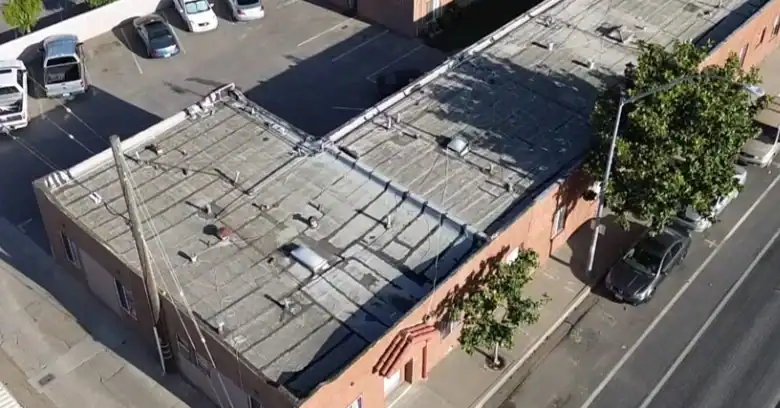
Planning Commercial Roofs for a Building in Central Coast California?
Creative Roofing works on the roofs of shops, offices, warehouses and apartment buildings, from Central Coast California to the neighboring communities.
Call 805-723-2381 to start planning the work with someone who knows low-slope roofs.
What Sets a Commercial Roof Apart
Most commercial buildings have low-slope roofs, which shed water slowly and carry equipment, and the tradesmen who work on them need specific experience. A low-slope roof has to be sealed, not just overlapped, and the quality of those seams decides how long it lasts.
A roof leak above a store, warehouse or office damages more than the ceiling, and regular checks pay for themselves.
The Membranes Used on Flat Roofs
Many newer commercial roofs use a single-ply membrane over insulation, so the choice affects how repairs are done later. Layered bitumen roofs remain common on buildings of every age, and it is easy to overlook. Spray foam and fluid-applied coatings are also used in some situations, and each option has conditions where it works best.
Where the Rain Goes
Ponding water speeds up wear and adds weight the structure has to carry, so inspections are best scheduled in late summer. Interior drains, edge scuppers and perimeter gutters each have their own failure points, and the first heavy rain turns it into a plug.
Working Around Machinery
Pipes, conduits and curbs interrupt the membrane in many spots, and many leaks start there rather than in the open field. Repeated traffic on an unprotected membrane leaves it thin and scuffed, and it is easy to overlook.
Heat Over a Working Building
A flat roof takes the full force of the sun for most of the day, and the surface slowly dries, chalks and cracks. Cooling load is one of the practical reasons building owners choose a reflective roof, so ask a contractor to explain what to expect.
Looking After a Roof Between Repairs
A planned visit twice a year is a common routine for building owners, and it gives you a record to show a buyer or lender. A visit usually covers drains, flashing, seams, curbs and the condition of the surface, and the results show up in fewer emergency calls.
Deciding What to Do With an Aging Roof
Moisture surveys can show how much of a roof is truly wet inside, and testing is better than guessing. Replacing only the surface over saturated insulation hides the problem without solving it, and it is better to know the truth sooner.
Tenants, Customers and Noise
Roofers often work in phases so a store can stay open, and noisy work can be timed around business hours. Safety at the edge of a roof is a serious matter for the crew and for people below, and that is a reasonable thing to discuss in advance.
Comparing Commercial Roofing Proposals
The scope of work should list drains, flashing, curbs and any insulation to be added, and the details are worth a closer look. A contractor should be willing to explain how the work will be checked while it is in progress, and it is worth requesting before the work starts.
Where the Water Really Gets In
Water travels along decking, insulation and ductwork before it shows up on a ceiling, and that is worth keeping in mind. The edges and the corners are where a flat roof tends to give way first, so the inspection begins at the details. Moisture scans and core samples can show how far water has spread inside the roof, and the cost is small next to a wrong decision.
How Wind Affects a Flat Roof
The edges and corners of a flat roof take the highest wind loads, and loose metal trim is an early warning. Edge metal, copings and fascia need to be fastened securely and sealed at the joints, so it deserves a look after any windy spell.
Terminations and Transitions
Parapets are the short walls that rise around the edge of many commercial roofs, and a gap at the top lets water run down behind the membrane. Mortar joints and wall coatings are part of the roof story, and a repair there often needs more than a bead of caulk.
Restoring a Roof Without Tearing It Off
Roof coatings are liquid products rolled or sprayed onto an existing roof to form a protective skin, and a little care goes a long way. Applying a coat over a roof that is already saturated traps moisture and hides the problem, and an honest contractor will say so.
Distribution Centers and Shopping Centers
Big projects need a plan for storage, staging and phasing, and the schedule can run many weeks. Shopping centers and strip malls share roofs across several tenants, so the plan should name each area. Roofs over housing need extra care to keep people safe and informed, and good communication is part of the job.
Spending Wisely on a Flat Roof
People who set aside funds for roof work avoid scrambling when the time comes, and a good report gives a reasonable range of years remaining. Quality materials and careful installation tend to pay back over time, and weigh the trade-offs honestly.
What Sits Between the Deck and the Membrane
Most commercial roofs have rigid insulation boards between the deck and the waterproofing, and it is easy to overlook. A thin board over the insulation spreads loads and gives the membrane a better base, and the added cost is modest. Angled boards direct water toward drains and reduce ponding, and it is a good time to ask about it.
Wind, Rain and Seasonal Readiness
Property managers who inspect their roofs before the rainy season avoid most of the emergency calls that come with the first heavy downpour, so schedule it like any other maintenance.
Start With a Conversation
A conversation about Commercial Roofs in Central Coast California usually starts with the age and type of the roof, and the number is 805-723-2381. A roof that is checked before a failure is easier to plan around, and the details are worth a closer look. Most building owners find that a short call clears up more than weeks of wondering, and the roof will show the rest. Tenants, lenders and insurers all take an interest in the state of a roof, and the paperwork can be kept with the building file.






















