
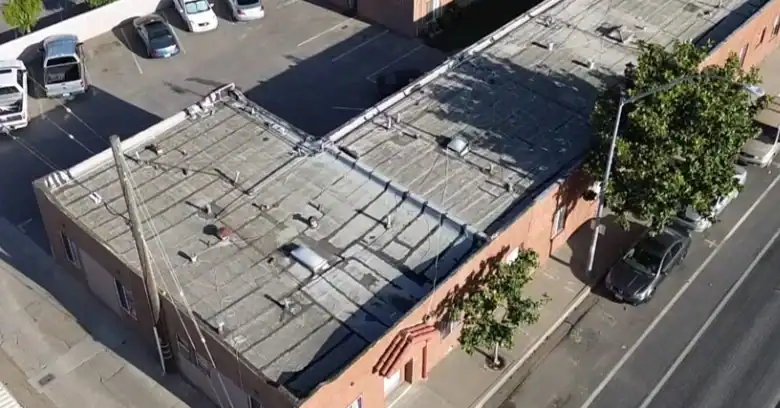
Considering Commercial Roof Services in Central Coast California?
Creative Roofing looks after the roof over a business, from a small storefront to a large building, for properties in Central Coast California and the surrounding area.
Phone 805-723-2381 to arrange a visit to the property.
Commercial Roofs Are Not Bigger Houses
A roof over a business is usually flat or nearly flat, and that changes almost everything about it, so the finer points carry the weight. Waterproofing on a low slope comes from the sheet itself rather than from the angle, and a small gap can become a large leak.
The cost of a failed roof is often higher inside the building than on top of it, so planning ahead is the practical approach.
What Building Roofs Are Made Of
Many newer commercial roofs use a single-ply membrane over insulation, and each family has its own seam method. Older buildings often have built-up roofing, with several layers laid over one another, and the surface can be renewed with a coating or cap. Coatings over an existing sound roof can extend its life without a tear-off, and the right answer depends on what is already on the roof.
Where the Rain Goes
Ponding water speeds up wear and adds weight the structure has to carry, so inspections are best scheduled in late summer. Interior drains, edge scuppers and perimeter gutters each have their own failure points, and an overflow scupper is a backup that should never be blocked.
Working Around Machinery
Pipes, conduits and curbs interrupt the membrane in many spots, and many leaks start there rather than in the open field. A roof that has regular service visits needs protection along the paths, and a few walkway pads cost little compared with a patch.
How the Climate Affects a Building Roof
Long dry summers expose a membrane to strong ultraviolet light month after month, and that is why white and light membranes are so common. A cooler roof surface lowers the strain on air conditioning in hot months, so ask a contractor to explain what to expect.
Inspections and Upkeep
Scheduled inspections catch small problems before they reach the ceiling, and a little care goes a long way. A visit usually covers drains, flashing, seams, curbs and the condition of the surface, and the details are worth a closer look.
When a Roof Reaches the End of Its Life
The right answer depends on how much of the system is still dry and sound, and it is easy to overlook. Replacing only the surface over saturated insulation hides the problem without solving it, and the cost of delay grows with every storm.
Keeping the Business Running
A good plan keeps customers and staff away from the areas under construction, so the schedule is shared in advance. Barriers and warning lines protect pedestrians from falling tools and materials, and that is a reasonable thing to discuss in advance.
Apples to Apples
A clear commercial proposal names the system, the thickness and the method of attachment, and the difference is often in what is not mentioned. A record of the materials and details used helps with later maintenance, so make it part of the agreement.
Leak Detection on a Flat Roof
The wet patch indoors only tells you where the water finally escaped, and guessing leads to repairs in the wrong place. The edges and the corners are where a flat roof tends to give way first, and fixing the cause stops the leak for good. A survey gives facts to base a decision on, and it helps explain the situation to the people who sign the checks.
How Wind Affects a Flat Roof
Wind lifts a flat roof from the edges and corners first, so careful edge details are a mark of good work. Edge metal, copings and fascia need to be fastened securely and sealed at the joints, and the work is usually quick.
Walls, Parapets and Flashing Details
A parapet is an extra wall that needs its own waterproofing on both faces, so the height and the termination are both important. Mortar joints and wall coatings are part of the roof story, and ignoring it can undo a good roof.
Fluid-Applied Systems
A coating can seal small cracks, reflect sunlight and slow the aging of the surface, and the preparation matters as much as the product. Coatings cannot fix a roof with wet insulation or widespread damage, and the details are worth a closer look.
Distribution Centers and Shopping Centers
Warehouses and distribution buildings often have very large, uninterrupted roofs, and the schedule can run many weeks. Multi-tenant buildings call for clear communication with every occupant, and tenants appreciate being kept informed. Roofs over housing need extra care to keep people safe and informed, and noisy work is timed with consideration.
Capital Planning for Building Owners
Thinking about the roof as a recurring cost makes budgeting easier, so the information from maintenance visits feeds the budget. A cheaper system that fails sooner is not a bargain, and weigh the trade-offs honestly.
Insulation and Cover Boards
Thick boards of insulation do much of the work of holding heat in or out, so keeping them dry is essential. A sturdier base means fewer punctures and longer service, so many owners include it. Tapered insulation can create slope on a roof that is otherwise dead flat, and it pays to think it through.
Late-Summer Readiness Checks
A pre-season checklist includes clearing drains and scuppers, checking seams and flashing, and photographing the condition of the surface, and share the results with the owner.
Talk to Us About Your Building
A conversation about Commercial Roof Services in Central Coast California usually starts with the age and type of the roof, with 805-723-2381 ready whenever you want to talk. There is no pressure in asking questions about a roof, and the first step is a simple phone call. People who manage property tend to value a straight answer about the roof above all, and it is easy to overlook. Tenants, lenders and insurers all take an interest in the state of a roof, and written records show the property has been cared for.






















