
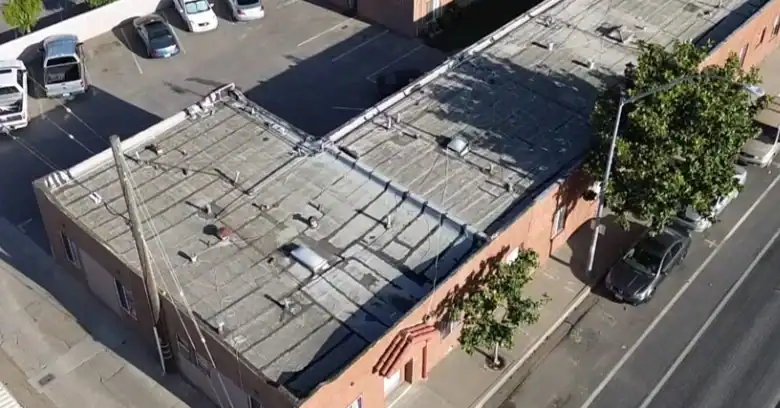
Comparing Commercial Roof Contractors Serving Santa Barbara California?
Creative Roofing deals with the flat and low-slope roofs that sit above working buildings, for properties in Santa Barbara California and the surrounding area.
Contact us at 805-723-2381 to arrange a visit to the property.
How Building Roofs Differ
Low slopes make a commercial roof a different problem from a house roof, and the materials are chosen with that in mind. Waterproofing on a low slope comes from the sheet itself rather than from the angle, so installation craft counts for a great deal.
A roof leak above a store, warehouse or office damages more than the ceiling, so planning ahead is the practical approach.
What Building Roofs Are Made Of
Single-ply membranes such as TPO, PVC and EPDM are among the most common coverings on commercial buildings, and each family has its own seam method. Asphalt-based systems are proven and repairable but heavier than single-ply sheets, and they suit many situations where traffic and equipment are heavy. Coatings over an existing sound roof can extend its life without a tear-off, and that is worth keeping in mind.
How Water Leaves a Building Roof
Ponding water speeds up wear and adds weight the structure has to carry, and ignoring it tends to shorten the life of the membrane. Drains, scuppers and gutters collect water and carry it away from the building, so clearing drains is the cheapest maintenance on the list.
What Sits on the Roof
A roof with a lot of equipment has a lot of penetrations to maintain, and sealants alone are rarely a lasting fix. Foot traffic that is not planned for wears the roof where it matters most, and a few walkway pads cost little compared with a patch.
Reflective Roofs and Cooling Costs
Sun and heat are the steady stresses on a commercial roof in this part of California, and that is worth keeping in mind. Owners often look at reflective roofing for the savings on cooling, and local rules may favor reflective surfaces on some projects.
Inspections and Upkeep
Roof maintenance is a habit more than a project, and a little care goes a long way. Small repairs made early keep water out and extend the life of the membrane, and the details are worth a closer look.
Repair, Coat or Replace
Not every aging roof needs a full tear-off, and it is easy to overlook. Wet insulation stops insulating and adds heavy weight to the structure, and that is worth keeping in mind.
Working in an Occupied Building
Roofers often work in phases so a store can stay open, so the schedule is shared in advance. Fall protection is required on commercial roofs, and a professional crew uses it, and a safe site is also an efficient one.
Comparing Commercial Roofing Proposals
Two proposals that look alike on the surface can differ a great deal in the details, and the details are worth a closer look. Ask how the work will be inspected and what documentation will be provided at the end, and a future owner will thank you.
Finding the Source of a Commercial Leak
On a flat roof the spot where water drips inside is rarely the spot where it came in, and the roofer has to follow the evidence across the roof. Penetrations and terminations are the usual suspects, and the open field is checked last. Knowing where the water is saves guesswork and wasted effort, and a clear map makes planning easier.
Perimeter Details and Attachment
Wind lifts a flat roof from the edges and corners first, and loose metal trim is an early warning. Perimeter metal is the first line of defense against uplift, and a small fix now prevents a large one later.
The Seams That Join Roof to Wall
The junction of roof and wall is where movement and water meet, and a gap at the top lets water run down behind the membrane. Sealants at the top of a flashing dry out in strong sun and need redoing, and ignoring it can undo a good roof.
Coatings Explained
A coating can seal small cracks, reflect sunlight and slow the aging of the surface, and a little care goes a long way. A coating is not a cure for a failed roof, and the details are worth a closer look.
Distribution Centers and Shopping Centers
Large roofs pose logistical problems that small ones never do, and the schedule can run many weeks. Common areas, walkways and canopies add their own details, and the owner usually coordinates the work. Residents expect notice before work begins above their homes, so schedules are shared in writing.
The Long View on Roof Spending
Treating the roof as an asset with a lifespan is the smart approach, and a little care goes a long way. Quality materials and careful installation tend to pay back over time, and the details are worth a closer look.
What Sits Between the Deck and the Membrane
The insulating layer is part of the roof system, not an afterthought, and wet boards lose most of their value. A sturdier base means fewer punctures and longer service, and the added cost is modest. A tapered plan can be drawn for any roof and installed with the new membrane, and the drawings show where the water will go.
Late-Summer Readiness Checks
Rooftop units should be examined for loose panels, failed seals and missing fasteners, since a stray panel can let rain into the system, and a dry building is the reward.
Ready to Look at the Roof
A conversation about Commercial Roof Contractors in Santa Barbara California usually starts with the age and type of the roof, so use 805-723-2381 to set up the next step. Calling sooner rather than later keeps repair costs and disruption smaller, and the first step is a simple phone call. A visit to the property turns a general worry into a specific plan, so call when you have a moment. The history of a roof matters when a building is sold or refinanced, and the paperwork can be kept with the building file.
Verified

Verified
Verified
Verified
Verified






















