
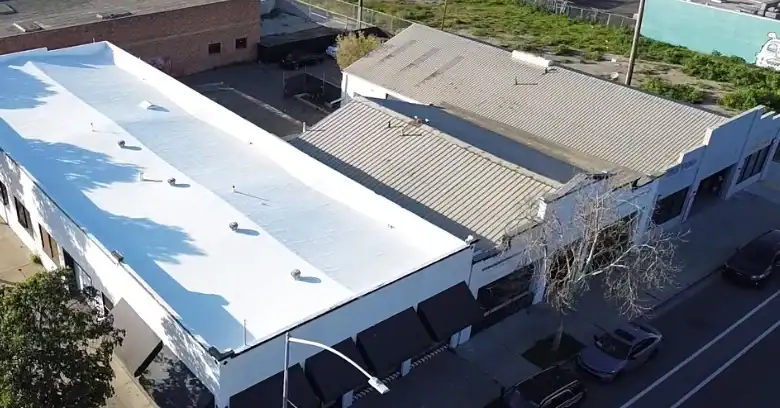
Considering Commercial Roofing Companies Near Me in Central Coast California?
Creative Roofing looks after the roof over a business, from a small storefront to a large building, from Central Coast California to the neighboring communities.
Ring 805-723-2381 and describe what is happening up there.
How Building Roofs Differ
Most commercial buildings have low-slope roofs, which shed water slowly and carry equipment, and the materials are chosen with that in mind. Water that stays on a roof for long finds every weakness in the membrane, and a small gap can become a large leak.
A roof leak above a store, warehouse or office damages more than the ceiling, and that makes prevention worth more than repair.
Types of Commercial Roofing
Single-ply membranes such as TPO, PVC and EPDM are among the most common coverings on commercial buildings, so the choice affects how repairs are done later. Modified bitumen sheets are heated or adhered in overlapping layers to make a durable surface, and the layers add redundancy. Standing seam metal panels cover warehouses, schools and retail buildings, and each option has conditions where it works best.
How Water Leaves a Building Roof
Standing water is the most common enemy of a low-slope roof, and a small amount of tapered insulation can fix ponding. Debris collects around drain strainers after the dry months and blocks them in the first storm, so clearing drains is the cheapest maintenance on the list.
Rooftop Equipment and Penetrations
Every unit on a roof is a potential entry point for water, so those details deserve the most attention in an inspection. A roof that has regular service visits needs protection along the paths, so the best owners plan the routes in advance.
Sun, Heat and Energy Use
Sun and heat are the steady stresses on a commercial roof in this part of California, and that is worth keeping in mind. Light-colored surfaces bounce much of the sunshine back instead of absorbing it, and local rules may favor reflective surfaces on some projects.
Looking After a Roof Between Repairs
Routine care costs a fraction of an emergency repair, and the best times are before and after the rainy season. Small repairs made early keep water out and extend the life of the membrane, so the cost is modest.
Choosing the Right Level of Work
Moisture surveys can show how much of a roof is truly wet inside, and a good contractor will show you what they found. Once water has spread through the layers, replacement is the honest answer, and it is better to know the truth sooner.
Keeping the Business Running
Many commercial roofs are replaced in sections so that the building is never left open, so the schedule is shared in advance. Access to the roof should be controlled while the work is in progress, and plan for parking and deliveries as well.
Comparing Commercial Roofing Proposals
Two proposals that look alike on the surface can differ a great deal in the details, and the difference is often in what is not mentioned. The paperwork at the end of a job is as important as the work itself, and keep it with the building records.
Tracing a Leak Over a Business
A stain on a tile may be many feet from the opening in the membrane, and that is worth keeping in mind. Most leaks start at a detail, not in the broad flat area of the membrane, and a good survey starts with those. A survey gives facts to base a decision on, so it is worth asking about on a larger roof.
How Wind Affects a Flat Roof
A roof that is poorly attached shows the problem at its edges, and the perimeter needs extra fastening. Loose trim lets wind get under the membrane and peel it back, and it is easy to overlook.
Terminations and Transitions
A parapet is an extra wall that needs its own waterproofing on both faces, and that is worth keeping in mind. Cracks in a parapet cap or the wall below can feed water into the roof system, and a repair there often needs more than a bead of caulk.
Fluid-Applied Systems
Coating is a way to protect a roof before it fails rather than after, and the preparation matters as much as the product. Coating over a wet roof is a common and costly mistake, and ask for the test results first.
Scale Changes the Planning
Big projects need a plan for storage, staging and phasing, and the schedule can run many weeks. Multi-tenant buildings call for clear communication with every occupant, and that is worth keeping in mind. The roof of an apartment building protects many households at once, so schedules are shared in writing.
Thinking About Cost Over the Life of the Roof
People who set aside funds for roof work avoid scrambling when the time comes, so the information from maintenance visits feeds the budget. Quality materials and careful installation tend to pay back over time, and the details in the scope explain the difference.
Thermal Layers on a Flat Roof
The insulating layer is part of the roof system, not an afterthought, and replacing them is part of many re-roof projects. Extra layers under the membrane help it resist wear from equipment and walking, and it is worth asking about. A tapered plan can be drawn for any roof and installed with the new membrane, and it pays to think it through.
Wind, Rain and Seasonal Readiness
Rooftop units should be examined for loose panels, failed seals and missing fasteners, since a stray panel can let rain into the system, and share the results with the owner.
Start With a Conversation
A conversation about Commercial Roofing Companies Near Me in Central Coast California usually starts with the age and type of the roof, so use 805-723-2381 to set up the next step. Even a quick conversation can clarify what the building needs, and the first step is a simple phone call. Putting off a roof decision seldom makes it simpler, and the roof will show the rest. Property managers often juggle many buildings and appreciate clear, written answers, and that starts with a good first inspection.






















