
Thinking About Roof Services Around San Luis Obispo California?
Creative Roofing takes a roofing job from the first look to the last sweep of the yard, working in San Luis Obispo California and nearby.
Dial 805-723-2381 and tell us what has you thinking about the roof.
Where a Roofing Job Begins
Every roofing job starts with someone climbing up to see what is actually there, because the rest of the plan rests on the findings from that look. Photographs taken on that first visit become the record for everything that follows, and that is the evidence a sensible plan is built on.
Long dry summers and strong sun leave their mark on nearly every roof in California, so the wear is rarely even from one side to the next.
Repair, Patch or Replace
Whether to fix or replace comes down to the condition of the layers beneath the surface, and an honest roofer will say which one applies. Ask to see the problem areas, either in photographs or from the ladder, and the answer tells you a lot.
Hidden damage found during tear-off is the usual reason a project grows beyond its first outline, and it helps to know that before the work begins.
Picking a Roof Covering
Most houses here wear one of three coverings, and the choice shapes everything else, and the style of the neighborhood often plays a part. Lighter colors reflect more of the summer sun, while darker ones soak it up, so do not settle the question from a photograph.
When the Crew Can Work
Roof work is easiest to schedule in the long dry stretch between rains, and it pays to think it through. Roof surfaces get hot enough in July to change how materials behave, and finishing early keeps people and materials in better shape.
Stripping Down to the Deck
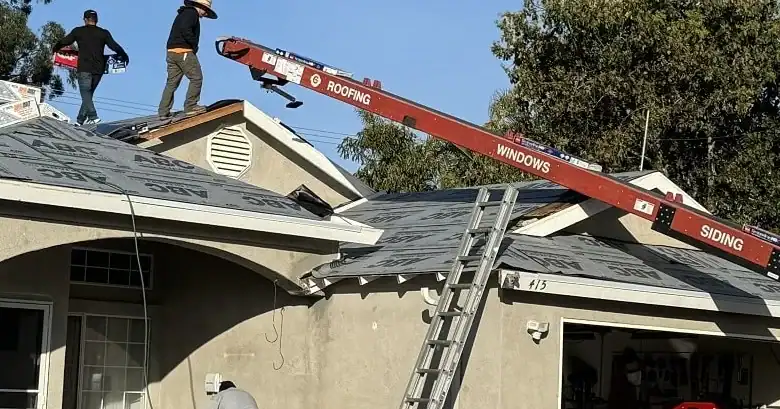
The existing covering is stripped away and the deck is left exposed for inspection, and debris goes into a bin or trailer rather than onto the lawn. Repairs to the deck happen now, before anything new is installed, and it is easier to fix now than after the roof is finished.
The Hidden Layers
The first layer laid over the deck is a barrier against moisture, and it is easy to overlook. Once the underlayment is down, the house is considered dried in, and that is worth keeping in mind.
Penetrations and Edges
Chimneys, skylights, vent pipes and walls all need flashing worked into the roof, and it pays to think it through. The seal around a vent pipe rarely lasts as long as the surface around it, and putting in new boots costs little when the roof is already open.
Ventilation in a Warm Climate
A roof without enough ventilation bakes the attic and everything stored in it, since warm air rises on its own when it is given a path. Adding vents at random may do little more than cut holes in the roof, and the answer should be part of the proposal.
Wrapping Up
The job is not over until the yard looks like a yard again, and a magnetic sweep picks up stray nails. Keeping a short record of the materials used helps with later maintenance, and a saved record answers questions nobody has thought to ask yet.
What the City Wants to See
Local requirements shape the job before the first shingle is touched, and a little care goes a long way. Certain hillside and edge-of-town areas follow stricter material rules than the valley floor, since the covering you pick has to be one the town accepts. A clear proposal lists what will be removed, what will be installed and what happens if the deck needs work, so compare any two side by side.
Looking After Your Property During the Work
A busy work site needs boundaries, and a careful crew sets them before the work begins. Children and animals should stay clear of the yard while the work is underway, and a little planning prevents most accidents. Hammering on the deck above can rattle a ceiling and drop dust into the rooms below, so it is wise to take down fragile pictures first.
What the Household Should Expect
Timing depends on the size of the roof, the complexity of the layout and the covering chosen, so ask for the expected start and finish up front. Informing nearby households is a courtesy that pays off, and it is easy to overlook. The loudest stretch is the tear-off, and it passes quickly, and a plan for the loud days makes them easier.
A Short List for Comparing Proposals
Ask how the crew protects the house when rain is in the forecast, and it pays to think it through. The product line matters as much as the type of covering, and it should be written on the proposal. Surprises are normal, and a process for them is a sign of a well-run job, and it is better to know in advance.
Small Habits That Extend Roof Life
A roof that is never looked at tends to fail when it is least convenient, and it is easy to overlook. Trim branches that touch or hang over the roof, so it is worth doing before summer ends. Early attention to a leak is almost always cheaper than late attention, so do not wait for the next storm.
Spring, Summer or Fall
Many homeowners wait until a leak appears before they think about a roof, and the schedule fills quickly once the rains end. Early fall is popular because the weather is still dry and the heat has eased, so do not feel the choice is locked in.
Roof Work and Your Attic
When the old roof comes off, the crew sees the underside of the deck, and stains, rust on nail tips and darkened wood tell the story of past leaks, and it is easy to overlook.
Getting Started in San Luis Obispo California
A call is the simplest way to begin planning work in San Luis Obispo California, so dial 805-723-2381 and say what you are seeing. Whether the job is a small section or a whole house, the questions are much the same, and we are glad to talk through the options. A short conversation can turn a vague worry into a clear plan, and nobody will rush you.
Verified

Verified
Verified
Verified
Verified






















