
Weighing Built Up Roofs Near Central Coast California?
Creative Roofing repairs and replaces the level roofs that cap porches, patios, shops and modern homes, for properties in Central Coast California and the towns around it.
Dial 805-723-2381 and describe what you are seeing up there.
A Roof With Almost No Slope
Low-slope roofs rely on a continuous waterproof skin because gravity does little to clear the surface, so shingles are never the answer. Standing water multiplies every defect and speeds up aging, and look at examples of their finished work.
A Guide to the Main Options
The seams on thermoplastic sheets are fused rather than glued, which makes them strong, so a damaged area can be fixed cleanly. The big rolls of rubber cover large areas with few seams, and the seam tape is a point to watch over time. The multiple plies mean that a flaw in one layer is backed up by the next, and repairs can be made in place.
The Weak Points of a Level Roof
The open field of a membrane is usually the toughest part of the whole system, and shortcuts miss the trouble. Where a flat roof meets a wall, the membrane must turn up and be sealed and capped with flashing, and a small bead of sealant in time prevents a big repair.
Standing Water Is a Warning
Rain here often comes in sudden bursts that test every flat roof drain, and a little care goes a long way. Angled boards under a new membrane direct water toward the drains and eliminate low spots, and a roofer can map the low areas.
Cool Roof Coatings and Light Membranes
Dark surfaces can reach temperatures much higher than the surrounding air, and a reflective finish lowers that stress. A coating adds a protective layer and can seal small cracks and seams, so cleaning and repair come first.
Vents, Pipes and Rooftop Units
A roof with many openings needs more maintenance than one with few, and plugging with caulk is only a stopgap. A roof used as a patio or deck needs a protective layer or pavers, and a little care goes a long way.
Matching the Work to the Roof
Targeted repairs buy time and protect the interior while a bigger plan is made, so ask to see where the water is getting in. Adding a new membrane over an existing one is possible in some cases and saves removal costs, and it is easy to overlook. Removing the old layers lets the deck be inspected and any damaged wood replaced, and it should be planned rather than rushed.
Small Flat Roofs With Big Responsibilities
Many homes combine a pitched main roof with flat sections at the back or the sides, and the two meet in a joint that needs careful flashing, and the repair needs a roofer who works with membranes. Where a flat porch roof meets the wall of the main house, the membrane has to climb the wall and be capped so that water cannot run behind it, and fixing it properly takes some patience. A deck surface over a roof has to be lifted to repair the layer beneath, which makes prevention far cheaper than correction, and the details should be planned with the whole project.
What Sits Between the Roof and the Ceiling
Rooms beneath a flat roof often feel warmest in late afternoon, when the surface has soaked up a full day of sun, and a light-colored membrane adds to the benefit. Replacing only the saturated sections can restore performance while leaving the dry parts in place, and that is often cheaper than a full tear-off.
Small Habits That Prevent Big Leaks
A check in early autumn catches clogged drains, lifted seams and cracked sealant before the first storm tests them, and a small repair now is nearly always cheaper. Branches, loose objects and windblown trash can cut a membrane or block a drain, and they should be removed promptly, and acting quickly limits the damage.
Edges Take the Brunt
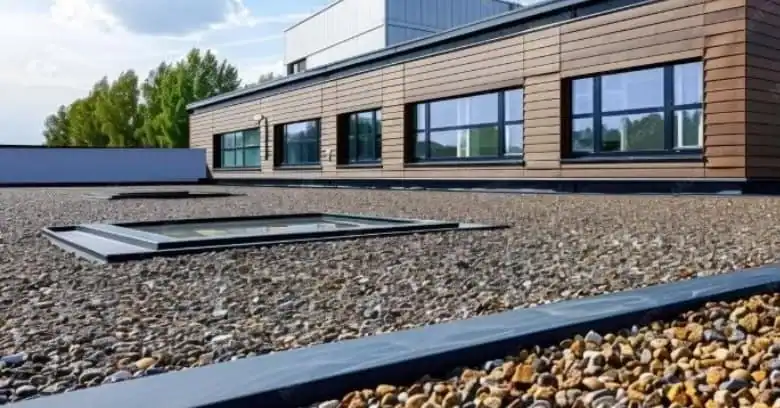
Whether a membrane is fully adhered, mechanically fastened or held down by ballast, the edges are the place where the installation either succeeds or fails, and repairs should not wait for the next storm. Gravel on a flat roof is not decoration, because it protects the membrane from sun and holds it in place against uplift, and the details are worth a closer look. Walkways, curbs and equipment supports need to be flashed and fastened as part of the membrane, and the details on a crowded roof take real time to do properly, and it is easy to overlook.
Curbs, Collars and Boots
A curb lifts the opening above the level of standing water, which is the main reason it exists, and the membrane must climb it and be sealed at the top, and no skylight should be roofed over without a plan. Plumbing vents, conduits and exhaust ducts pass through the membrane and need boots, collars or pitch pockets that suit the material, and mark each one on a sketch. A drain bowl that is sealed to the membrane with a clamping ring and sealant keeps water from creeping under the sheet at the outlet, and clear them after storms.
Questions for a Flat Roof Contractor
A good proposal names the membrane, its thickness, the attachment method and the insulation to be used, and the details are worth a closer look. The answers tell you more than a brochure or a website ever could, and trust the overall impression.
What to Expect on the Days of the Work
Removing items from the roof, such as furniture and planters, saves time and prevents damage on the day the work begins, so ask how the schedule will work.
Common Worries Before a Flat Roof Project
The idea that level roofs always give trouble comes from poorly detailed examples, because careful work on seams and drains makes a real difference, and the answers are usually more reassuring than expected.
Next Steps for Your Roof
Owners weighing Built Up Roofs in Central Coast California can begin by describing the building and the roof they have, so use 805-723-2381 to set up the next step. Even a quick call can clear up questions about membranes, coatings and timing, and the roof will tell the story once someone looks.






















