
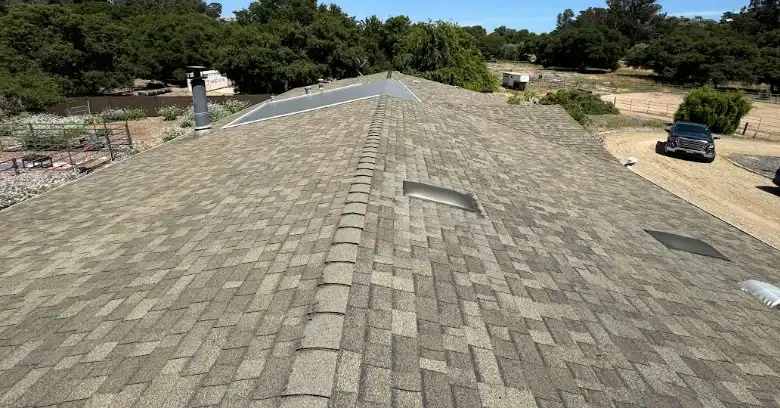
Thinking About Architectural Shingle Roof Installations Close to Sacramento California?
Creative Roofing lays asphalt, architectural and designer shingles over carefully prepared decks, serving homeowners in Sacramento California and beyond.
Ring 805-723-2381 and we will go over what a shingle roof involves.
The Anatomy of an Asphalt Shingle
The common residential shingle starts as a reinforcing mat, which is coated with asphalt and then surfaced with mineral granules, and the mat gives the piece its strength. Without a surface of mineral granules, the asphalt beneath would dry and crack in a short time, and it pays to think it through.
Shingle Grades Explained
Flat shingles of this style are economical but wear out sooner than thicker kinds, and a little care goes a long way. Dimensional shingles imitate the look of shake or slate at a modest cost, so there is something for most houses. Premium and luxury lines go further, with thicker laminates, deeper shadow lines and designer shapes, and a sample on site shows the difference clearly.
Sun, Heat and Aging
Long dry summers bake a shingle roof for months with very little relief from rain, and the effects are visible on the south and west slopes first. A shingle that has begun to curl no longer lies flat against the roof, and photographs make a useful record.
Picking a Shade That Works in the Sun
Shingles in dark shades absorb more heat, and they can run noticeably hotter on a summer afternoon, and nearby roofs offer a useful preview. Special coatings on the granules help send solar heat away from the house, and the details are worth a closer look.
Nails, Courses and Starter Strips
Fastening is the quiet detail that separates a durable roof from a poor one, and it is easy to overlook. A starter strip along the eave and the rake gives the first course a sealed edge and extra grip, and a straight line of shingles is a sign of care. Special cap products are made to bend without cracking, and it pays to think it through.
How Shingles Resist Wind
The adhesive bond is what keeps tabs flat against the roof in a strong wind, and the nails hold the rest. Pieces that blow off expose the underlayment, which is not meant to sit in the sun, and a roofer can reseal tabs with a dab of roofing cement.
Heat Trapped Below Shortens the Roof
Heat that cannot escape from the attic speeds the aging of the roof deck and the shingles, and the eaves and the ridge are where the vents belong. Blocking the soffit vents with insulation is a common mistake that undermines the whole system, and avoid anyone who ignores the question.
Valleys, Walls and Pipes
Self-adhering membranes at the eaves and valleys give extra protection where leaks start, and it pays to think it through. Valleys are the crossing channels where two slopes meet, and they carry the most water on the roof, and replacing flashing during a re-roof is standard practice.
Spotting Trouble Early
Several signs together point to a roof that needs more than a patch, and a roofer can sort the serious from the cosmetic. Patching makes sense when the damage is limited and the shingles are otherwise healthy, and a good roofer will tell you when a repair is enough. Putting money into a failing roof delays the inevitable and may cost more in the end, and that is worth keeping in mind.
Stripping Down Before Building Up
Most shingle replacements begin with a full tear-off, in which the old layers are stripped away and the plywood or boards beneath are laid bare, so the plan should allow for repairs to the wood. Laying new shingles over old ones is sometimes allowed, but it hides the deck and adds weight to the structure, and the savings are usually smaller than they seem. Agreeing on how replacement boards are measured and charged prevents a dispute halfway through the job, and the cost of a few sheets is rarely large.
Debris, Magnets and Final Sweeps
Protecting the house is part of the work, not an extra, and the plan should say how landscaping and windows will be shielded, and a little preparation prevents most complaints. Final cleanup should leave the property as orderly as it was found, apart from the new roof, and the work is not finished until the cleanup is. Letting grit and leaves pile up in a gutter can lead to overflow along the fascia and the foundation, and it pays to think it through.
Planning Around Rain and Heat
Timing a project well means picking a stretch of dry days and leaving some room for delays, and the calendar is only part of the question. Heat is a normal part of summer roofing, and a good crew plans the day around it rather than fighting it, and a rushed job in extreme heat is a poor bargain.
Rooftop Additions and Shingle Work
Roofers work around fixed obstacles all the time, but each one adds time and adds a place where water might enter, and a thorough roofer will count them. Ideally the roof is renewed before panels are installed, so that the new system is not removed again within a few seasons, and the order of the work matters a great deal.
Matching Shingles After a Repair
A roofer can often borrow shingles from a hidden slope or the back of the house to repair a more visible area, which gives the best match, and a small color difference is not a defect.
Gutters, Drip Edge and the Roofline
Without proper edging, rain can wick behind the shingles and attack the sheathing and fascia board over the following seasons, and a little care goes a long way.
Getting Specific About the Product
Look for the product by name so that you can compare it with another bid, and the details are worth a closer look. Find out how the crew will protect the house and landscaping during the work, and trust your sense of how the questions are received.
Talk to Us About a Shingle Roof
A conversation about Architectural Shingle Roof Installations in Sacramento California usually starts with the age of the current roof, so dial 805-723-2381 when it suits you. Planning ahead usually leads to better choices than reacting to an emergency, so reach out whenever you are ready.
Verified

Verified
Verified
Verified
Verified






















