
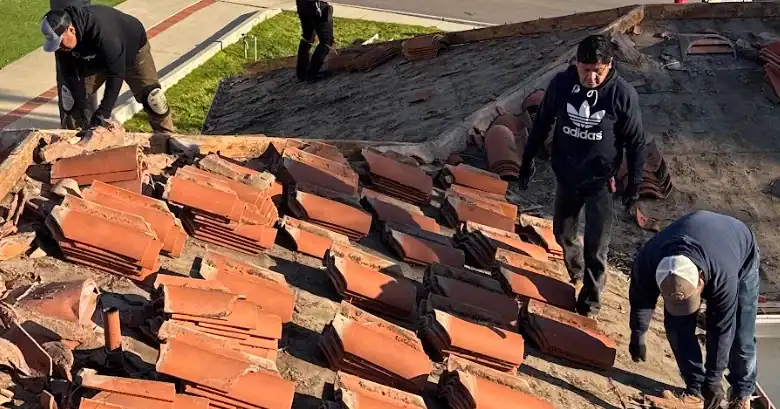
Weighing Clay Tile Roofer Contractors Serving Central Coast California?
Creative Roofing handles the underlayment, battens and hand-shaped details that a fired or molded roof depends on, throughout Central Coast California and the neighboring communities.
Phone 805-723-2381 to talk through what a tile roof needs.
What Makes a Roof Out of Fired Clay or Molded Concrete Different
The surface you see is only the first line of defense on a roof like this, and the real waterproofing sits underneath. Concrete units are molded from cement and sand and colored through the body or on the surface, so samples help with the choice.
Checking the Rafters Before Choosing
Many houses built for tile are designed to carry it, while others would need reinforcement, and it should happen before materials are ordered. Adding weight without adding support invites cracks, sagging and even failure, and a casual answer should give you pause.
Felt, Membranes and Battens
The units shed most of the rain, but the underlayment beneath is the layer that actually keeps the house dry, and a membrane that has dried out is a common reason for leaks. Replacing the underlayment when the units are removed gives the roof a fresh start, and high-temperature types are worth the small extra cost.
Sun, Heat and Dry Summers
Clay and concrete handle strong sun far better than lighter coverings, which is a large part of their appeal here, and that is why roofs of this kind are so common in warm regions. Cosmetic wear is common and does not usually affect performance, and surface cleaning is far cheaper than replacement.
Why Pieces Break
Broken pieces are the most common problem on a roof of this kind, and they usually come from foot traffic, and replacing a broken piece is a quick job. A short inspection after any work on the roof catches damage early, so ask for a check after other work is done.
The Detail Work on a Heavy Roof
Every junction on the roof is a place where craft decides the outcome, and metal valleys should be replaced during a re-lay. Ridge and hip pieces are bedded in mortar or fastened with mechanical systems, and the old mortar often fails before the roof does, and it deserves attention as the roof ages.
Seasonal Gusts and Embers
A roof with loose pieces is a hazard in a windstorm, and edges and ridges deserve the most attention. Bird stops and closures at the eave seal the openings where embers might enter, and the details are worth a closer look.
Restoring a Roof Rather Than Starting Over
A re-lay means lifting the units, replacing the underlayment and flashing, and setting the pieces back in place, and the savings from a re-lay can be considerable. If the pieces are worn out, a re-lay would only reuse tired material, and a good roofer will lay them out plainly.
Holding the Pieces Together
Each fastening method has strengths, and the choice depends on the slope, the wind exposure and the local rules, and the method should be named in the proposal. The openings along the bottom edge of a profiled roof need a closure strip, or they become a doorway for pests and debris, and they are often forgotten.
Dirt, Lichen and Cosmetic Wear
Surface growth tends to be slower in dry summers, though shaded areas may still collect some, so consider it before deciding to replace. Soft washing with a mild solution and a gentle rinse removes growth without harming the surface, so combine the two visits.
Specifying the Hidden Layer
Heavy felt, synthetic sheets and self-adhering membranes are the common options, and they differ in heat resistance and tear strength, and why. Self-adhering membrane is often used in valleys, around penetrations and along the eaves, where leaks are most likely to begin, and it pays to think it through.
Working Around Obstacles
Special hooks and flashing kits exist for these roofs, and an installer who uses them keeps the surface watertight, and the decision deserves some planning. Satellite dishes, antennas and holiday lights are small additions that can break units if the installer is careless or the fasteners are driven in the wrong place, and replacing a unit is far cheaper than repairing the leak. A valley that is clogged with leaves and needles can send water sideways under the units, which they are not designed to handle, so make valleys the first stop on any check.
Picking the Right Unit for the House
Natural clay generally keeps its color for a very long time, while a coated concrete surface can fade or chalk and may need refreshing, and the better choice depends on the house and the budget. Matching the profile to the style of the house is the first design decision, and it affects the cost and the installation method, and a good supplier will lend a few.
Questions Worth Asking
The best contractors put the specifics in writing, and a clear proposal reflects a careful crew. Questions about experience are reasonable, and the answers say a great deal, so do not hesitate to ask.
From Lifting the Units to Setting Them Back
Pieces are removed row by row from the top down, and the crew takes care to avoid cracking more units than the roof already has, and the crew has to be careful with every piece.
Seasonal Readiness for a Tile Roof
Before the dry season peaks, a quick walk around the house with binoculars can show broken units, loose ridge pieces and debris piled in the valleys, and a roofer can check them quickly.
Documenting the Work for the Future
A note of the underlayment type, the flashing metal and the fastening method helps any roofer who works on the roof later, and it pays to think it through.
Next Steps for Your Roof
Those comparing Clay Tile Roofer Contractors in Central Coast California can reach us by phone, so use 805-723-2381 to set up the next step. Calling before a problem becomes urgent makes it easier to compare materials and schedules, and we are glad to help you sort it out.






















