
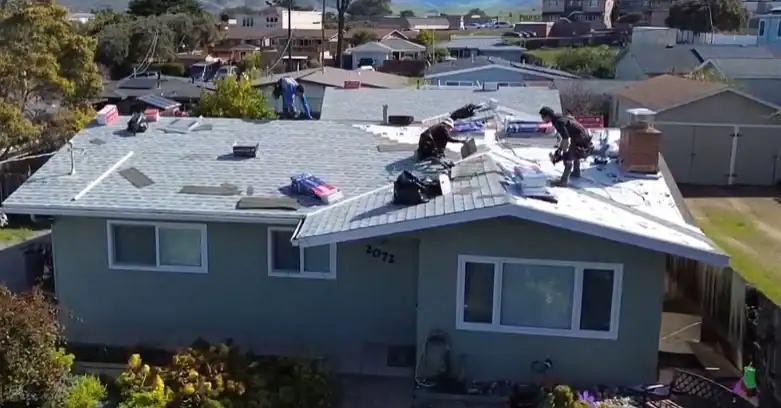
Thinking About Roofing Companies Around Central Coast California?
Creative Roofing walks a household through every stage of a roofing project, working in Central Coast California and nearby.
Call 805-723-2381 and tell us what has you thinking about the roof.
Day One of a Roof Project
Nothing gets decided until someone has walked the roof, and that is worth keeping in mind. Photographs taken on that first visit become the record for everything that follows, and it pays to think it through.
Heat is the quiet cause behind much of the wear seen on roofs here, and a roofer who knows the area expects exactly that.
Choosing How Far to Go
A roof can be repaired, partly rebuilt or removed entirely, and the evidence decides what is done, and the details are worth a closer look. Pictures of the trouble spots take the guesswork out of the decision, because you are the one living under the result.
Weak spots in the deck only show themselves once the old roof is off, so a note on how it will be handled saves arguments later.
Choosing Materials for Your Home
Three families of material cover most residential roofs in this region, but the framing and the slope decide more than preference does. Color deserves more thought than it usually gets, so hold a sample against the house in daylight.
Planning for Rain and Heat
Rain arrives in bursts, and a roof that is open when one comes needs protection, and it pays to think it through. Crews often start early in summer to get ahead of the hottest hours, and finishing early keeps people and materials in better shape.
Getting to a Clean Surface
Removal of the old material is where the project gets loud, and magnets and rakes pick up the nails that fall. Once the deck is bare, any damaged boards are replaced, and skipping the step shortens the life of an otherwise good roof.
The Hidden Layers
The surface you see is only the outer layer of a roof, and it is easy to overlook. With the barrier in place the roof can shed rain even before the covering is finished, and rows are laid from the eave upward, each lapping the last.
Flashing and the Fiddly Parts
Water finds the joints first, so flashing matters, so fresh metal is standard practice among careful crews. Vent boots and pipe collars are rubber or lead pieces that wear out before the roof does, and a little care goes a long way.
Intake and Exhaust
Heat collects in the space beneath the roof deck unless it has somewhere to go, since warm air rises on its own when it is given a path. Adding vents at random may do little more than cut holes in the roof, because airflow is easy to plan now and hard to add later.
The Last Day on Site
A finished roof still leaves a yard full of scraps, nails and packaging, and that is part of the work, not an extra. Photographs of the completed work are worth having for your own records, and it pays to think it through.
The Paperwork Side of a Roof
Municipal offices have their own expectations for roof work, so it is fair to ask who pulls the permit. Areas with wildfire exposure often have extra requirements for roofing materials and vents, and the proposal should reflect them. Written proposals should describe the materials, the scope and the cleanup in plain words, because what is written down is what everyone remembers.
Looking After Your Property During the Work
Roof work is hard on landscaping unless it is planned for, and plants and patio furniture are moved or covered. Children and animals should stay clear of the yard while the work is underway, so tell the crew about anything fragile or valuable. Attic contents are best covered or moved before the work starts, so it is wise to take down fragile pictures first.
Noise, Neighbors and Daily Life
A simple roof may go quickly while a complicated one takes longer, so ask for the expected start and finish up front. Roof work is loud, and the street will hear it, so a friendly note goes a long way. Working from home during a roof job is possible, though not always pleasant, so consider a day out of the house if you can.
A Short List for Comparing Proposals
Ask what will be done with the old material and how the deck will be handled, and write the answers down. Knowing exactly what is going on the house removes a common source of disputes, and a little care goes a long way. Surprises are normal, and a process for them is a sign of a well-run job, and settle it before the first day.
Caring for the Roof Once It Is Done
A roof that is never looked at tends to fail when it is least convenient, and binoculars make the job easy. Keep the gutters clear of leaves and needles, especially at the end of the dry season, and it also reduces fire risk in dry months. Waiting on a small problem usually makes it more expensive, and a photograph helps explain what you saw.
Is There a Best Time for a New Roof
A roof replaced on purpose goes better than one replaced in a panic, so a few weeks of lead time is common. Any month can work with the right planning and a willingness to move a day, so do not feel the choice is locked in.
What the Crew Sees Inside the House
Rust on the points of roofing nails and dark patches on the sheathing are signs that moisture has been present for some time, and bring a flashlight if you can.
Next Steps for Your Roofing Project
Anyone researching Roofing Companies in Central Coast California is one call away from a straight answer, so use 805-723-2381 to talk through the roof and the next step. Every roof is different, so every conversation starts from the house itself, and that is worth keeping in mind. Putting off a roof question rarely makes it easier to answer, so pick up the phone when you are ready.






















