
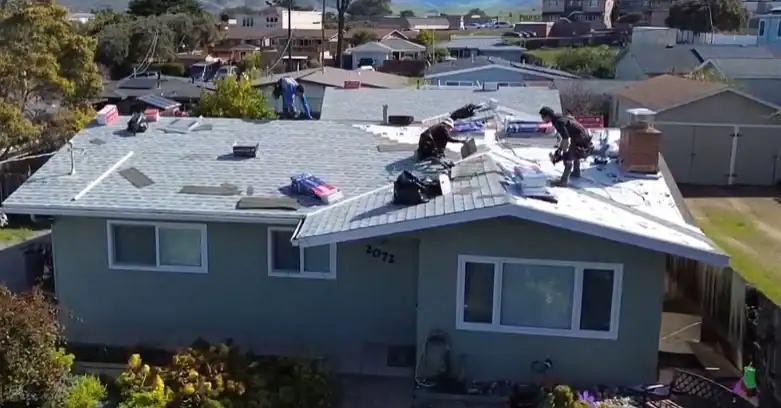
Looking for Roofing Maintenance Around Central Coast California?
Creative Roofing walks a household through every stage of a roofing project, across Central Coast California and the neighboring communities.
Call 805-723-2381 and describe the project you have in mind.
Starting Out Right
Every roofing job starts with someone climbing up to see what is actually there, and a rushed visit tends to cost more than it saves. Loose granules, lifted edges, cracked flashing and soft spots all say something about the layers below, so the visit usually takes longer than people expect.
Sunny slopes and shaded slopes tell different stories, and both matter, so the wear is rarely even from one side to the next.
Repair, Patch or Replace
Whether to fix or replace comes down to the condition of the layers beneath the surface, and the details are worth a closer look. Pictures of the trouble spots take the guesswork out of the decision, since the plan should make sense to the person paying for it.
Wood that has been wet for a long time has to be cut out and replaced, and nobody should be surprised when it happens.
Matching the Covering to the House
Three families of material cover most residential roofs in this region, since heavy coverings need a frame built to carry them. A roof that faces strong sun all afternoon behaves differently depending on its shade, so do not settle the question from a photograph.
When the Crew Can Work
Rain arrives in bursts, and a roof that is open when one comes needs protection, and a careful crew never leaves an opening to chance. Heat affects the work as well, so an early knock on the door is nothing to worry about.
Getting to a Clean Surface
Taking the old roof off is the noisiest and messiest part of the job, and magnets and rakes pick up the nails that fall. Sound wood is the base everything else depends on, so this is not the place to save time.
What Goes Down First
Much of the protection a roof offers is out of sight, and valleys, eaves and penetrations get extra layers. Reaching this stage quickly is a sensible way to protect the interior, so the rest of the work can proceed without worry.
Penetrations and Edges
Chimneys, skylights, vent pipes and walls all need flashing worked into the roof, since worn metal under new material becomes the weak link. Plumbing vents are among the most common sources of small leaks, so this is an easy step to ask about.
Air Under the Roof
An attic under a hot roof can reach extreme temperatures in summer, and a proper system draws air in low and sends it out high. A ventilation plan is worth a conversation before the job starts, and it is easy to overlook.
Wrapping Up
A finished roof still leaves a yard full of scraps, nails and packaging, and that is part of the work, not an extra. Questions are easier to settle while the crew is still on site, and it only takes a few minutes.
What the City Wants to See
Local requirements shape the job before the first shingle is touched, and the answer should be clear from the start. Certain hillside and edge-of-town areas follow stricter material rules than the valley floor, and the details are worth a closer look. A proposal that names its materials and steps is easier to compare, and it is easy to overlook.
What Happens to the Yard
A busy work site needs boundaries, and a careful crew sets them before the work begins. Moving vehicles out of range for the day is a simple precaution, and a short talk the evening before covers the details. The attic gets dusty during tear-off, and anything stored there will notice, and a little care goes a long way.
Noise, Neighbors and Daily Life
The calendar for a job is set by the roof, not by the wish list, and nobody can promise a date through a rain delay. A quick word with the people next door can head off complaints, so a friendly note goes a long way. The loudest stretch is the tear-off, and it passes quickly, and the noise settles once the old roof is gone.
Questions That Reveal the Difference
Ask what will be done with the old material and how the deck will be handled, and it pays to think it through. A proposal that only says shingles or tile is not specific enough, so ask before you sign anything. Ask what happens if something unexpected turns up under the old roof, and you will have a clear record.
Caring for the Roof Once It Is Done
A roof needs less attention than most parts of a house, but it needs some, and it is easy to overlook. Overhanging trees drop material that collects in corners and valleys, and it protects the investment you just made. A prompt visit after damage keeps a minor repair minor, and the earlier the better.
Is There a Best Time for a New Roof
Planning ahead usually gives better choices than reacting to an emergency, and calling in spring avoids the rush. Any month can work with the right planning and a willingness to move a day, and the details are worth a closer look.
Attic Findings That Change the Plan
Looking at the roof from inside the attic before the work begins reveals water stains, damp insulation and daylight where none should enter, and the findings can change the scope.
Ready When You Are
Homeowners comparing Roofing Maintenance in Central Coast California can simply pick up the phone, and the number is 805-723-2381. Large or small, a roofing project goes best when the plan is clear before the work starts, and an early conversation costs little. A short conversation can turn a vague worry into a clear plan, and it pays to think it through.






















