
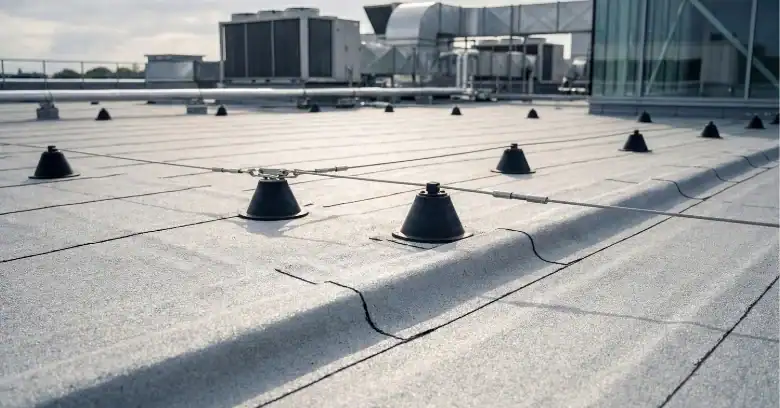
Researching EPDM Roofing Serving Central Coast California?
Creative Roofing repairs and replaces the level roofs that cap porches, patios, shops and modern homes, for properties in Central Coast California and the towns around it.
Call 805-723-2381 and we will explain the options for a level roof.
How a Flat Roof Differs From a Pitched One
Where a pitched roof sheds rain in seconds, a level roof holds it for hours or days, and the materials and details are chosen for it. A flat roof gives little margin for error in the details, and the cost of a mistake is paid in repairs.
The Systems You Will Hear About
Heat-welded sheets such as TPO are among the most popular choices for new flat roofs, and repairs are made by welding on a patch. Black EPDM absorbs heat, while a white version reflects more of the sun, and the seam tape is a point to watch over time. Gravel surfacing on a built-up roof protects the layers from sun and foot traffic, so the structure has to carry it.
Details That Fail First
Seams, corners, edges and penetrations are where problems begin on a low-slope surface, and shortcuts miss the trouble. Where a flat roof meets a wall, the membrane must turn up and be sealed and capped with flashing, so look at those joints every year.
Keeping a Level Roof Drained
Ponding is the condition of standing water on a roof, and it accelerates wear on any membrane, and the first storm of the season shows the problems. Adding drains or enlarging scuppers helps when the old ones were undersized, and the improvement is permanent.
How Heat Wears a Low-Slope Roof
Ultraviolet light and heat are the main forces that age the surface of a low-slope roof in this region, and the movement stresses seams and fasteners. Reflective surfaces keep rooms below cooler and may reduce the load on air conditioning, and the preparation is as important as the product.
Vents, Pipes and Rooftop Units
A roof with many openings needs more maintenance than one with few, and replacing a worn collar is a quick job. Roof-mounted air conditioners and other equipment bring service people who walk on the membrane, and a quick look after any service visit catches new damage.
Matching the Work to the Roof
Localized seams, flashings and punctures can be fixed without touching the rest of the roof, and photographs help. Testing for moisture shows what the roof can accept, and the survey is worth the small cost. When the roof is saturated, cracked and failing in many places, replacement is the only lasting answer, so begin conversations before the leaks become urgent.
Small Flat Roofs With Big Responsibilities
Residential low-slope roofs turn up over additions, covered patios, carports and contemporary houses designed with clean horizontal lines, and it pays to think it through. Siding, stucco and trim all have to be worked into the flashing, and the roofer has to cooperate with whoever finished the wall, and a little care goes a long way. A deck surface over a roof has to be lifted to repair the layer beneath, which makes prevention far cheaper than correction, so involve the roofer early.
Keeping Rooms Cool Below a Flat Surface
Rigid insulation boards above or below the deck slow the passage of heat, and they matter more on a level roof than on any other type, and the savings show up in the cooling bill. A moisture survey with a meter or an infrared camera can map the wet areas without tearing the roof apart, and that is worth keeping in mind.
Keeping a Flat Roof in Shape Through the Year
Photographs taken each year create a record that makes changes easy to see, and a small repair now is nearly always cheaper. After a heavy storm or a spell of high wind, a quick look from a ladder can show whether anything has shifted, lifted or collected on the surface, so do not wait to see whether it dries out.
Securing the Roof Against the Wind
After a windy spell it is worth checking the perimeter from a ladder for loose trim, lifted seams and curling edges, and a little care goes a long way. Gravel on a flat roof is not decoration, because it protects the membrane from sun and holds it in place against uplift, and the gravel does a great deal of quiet work. Surprises about extra details are the most common cause of disagreement over flat roof bids, and point out anything unusual.
Curbs, Collars and Boots
Skylights and roof hatches sit on raised curbs that are flashed into the membrane, and the quality of that flashing decides whether they leak, and no skylight should be roofed over without a plan. Gathering the pipes and conduits into fewer penetrations reduces the number of places where leaks can begin, so ask about consolidating them. Overflow scuppers set slightly higher than the main drains act as a safety valve when the primary outlet is blocked, and a blocked outlet loads a roof beyond its design.
Comparing Flat Roofing Proposals
A good proposal names the membrane, its thickness, the attachment method and the insulation to be used, and it lets you compare two bids fairly. Ask who will supervise the work and how weather delays will be handled, and it is easy to overlook.
Keeping Disruption Small
Most flat roof jobs on a house or small building take only a few days, though adhesives and torch work call for dry weather and some advance planning, and the disruption is brief compared with a leak.
Clearing Up a Few Misconceptions
Questions about a level roof are best answered by someone who has looked at it in person, and bring photographs if you have them.
Next Steps for Your Roof
Anyone sorting out EPDM Roofing in Central Coast California is one call away from a straight answer, and the number is 805-723-2381. Even a quick call can clear up questions about membranes, coatings and timing, and the first step is just a phone call.