
Weighing Residential Roofing Contractors Near Me Around San Luis Obispo California?
Creative Roofing takes a roofing job from the first look to the last sweep of the yard, for homes in San Luis Obispo California and the towns around it.
Dial 805-723-2381 to set up a time for someone to look at the roof.
Before Anything Is Torn Off
A roofing project begins with a close look at the surface, the edges and the pipes, since guessing from the ground leads to surprises later. Photographs taken on that first visit become the record for everything that follows, and each one goes into the notes.
Heat is the quiet cause behind much of the wear seen on roofs here, so the south and west slopes get the closest attention.
What Should Actually Be Done
Not every worn roof needs replacing, and not every leak is a small one, and the recommendation should come with the reasons attached. A roofer who explains the reasoning in plain terms is easier to trust with the work, since the plan should make sense to the person paying for it.
Weak spots in the deck only show themselves once the old roof is off, and it is easy to overlook.
Shingle, Tile or Metal
Asphalt shingles, concrete or clay tile and standing seam metal are the coverings most often put on homes here, but the framing and the slope decide more than preference does. Lighter colors reflect more of the summer sun, while darker ones soak it up, and that is worth keeping in mind.
The Calendar and the Forecast
Dry months are the busy season for roofing, since an open roof and rain do not mix, and crews watch the forecast closely. Roof surfaces get hot enough in July to change how materials behave, so the day usually begins at sunrise.
What Happens on Demolition Day
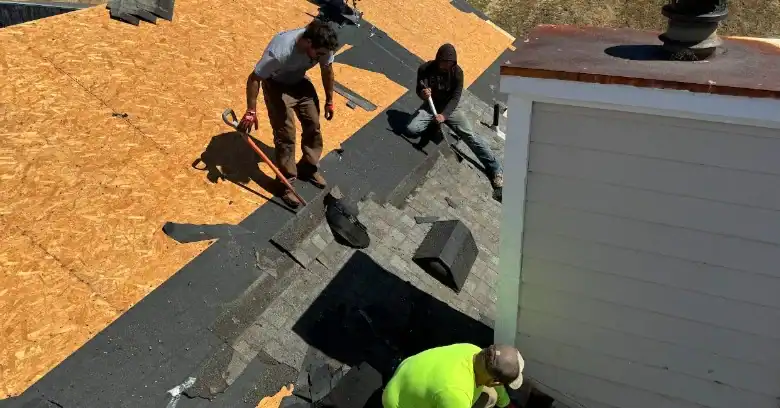
Tear-off gives the first real view of the structure under the roof, so landscaping and windows are covered before the first piece comes up. Once the deck is bare, any damaged boards are replaced, because new material is only as good as what it is fastened to.
Underlayment and Drying In
The surface you see is only the outer layer of a roof, and valleys, eaves and penetrations get extra layers. The house is safest once the second layer is complete, and rows are laid from the eave upward, each lapping the last.
Penetrations and Edges
Wherever the roof surface stops, a metal detail has to take over, and reusing old flashing under a new roof often comes back to bite. The seal around a vent pipe rarely lasts as long as the surface around it, and a little care goes a long way.
Air Under the Roof
An attic under a hot roof can reach extreme temperatures in summer, and a proper system draws air in low and sends it out high. The design of the system matters more than the number of vents, and it is easy to overlook.
Cleanup and the Final Walk-Through
The job is not over until the yard looks like a yard again, so gutters are checked and cleared of loose granules. Photographs of the completed work are worth having for your own records, and it only takes a few minutes.
The Paperwork Side of a Roof
Replacing a roof usually involves the local building department in some way, and a little care goes a long way. Certain hillside and edge-of-town areas follow stricter material rules than the valley floor, since the covering you pick has to be one the town accepts. A clear proposal lists what will be removed, what will be installed and what happens if the deck needs work, because what is written down is what everyone remembers.
Shielding Windows, Plants and Patios
The ground around a house takes a beating during a roof project, and it is reasonable to ask how this will be done. Moving vehicles out of range for the day is a simple precaution, so tell the crew about anything fragile or valuable. Inside the house, vibration can shake items from shelves and loosen attic insulation, and a little care goes a long way.
Disruption and How to Manage It
The calendar for a job is set by the roof, not by the wish list, and plan on some slack for the weather. Neighbors appreciate a heads-up before the noise begins, and most people are tolerant when they know what to expect. Working from home during a roof job is possible, though not always pleasant, and everything returns to normal once the crew packs up.
Questions Worth Asking Before You Agree
A sensible first question is what exactly is included in the scope, and anything left vague deserves a follow-up. Knowing exactly what is going on the house removes a common source of disputes, and take your time reading it. Surprises are normal, and a process for them is a sign of a well-run job, and keep the discussion friendly but specific.
Maintenance After the Job
A roof needs less attention than most parts of a house, but it needs some, and little problems stay little. Trim branches that touch or hang over the roof, and it also reduces fire risk in dry months. Call a roofer after a major wind event or if you see a stain on a ceiling, and the earlier the better.
Choosing the Right Season
Planning ahead usually gives better choices than reacting to an emergency, and a little care goes a long way. Any month can work with the right planning and a willingness to move a day, and the best season is often the one that fits your calendar.
Insulation, Ducts and Cables Under the Roof
When the old roof comes off, the crew sees the underside of the deck, and stains, rust on nail tips and darkened wood tell the story of past leaks, and bring a flashlight if you can.
Talk to Us About Your Roof
A call is the simplest way to begin planning work in San Luis Obispo California, with 805-723-2381 ready whenever you are. Whether the job is a small section or a whole house, the questions are much the same, and the roof will tell the story once someone looks. A short conversation can turn a vague worry into a clear plan, and it pays to think it through.
Verified

Verified
Verified
Verified
Verified






















