
Planning Residential Roofing Installation in San Luis Obispo California?
Creative Roofing walks a household through every stage of a roofing project, across San Luis Obispo California and the neighboring communities.
Phone 805-723-2381 and tell us what has you thinking about the roof.
Day One of a Roof Project
The first visit is about gathering facts rather than picking a product, since guessing from the ground leads to surprises later. Signs of wear on top often point to a moisture problem underneath, and it pays to think it through.
Sunny slopes and shaded slopes tell different stories, and both matter, and the sunniest side is usually the oldest-looking side.
Setting the Scope of Work
Whether to fix or replace comes down to the condition of the layers beneath the surface, so a clear explanation matters more than a quick quote. Findings that cannot be pointed to are findings worth questioning, because you are the one living under the result.
When the decking underneath is damaged, the scope of the job grows, and it helps to know that before the work begins.
Picking a Roof Covering
The common choices are shingle, tile and metal, and each suits some houses better than others, and the style of the neighborhood often plays a part. Lighter colors reflect more of the summer sun, while darker ones soak it up, and that is worth keeping in mind.
Timing the Work
For most of the year the weather here lets a roof go on with few interruptions, and temporary dry-in layers keep the house safe overnight. Heat affects the work as well, so an early knock on the door is nothing to worry about.
Removing the Old Roof
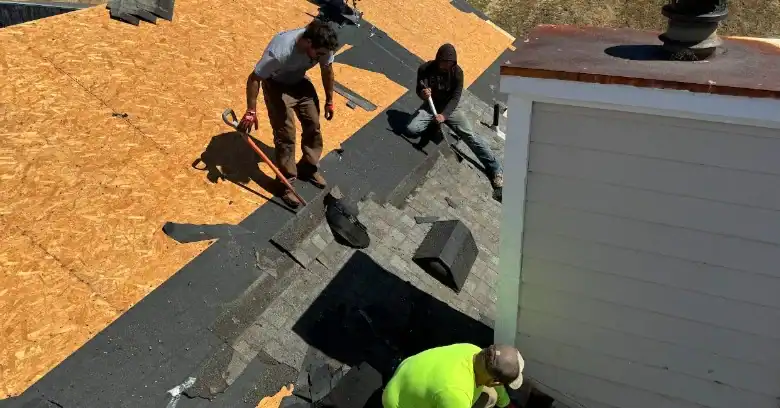
The existing covering is stripped away and the deck is left exposed for inspection, and magnets and rakes pick up the nails that fall. Soft or split sheathing is cut out and new panels are fastened down, because new material is only as good as what it is fastened to.
The Hidden Layers
Underneath the visible covering sits a water-resistant layer that does much of the work, and chimneys get particular care. Drying in gives the crew a margin against surprise weather, and the visible covering goes on from there.
Where Roofs Meet Walls and Pipes
Flashing is the thin metal that keeps water out where the roof meets something else, and the cost is small next to the roof it protects. Plumbing vents are among the most common sources of small leaks, and a new roof should not depend on a seal that is already tired.
Intake and Exhaust
Heat collects in the space beneath the roof deck unless it has somewhere to go, and a proper system draws air in low and sends it out high. Mixing vent types without a plan can short-circuit the airflow, so ask how the attic will breathe once the work is done.
The Last Day on Site
Once the roofing is done, the property has to be put back in order, so gutters are checked and cleared of loose granules. Looking at the ridge, the valleys and the flashing with the roofer present is time well spent, and it makes future repairs and sales smoother.
Local Rules and Paper Trails
Rules about reroofing differ from one city to the next, because surprises at the counter slow everything down. Wildfire concerns have changed what many local codes ask of a roof, and the proposal should reflect them. A proposal that names its materials and steps is easier to compare, and it is worth reading it slowly.
Looking After Your Property During the Work
The ground around a house takes a beating during a roof project, and plants and patio furniture are moved or covered. Cars parked in the driveway can be struck by falling nails or pieces of shingle, and a short talk the evening before covers the details. Inside the house, vibration can shake items from shelves and loosen attic insulation, and a sheet over stored boxes keeps the grit off.
Disruption and How to Manage It
Most residential projects are finished within days, not weeks, and plan on some slack for the weather. Informing nearby households is a courtesy that pays off, and the whole thing is over sooner than it seems. Pets are often the ones most bothered by the commotion, and a plan for the loud days makes them easier.
Questions That Reveal the Difference
A sensible first question is what exactly is included in the scope, and anything left vague deserves a follow-up. Product names and thicknesses on the proposal let you compare like with like, and it should be written on the proposal. A change in scope should be written down and approved before the work continues, and settle it before the first day.
Small Habits That Extend Roof Life
Checking the roof twice a year takes only a few minutes, and it is easy to overlook. Overhanging trees drop material that collects in corners and valleys, and it protects the investment you just made. Early attention to a leak is almost always cheaper than late attention, and it pays to think it through.
Spring, Summer or Fall
Planning ahead usually gives better choices than reacting to an emergency, and the schedule fills quickly once the rains end. Late summer is hot but dependable, and crews are usually busy, so do not feel the choice is locked in.
Roof Work and Your Attic
Insulation in the attic that is compressed, wet or missing should be noted, since a new roof is a good time to fix the whole assembly, and the findings can change the scope.
Talk to Us About Your Roof
Sorting out Residential Roofing Installation in San Luis Obispo California is easier with someone who can look at the house, with 805-723-2381 ready whenever you are. Whether the job is a small section or a whole house, the questions are much the same, so there is no harm in asking questions first. Putting off a roof question rarely makes it easier to answer, so pick up the phone when you are ready.
Verified

Verified
Verified
Verified
Verified






















