
Looking Into TPO Membrane Roofing Installation in Central Coast California?
Creative Roofing installs membranes, coatings and built-up layers on roofs that barely shed water on their own, across Central Coast California and nearby.
Phone 805-723-2381 to talk through repair, coating or replacement.
A Roof With Almost No Slope
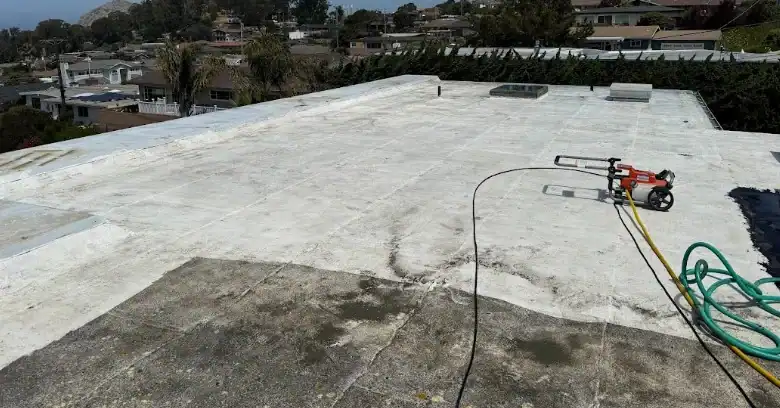
A flat roof is never truly flat, but its slope is so slight that water drains slowly and lingers, and drainage is the central question. Because water stays on the surface, small flaws that a pitched roof would forgive become leaks on a flat one, and look at examples of their finished work.
The Systems You Will Hear About
Heat-welded sheets such as TPO are among the most popular choices for new flat roofs, and repairs are made by welding on a patch. The big rolls of rubber cover large areas with few seams, and the system suits many residential flat roofs. Built-up roofing, often called BUR, layers hot or cold asphalt with reinforcing fabric and finishes with gravel or a cap sheet, so the structure has to carry it.
Following the Water to Its Source
Most flat roof leaks start at a detail rather than in the middle of the roof, and shortcuts miss the trouble. Termination bars and sealant hold the top edge of the membrane against the wall, and the work is simple for a roofer.
Scuppers, Drains and Slope
Water that does not drain adds weight, breeds algae and ages the surface faster, and clear leaves and debris from scuppers. Adding drains or enlarging scuppers helps when the old ones were undersized, and the details are worth a closer look.
How Heat Wears a Low-Slope Roof
Heat makes a membrane expand during the day and shrink at night, and it is easy to overlook. Silicone, acrylic and elastomeric coatings are the main families used on flat roofs, and that is worth keeping in mind.
Foot Traffic, Equipment and Penetrations
Boots, pitch pockets and flashing collars around pipes must be sound and sealed, so these spots deserve regular checks. Regular foot traffic wears a path in the surface unless it is protected, so ask the roofer to mark and protect the routes.
Matching the Work to the Roof
Repairing a small area is practical when the surrounding material is still healthy, and the key is an accurate diagnosis. When the surface is simply worn, a coating or an overlay can refresh it without a full tear-off, and an honest answer starts with a survey. When the roof is saturated, cracked and failing in many places, replacement is the only lasting answer, and that is worth keeping in mind.
Residential Low-Slope Roofing
Owners of older homes often discover that an addition from a previous decade was finished with a membrane that has long since worn out, and the repair needs a roofer who works with membranes. Siding, stucco and trim all have to be worked into the flashing, and the roofer has to cooperate with whoever finished the wall, and describe where the stain appears. Pavers, decking and planters laid over a membrane protect it from the sun but hide it from view, so involve the roofer early.
Energy and the Low-Slope Roof
A flat roof has little or no attic, so the layers of the roof itself have to do the work that attic insulation and ventilation do on a pitched house, and the savings show up in the cooling bill. Wet insulation loses most of its ability to resist heat and adds weight the roof was never meant to carry, and that is often cheaper than a full tear-off.
Seasonal Checks for a Level Roof
The best time to look at a flat roof is at the end of the dry season, when leaves and debris have piled up and the rains are about to test every drain, and the work is quick. A stain on a ceiling after a storm is a clear signal to have the roof inspected before the next one arrives, and it pays to think it through.
Perimeter Details and Uplift
After a windy spell it is worth checking the perimeter from a ladder for loose trim, lifted seams and curling edges, so ask how the edges will be attached. Gravel on a flat roof is not decoration, because it protects the membrane from sun and holds it in place against uplift, so inspect the outlets after any disturbance. Crowded rooftops with many pipes and units are slow to roof, because every obstacle needs its own flashing and sealing, and point out anything unusual.
Openings That Need Their Own Waterproofing
Replacing a worn skylight and its curb flashing together with the roof is far cheaper than doing the two jobs separately, and loose sealant around a frame is a warning sign. Gathering the pipes and conduits into fewer penetrations reduces the number of places where leaks can begin, so ask about consolidating them. Drains and scuppers are also penetrations, and the flashing around them has to be watertight while still letting the water through quickly, and a blocked outlet loads a roof beyond its design.
What the Paperwork Should Say
Specific wording is your best protection against disputes, and a careful contractor will explain every line. The answers tell you more than a brochure or a website ever could, and it is easy to overlook.
Preparing the Property for a Membrane Job
The crew needs clear access to the roof, a place to set up the equipment and a path for removing old material without crossing living areas, so ask how the schedule will work.
What People Wonder When the Roof Is Flat
Plenty of owners assume a membrane has to be replaced at the first sign of wear, when a repair or a coating would have done the job, and bring photographs if you have them.
Ready to Look at Options
People researching TPO Membrane Roofing Installation in Central Coast California are welcome to call with questions, and 805-723-2381 reaches someone who can help. Whether the roof is leaking now or you are planning ahead, an early conversation keeps your options open, and a little care goes a long way.






















