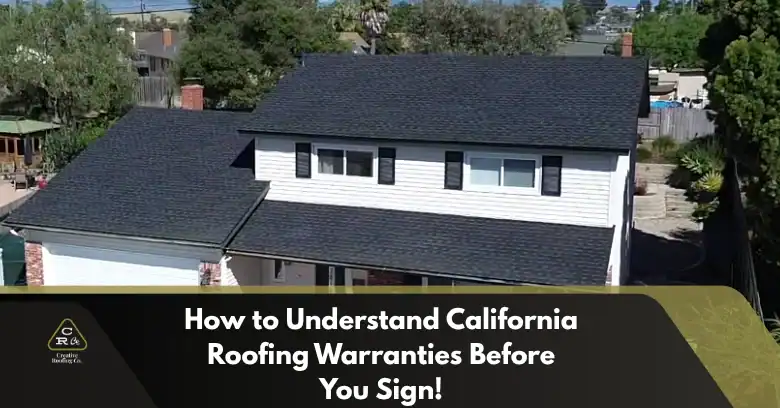
Every roof purchase involves two documents. One is the proposal with the price and most homeowners read it three times. The other is the warranty, usually skimmed, filed, and forgotten until water shows up on a ceiling six years later. That is exactly backward. The price determines what a homeowner spends once; the warranty determines who pays when a nail pops, a valley leaks, or a ridge cap blows off in a canyon wind event. Choosing a roofing contractor& in Santa Maria California without reading the warranty language closely can turn a competitive bid into an expensive surprise.
The problem is not that most warranties are deceptive. The problem is that most roofing transactions involve three different warranties that cover different things and sales conversations routinely blur them into one confident sentence like it is a lifetime roof, fully warrantied. Materials, labor, and system performance are separate promises with separate durations, separate exclusions, and separate registration requirements. A homeowner who does not know which one they are being sold cannot compare two bids, because a proposal that looks $3,000 cheaper may simply be missing the coverage tier that matters most.
This article breaks down what each warranty actually covers, what lifetime limited means in practice, and the specific conditions that cause claims to be denied on the Central Coast such as ventilation shortfalls, second-layer overlays, corroded fasteners in salt air, and missed registration deadlines. It also covers California's roofing contractor licensing and contract rules that sit underneath any warranty promise, the permit and inspection steps in Santa Maria and unincorporated Orcutt California, and the exact questions worth asking before money changes hands.
Three Roofing Warranties, Not One
Understanding the difference between the three warranties is the single most useful thing a homeowner can do before signing. They fail in different ways and protect against different risks.
1. The Manufacturer Material Warranty
This is the roofing material maker's promise that the product itself is not defective. It comes standard with GAF Timberline HDZ, Owens Corning Duration, CertainTeed Landmark, and comparable architectural shingles and it costs nothing extra. It does not cover labor in most cases and it does not care how the product was installed. If shingles blow off because the starter strip was omitted at the rakes, that is not a material defect. It is an installation issue and the material warranty will not respond to it.
Wind coverage is a good example of how conditions attach. A standard wind rating of 110 mph is common, while the higher 130 mph rating typically applies only when the shingles are installed with a six-nail pattern plus starter strip at both eaves and rakes. The rating on the brochure is a ceiling, not a guarantee; installation makes the determination.
2. The Contractor Workmanship Warranty
This covers the installing roofing contractor's labor including flashing details, nailing, penetration sealing, and valley construction. In the trade, it ranges from one or two years at the bare minimum to ten years or more from companies that stand behind their crews. It is also the warranty most dependent on the company still existing. A ten-year workmanship promise from a business with no history, no bond, and no association memberships is a promise with no recovery mechanism behind it.
Credentials matter in the roofing industry. A respected company should have relevant accreditations and partnerships, backed by experienced professionals. While these credentials do not replace warranty language, they help see that the company will be available for long-term support.
3. The Manufacturer-Backed System Warranty
This is the tier most homeowners have never had explained to them and it is often the difference between a good purchase and a great one. Enhanced programs such as Owens Corning Platinum and Silver, GAF Golden Pledge and System Plus, and CertainTeed SureStart PLUS put the manufacturer behind the labor as well as the materials. If the installing roofing contractor closes their doors, coverage survives. That is a fundamentally different risk profile than a workmanship warranty tied to one business.
These programs have hard requirements.
- The installer must be credentialed by the manufacturer.
- The roof must be built with full-system components including starter strip, ridge cap, underlayment, and ventilation from the same product line.
- The warranty must be registered, typically within 30 to 60 days of completion. Miss the registration window and the upgrade evaporates even though the roof was built correctly.
A roofing contractor working in Orcutt California should be able to state plainly which program a home qualifies for, what the upcharge is, and when the certificate will arrive. The enhanced tier commonly adds about 3 to 8 percent of contract value, which is little money against a labor-inclusive term measured in decades.
What Lifetime Limited Actually Means
The phrase does real work in marketing and much less work in a claim. On most roofing shingle lines, lifetime limited describes a non-prorated period, frequently the first ten years, during which full material value is covered. After that, coverage prorates steeply and by year twenty the payout on a defective shingle may not cover the cost of the dumpster. Labor is generally excluded entirely unless an enhanced system tier was purchased and registered.
Algae coverage is also separate, which matters enormously in a marine climate. Persistent fog and a stubborn marine layer produce the black streaking homeowners assume is dirt and instead it is algae and is usually covered under its own limited term, such as StainGuard Plus, often in the 10 to 25 year range and only when the algae-resistant version of the shingle was actually specified. Ordering the standard product and expecting stain coverage is a common, avoidable mistake in Orcutt California and along the fog-belt corridor toward Guadalupe.
The Exclusions That Deny Claims Locally
Warranty denials rarely come out of nowhere. On the Central Coast, most trace back to a short list of conditions visible on day one.
- Ventilation. Attic ventilation shortfalls are among the top reasons shingle claims get rejected. The code baseline is 1 to 150 of attic floor area or 1 to 300 when high and low venting are balanced. Heat and moisture trapped under a deck cook shingles from below and manufacturers know this. If a bid does not mention intake at the eaves and exhaust at the ridge, the warranty is already compromised.
- Overlays and layer count. The California Residential Code, section R908.3, limits a structure to two roof coverings. Beyond the code issue, a re-cover installed over existing shingles routinely voids or downgrades the manufacturer's warranty because fastener embedment and surface plane cannot be verified. Tear-off costs more and protects coverage.
- Corrosion. Salt-laden air toward Guadalupe and Morro Bay eats uncoated fasteners, drip edge, and gutter hangers. Aluminum and properly coated steel are not upsells in that environment; they are the difference between a roof edge that lasts and one that stains and fails early. Gutter gauge matters for the same reason as 0.032 aluminum in a seamless run holds shape far better than 0.027 and a 6-inch K-style profile handles a concentrated November downpour that a 5-inch struggles with.
- Wind and fire exposure. Sundowner and canyon winds pushing toward Lompoc and Santa Barbara are the real test of a wind warranty and they punish shortcuts at rakes and hips. Inland, Fire Hazard Severity Zone designations around Orcutt and the surrounding canyons drive Class A assembly requirements and Chapter 7A ember-resistant details at vents and eaves, which should be verified per parcel rather than assumed.
- Decking and conversions. Older tile roofs often sit on skip sheathing. Converting to shingle requires solid decking and that scope has to appear in the contract, because deck replacement is a common exclusion in warranty language and a common change-order fight when it is discovered mid-tear-off.
California Licensing, Contracts, and Time Limits
A warranty is only as enforceable as the company standing behind it, which is why California's licensing framework belongs in this conversation. Roofing falls under the CSLB C-39 classification. C-39 holders must carry workers& compensation coverage even with no employees and licensed contractors carry a $25,000 license bond. Verifying classification and bond status takes minutes and screens out a meaningful share of risk before a homeowner in Santa Maria California ever discusses shingle color with a roofing contractor.
Home-improvement contract rules add further protection. The agreement must be in writing, the homeowner has a three-day right to cancel, and the down payment is capped at 10 percent of the contract or $1,000, whichever is less. A company requesting half the job up front is not offering a payment plan; it is ignoring the statute. Legitimate financing options, both short-term and long-term, exist so homeowners do not have to fund a re-roof out of pocket and free estimates mean comparison shopping costs nothing.
Timing matters, too. California's statute of repose allows roughly four years for patent or visible defects and about ten years for latent or hidden defects. A two-year roofing contractor workmanship warranty expires long before that window closes, while a manufacturer-backed program can extend well past it. Comparing warranty length against those statutory periods is a more useful exercise than comparing it against a competitor's brochure.
Permits, Inspections, and Cost Context
Re-roofs are permitted work. Projects inside the city limits go through the City of Santa Maria Building Division for permit and final inspection, while unincorporated Orcutt California falls under Santa Barbara County jurisdiction. Permit fees for a residential re-roof commonly run somewhere between $150 and $500 depending on job valuation. Title 24 requirements can also trigger once the work exceeds set areas or percentages of the roof and steep-slope cool-roof provisions vary by climate zone, with this part of the Central Coast generally treated as Zone 5. Permits are not optional paperwork; an unpermitted roof complicates resale, insurance, and any future warranty claim& and any credible roofing contractor in Santa Maria will pull them as a matter of course.
Cost context helps frame the warranty decision. Asphalt shingle replacement nationally runs roughly $8,000 to $25,000, while Central Coast labor rates push a typical 2,000-square-foot home toward the $15,000 to $35,000 range, with tile and standing seam metal higher still. Against that number, an enhanced warranty upcharge in the 3 to 8 percent band is modest insurance. On the commercial side, built-up and modified bitumen NDL warranties typically run 10 to 20 years but require a specified ply count and a manufacturer field inspection, meaning the paperwork and the installation have to match exactly.
Questions to Ask Before Signing
The following list separates a warranty that will respond from one that will not. A qualified roofing contractor in the& Santa Maria California area should answer all of them without hesitation or hedging:
- Which of the three warranties am I receiving: material, workmanship, or manufacturer-backed system?
- What is the non-prorated period
- Is labor included and for how many years?
- Who honors the workmanship coverage if this company closes?
- Is the warranty transferable on sale, how many times, and is there a transfer fee or deadline?
- Which full-system components are being installed, by brand and product name?
- When will the registered warranty certificate be issued and will I receive a copy?
- Are tear-off, disposal, and deck replacement included in the scope or excluded?
- What specifically voids coverage such as pressure washing, foot traffic, solar mounts, or inadequate attic ventilation?
- Are you using synthetic underlayment or 15/30 lb. felt?
Written answers beat verbal ones every time. A roofing contractor serving Orcutt California who includes those responses in the proposal is demonstrating the honesty, safety, and communication values that separate a durable installation from a cheap one.
Final Thoughts
A roofing warranty is not a bonus attached to a purchase; it is a significant part of the purchase itself and deserves the same scrutiny as the price. Homeowners in Santa Maria California or nearby Orcutt who identify which of the three warranties they are being offered, confirm the enhanced tier and its registration deadline, verify C-39 licensing and bond status, and insist that ventilation, tear-off, decking, and corrosion-resistant metals appear in writing will end up with coverage that responds when it is needed. The best time to do this work is before the first storms of the season, when schedules are open, and decisions are not being made under a bucket in the hallway.
Requesting a free roofing contractor estimate costs nothing, produces a written scope you can compare line by line, and quickly reveals which companies are prepared to document their promises. Acting early also preserves access to financing and the registration windows that make labor-inclusive coverage possible in the first place!
Key Takeaways
- Three separate warranties exist including manufacturer material, contractor workmanship, and manufacturer-backed system - and only the third keeps labor coverage alive if the installing company closes.
- Enhanced programs such as Owens Corning Platinum, GAF Golden Pledge, and CertainTeed SureStart PLUS require a credentialed installer, full-system components, and registration typically within 30 to 60 days of completion.
- Lifetime limited usually means full material value for a non-prorated period of about ten years, followed by steep proration with labor excluded unless an upgraded tier was purchased.
- Inadequate attic ventilation, second-layer overlays, and uncoated fasteners in salt air are the most common local causes of denied claims.
- California requires a C-39 license, workers compensation coverage, a $25,000 bond, a written contract, a three-day cancellation right, and a down payment capped at 10 percent or $1,000, whichever is less.
- Permits come from the City of Santa Maria Building Division inside city limits and from Santa Barbara County for unincorporated Orcutt, commonly costing $150 to $500 depending on valuation.
Frequently Asked Questions
If the contractor goes out of business, who honors the workmanship warranty?
Nobody, unless the roof was installed under a manufacturer-backed system warranty. A standard workmanship warranty is a contract with one company and it ends when that company does. Enhanced programs shift labor coverage to the manufacturer, which is the single strongest argument for paying the upcharge.
Is the warranty transferable when the home is sold?
Usually yes, but with limits that vary by manufacturer and tier. Most programs allow one transfer, often within a set window after the sale, and some require a small fee and written notification. Confirm the transfer terms in the certificate rather than assume them.
Does adding solar or a satellite mount void the warranty?
It can, if penetrations are made improperly or by an uncredentialed installer. Coordinating solar with the roofing company and documenting flashing details usually preserves coverage. Homeowners planning panels should raise it before the roof is installed, not after.
Does the warranty cover tear-off, disposal, and deck replacement?
Generally no as those are scope items in the contract, not warranty items. Deck replacement in particular is often discovered after tear-off begins, so the contract should state the per-sheet cost in advance. Warranties cover product and installation performance, not demolition or substrate repair.
What voids coverage most often?
Poor attic ventilation, pressure washing, unnecessary foot traffic, and installing over an existing layer are the usual culprits. Ventilation is the most common because it is invisible from the street and frequently ignored in bids. The code baseline is 1 to 150 of attic floor area or 1 to 300 with balanced high and low venting.
When should the registered warranty certificate arrive?
Typically within a few weeks of completion, since most enhanced programs require registration inside a 30 to 60 day window. Homeowners should request a written copy and follow up if it does not arrive. Without registration, the upgrade simply does not exist regardless of how the roof was built.
Does ponding water on a flat or built-up section exclude coverage?
Yes, ponding water is a standard exclusion in most low-slope and modified bitumen warranties. Coverage assumes positive drainage, so you may need tapered insulation, added drains, or crickets to qualify. Commercial NDL warranties also require a specified ply count and a manufacturer field inspection.
How much does an enhanced warranty add to the price?
Commonly around 3 to 8 percent of contract value, though it varies by manufacturer and program tier. Against a Central Coast re-roof that often lands between $15,000 and $35,000 for a typical 2,000-square-foot home, which is a small premium for decades of labor-inclusive coverage.
Does a re-roof require a permit and inspection?
Yes, residential re-roofs require a permit and a final inspection. Projects inside the city go through the City of Santa Maria Building Division& and Santa Barbara County handles unincorporated Orcutt. Fees commonly range from about $150 to $500 depending on job valuation and Title 24 provisions may apply once work exceeds certain thresholds.