
Weighing Residential Roofing Repair Around Grover Beach California?
Creative Roofing walks a household through every stage of a roofing project, for homes in Grover Beach California and the towns around it.
Dial 805-723-2381 to start a conversation about the roof over your head.
The First Step in a Roofing Project
Every roofing job starts with someone climbing up to see what is actually there, since guessing from the ground leads to surprises later. Loose granules, lifted edges, cracked flashing and soft spots all say something about the layers below, so the visit usually takes longer than people expect.
Months of direct sun take a steady toll on whatever covers a house, and a little care goes a long way.
Setting the Scope of Work
Some roofs need a patch, some need a section redone, and some have reached the end of the road, and the details are worth a closer look. A roofer who explains the reasoning in plain terms is easier to trust with the work, because you are the one living under the result.
Hidden damage found during tear-off is the usual reason a project grows beyond its first outline, and it is easy to overlook.
Choosing Materials for Your Home
Asphalt shingles, concrete or clay tile and standing seam metal are the coverings most often put on homes here, but the framing and the slope decide more than preference does. A roof that faces strong sun all afternoon behaves differently depending on its shade, and it pays to look at them at different times of day.
Planning for Rain and Heat
Rain arrives in bursts, and a roof that is open when one comes needs protection, and a careful crew never leaves an opening to chance. On very hot afternoons shingles soften and workers slow down, so an early knock on the door is nothing to worry about.
Getting to a Clean Surface
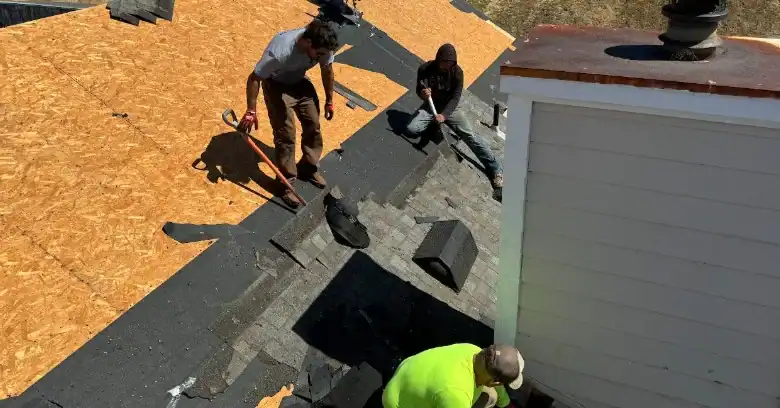
The existing covering is stripped away and the deck is left exposed for inspection, and magnets and rakes pick up the nails that fall. The deck is checked, mended and made flat for the next layer, so this is not the place to save time.
The Hidden Layers
Beneath every roof is a membrane that catches whatever the surface lets through, and it is easy to overlook. Reaching this stage quickly is a sensible way to protect the interior, and rows are laid from the eave upward, each lapping the last.
Small Metal Pieces, Large Consequences
Chimneys, skylights, vent pipes and walls all need flashing worked into the roof, and reusing old flashing under a new roof often comes back to bite. Pipe seals made of soft materials fail early in strong sun, so this is an easy step to ask about.
Air Under the Roof
Warm air trapped under the deck works on the roof from below, and a proper system draws air in low and sends it out high. The design of the system matters more than the number of vents, and a roofer should be able to describe it simply.
Finishing the Job
The job is not over until the yard looks like a yard again, and covers come off the landscaping and the beds are inspected. Looking at the ridge, the valleys and the flashing with the roofer present is time well spent, and it makes future repairs and sales smoother.
The Paperwork Side of a Roof
Municipal offices have their own expectations for roof work, and the answer should be clear from the start. Areas with wildfire exposure often have extra requirements for roofing materials and vents, and the details are worth a closer look. A proposal that names its materials and steps is easier to compare, so compare any two side by side.
Keeping the Property Safe
The ground around a house takes a beating during a roof project, so tarps and plywood go down where debris will land. The area under the eaves is the one to avoid, so tell the crew about anything fragile or valuable. The attic gets dusty during tear-off, and anything stored there will notice, and it is best done the night before.
Disruption and How to Manage It
A new roof usually takes a few days for an average house, though weather and size change that, and the crew should give you a realistic window. Informing nearby households is a courtesy that pays off, and the whole thing is over sooner than it seems. Household routines bend a little while the work is under way, and that is worth keeping in mind.
Getting Clear Before the Work Begins
Ask how the crew protects the house when rain is in the forecast, and anything left vague deserves a follow-up. Product names and thicknesses on the proposal let you compare like with like, and it should be written on the proposal. Ask what happens if something unexpected turns up under the old roof, and it is better to know in advance.
Looking After a New Roof
A roof that is never looked at tends to fail when it is least convenient, and the best times are before the rainy season and after the first big storm. Overhanging trees drop material that collects in corners and valleys, and it protects the investment you just made. Call a roofer after a major wind event or if you see a stain on a ceiling, and a photograph helps explain what you saw.
Is There a Best Time for a New Roof
Many homeowners wait until a leak appears before they think about a roof, so a few weeks of lead time is common. Any month can work with the right planning and a willingness to move a day, and the covering you choose affects the timing as well.
What the Crew Sees Inside the House
Rust on the points of roofing nails and dark patches on the sheathing are signs that moisture has been present for some time, and bring a flashlight if you can.
Ready When You Are
Sorting out Residential Roofing Repair in Grover Beach California is easier with someone who can look at the house, with 805-723-2381 ready whenever you are. The size of the project changes the schedule but not the principle, and that is worth keeping in mind. Taking the first step is usually the hardest part of any home project, and that is a good place to begin.
Verified

Verified
Verified
Verified






















