
Thinking About Roof Inspections for a Home in Atascadero California?
Creative Roofing walks a household through every stage of a roofing project, from Atascadero California out to the surrounding area.
Dial 805-723-2381 and describe the project you have in mind.
Where a Roofing Job Begins
A roofing project begins with a close look at the surface, the edges and the pipes, and that is worth keeping in mind. Loose granules, lifted edges, cracked flashing and soft spots all say something about the layers below, and the findings are worth asking to see.
Sun and heat age a roof in ways that rain alone never would, and a roofer who knows the area expects exactly that.
Deciding What the Roof Needs
A roof can be repaired, partly rebuilt or removed entirely, and the evidence decides what is done, and the reasons should be easy to follow. A roofer who explains the reasoning in plain terms is easier to trust with the work, and the answer tells you a lot.
Hidden damage found during tear-off is the usual reason a project grows beyond its first outline, and nobody should be surprised when it happens.
Picking a Roof Covering
Most houses here wear one of three coverings, and the choice shapes everything else, and the style of the neighborhood often plays a part. Color deserves more thought than it usually gets, and a full-size piece seen outdoors beats a catalog picture.
Timing the Work
Roofing here follows the weather more than the calendar, and crews watch the forecast closely. Crews often start early in summer to get ahead of the hottest hours, so the day usually begins at sunrise.
Tear-Off and Preparation
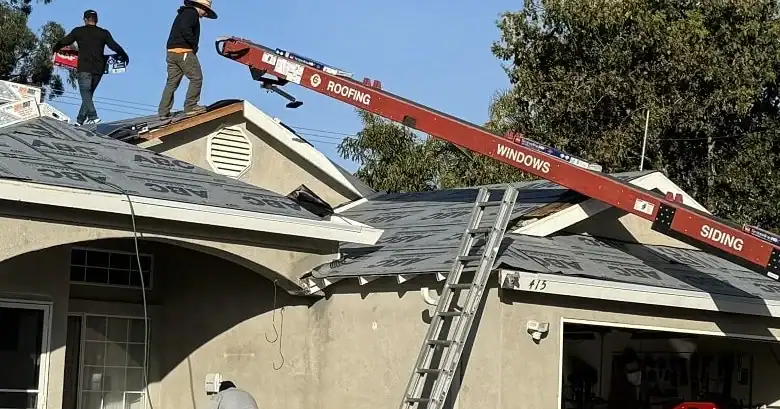
Removal of the old material is where the project gets loud, so landscaping and windows are covered before the first piece comes up. Repairs to the deck happen now, before anything new is installed, since good materials laid over a weak deck do not last.
What Goes Down First
The surface you see is only the outer layer of a roof, and metal edging is set at the eaves and rakes before the covering. Drying in gives the crew a margin against surprise weather, and the visible covering goes on from there.
Where Roofs Meet Walls and Pipes
Chimneys, skylights, vent pipes and walls all need flashing worked into the roof, and it pays to think it through. Pipe seals made of soft materials fail early in strong sun, so this is an easy step to ask about.
Intake and Exhaust
An attic under a hot roof can reach extreme temperatures in summer, and a proper system draws air in low and sends it out high. The design of the system matters more than the number of vents, and the answer should be part of the proposal.
Cleanup and the Final Walk-Through
Once the roofing is done, the property has to be put back in order, so gutters are checked and cleared of loose granules. Looking at the ridge, the valleys and the flashing with the roofer present is time well spent, and it pays to think it through.
Approvals Before the Work Starts
Municipal offices have their own expectations for roof work, so it is fair to ask who pulls the permit. Areas with wildfire exposure often have extra requirements for roofing materials and vents, so ask how the plan meets the rules for your street. A proposal that names its materials and steps is easier to compare, and it is worth reading it slowly.
What Happens to the Yard
Roof work is hard on landscaping unless it is planned for, and it is reasonable to ask how this will be done. Children and animals should stay clear of the yard while the work is underway, and a short talk the evening before covers the details. Inside the house, vibration can shake items from shelves and loosen attic insulation, so it is wise to take down fragile pictures first.
Disruption and How to Manage It
A simple roof may go quickly while a complicated one takes longer, and the crew should give you a realistic window. A quick word with the people next door can head off complaints, so a friendly note goes a long way. The loudest stretch is the tear-off, and it passes quickly, and a plan for the loud days makes them easier.
A Short List for Comparing Proposals
Ask what will be done with the old material and how the deck will be handled, and listen to how the answer is given. Product names and thicknesses on the proposal let you compare like with like, and it should be written on the proposal. Talk through how changes to the plan will be handled and agreed, and settle it before the first day.
Caring for the Roof Once It Is Done
A roof needs less attention than most parts of a house, but it needs some, and binoculars make the job easy. Debris on the roof holds moisture and wears the surface, and a small broom is often enough. Early attention to a leak is almost always cheaper than late attention, and the earlier the better.
When to Schedule the Work
Booking early in the dry season leaves time to compare more than one proposal, and the schedule fills quickly once the rains end. Early fall is popular because the weather is still dry and the heat has eased, and a good roofer will explain the trade-offs.
Roof Work and Your Attic
Rust on the points of roofing nails and dark patches on the sheathing are signs that moisture has been present for some time, and attic problems are cheaper to deal with during a re-roof.
Next Steps for Your Roofing Project
Homeowners comparing Roof Inspections in Atascadero California can simply pick up the phone, so use 805-723-2381 to talk through the roof and the next step. The size of the project changes the schedule but not the principle, so there is no harm in asking questions first. A short conversation can turn a vague worry into a clear plan, so pick up the phone when you are ready.
Verified

Verified
Verified
Verified






















