
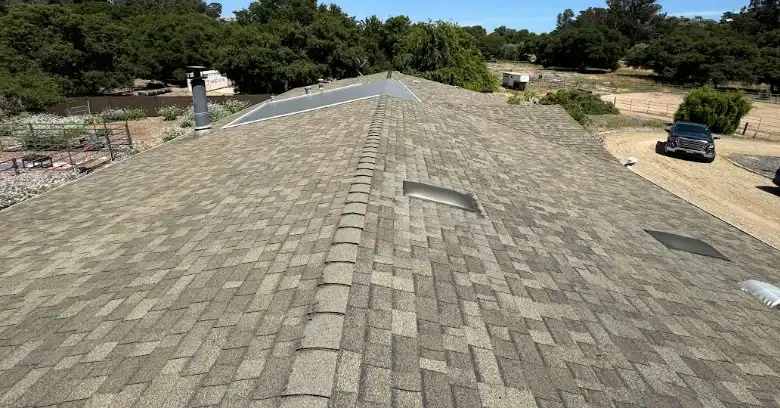
Comparing Architectural Shingle Roof Installations for a Home in Central Coast California?
Creative Roofing lays asphalt, architectural and designer shingles over carefully prepared decks, serving homeowners in Central Coast California and beyond.
Ring 805-723-2381 to set up a visit to look at your shingles.
Layers You Cannot See From the Street
The common residential shingle starts as a reinforcing mat, which is coated with asphalt and then surfaced with mineral granules, so the whole shingle depends on all of them. Granule loss is the clearest sign that a shingle is wearing out, and the process only gets faster over time.
How Shingle Lines Differ
The basic strip shingle is a simple product with a simple appearance, and the saving is real but so is the shorter life. Laminated shingles are thicker, heavier and more dimensional than flat strip shingles, and the thicker body stands up better to sun. Premium and luxury lines go further, with thicker laminates, deeper shadow lines and designer shapes, and the added weight is a benefit in wind.
Sun, Heat and Aging
Heat, ultraviolet light and temperature swings wear the surface steadily, and that is worth keeping in mind. Edges that lift, corners that curl and surfaces that crack all point to age, and the pattern across the roof shows how far the wear has gone.
Color Choices for a Sunny Climate
The color of a roof affects both its appearance and its temperature, so consider how the house sits in the sun. Cool shingle lines are designed to lower roof temperatures without changing the look much, so ask for the product details and the rating.
The Craft Behind a Good Install
The number and position of nails are set by the manufacturer for a reason, and check that they are driven flush. The row at the eave is the most exposed to wind and water, which is why it gets special treatment, and crooked rows are a warning. Ridge caps finish the roof where two slopes meet and shed water over the crest, and replacing a ridge is simple when done in time.
Seal Strips and Warm Weather
Seal strips need warmth to activate, which is why roofs installed in cool weather may take longer to bond, and checking for lifted tabs after a windy spell is a good habit. Wind rarely harms a well-sealed roof, but it finds every weak spot on an old one, and a prompt repair prevents a leak.
Balanced Intake and Exhaust
A balanced system of intake and exhaust keeps the temperature under the roof closer to the air outside, and it is easy to overlook. Attic fans, gable vents and ridge vents each work differently and should not fight each other, and fixing ventilation is far easier during a re-roof.
Where Shingles Meet Everything Else
Modern synthetic underlayments resist tearing and last better in strong sun, so ask which product is going on. Valley flashing has to be formed correctly and sealed well, or water finds a way in, and a little care goes a long way.
Is It Time for a New Roof
A roof that sheds grit, lifts at the edges and shows dark patches is reaching the end of its life, and the details are worth a closer look. Spot repairs are a good choice when most of the roof still has plenty of life left, and the savings can be substantial. Putting money into a failing roof delays the inevitable and may cost more in the end, and that is worth keeping in mind.
What Lies Under the Existing Roof
Old shingles come off in sections and go straight into a bin, leaving a clean deck ready for the next step, and the bare deck is also the moment to check ventilation openings. A roof-over saves effort in the short run, yet it prevents any look at what the old roof has been hiding, and a second layer is difficult to remove later. Rotted boards and delaminated plywood are usually found around leaks, valleys and plumbing vents, and expect a call with photographs.
Keeping the Yard Safe During a Shingle Job
Tarps along the walls, plywood over delicate plantings and a bin positioned below the edge keep the mess contained, and it is easy to overlook. Rolling magnets across the lawn, the driveway and the planting beds collects what a rake and the eye miss, and that is worth keeping in mind. Letting grit and leaves pile up in a gutter can lead to overflow along the fascia and the foundation, and it costs little to keep them clear.
Timing a Shingle Replacement
Most replacements here are scheduled for the long dry season, which gives the roof time to settle before the first winter storm, and the busiest months fill up quickly. Very hot afternoons can scuff new shingles underfoot and make nails harder to drive cleanly, so many crews start at dawn in midsummer, so an early arrival is nothing to worry about.
Coordinating With Other Trades
Openings in a roof have a real effect on the quality and cost of a shingle project, and it is easy to overlook. Replacing a roof beneath an existing array is a coordination job involving the roofer and the solar company, and that is worth keeping in mind.
Matching Shingles After a Repair
A roofer can often borrow shingles from a hidden slope or the back of the house to repair a more visible area, which gives the best match, so ask the roofer what to expect.
Carrying Water Away From the House
Metal edging installed under the underlayment at the eave and over it at the rake is the correct order, and it makes a visible difference to the durability of the edge, and a little care goes a long way.
What to Look for in Writing
The written scope should list tear-off, deck repair, ventilation and cleanup, and a thorough contractor will be happy to explain. Ask about the schedule and how the roof will be covered if rain is forecast, and trust your sense of how the questions are received.
Talk to Us About a Shingle Roof
Anyone sorting out Architectural Shingle Roof Installations in Central Coast California is one call away from a straight answer, so use 805-723-2381 to set up the next step. Whether the roof is leaking now or you are planning ahead, an early conversation keeps your options open, and we are glad to help you sort it out.






















