
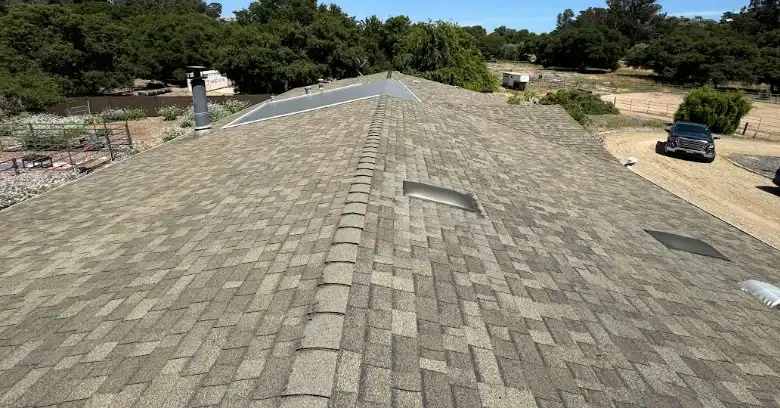
Thinking About Architectural Shingle Roof Services Close to Central Coast California?
Creative Roofing works with layered shingles, starter strips, underlayment and ridge caps, from Central Coast California out to the surrounding area.
Reach us at 805-723-2381 to talk through shingle styles and what suits the home.
The Anatomy of an Asphalt Shingle
Most roofs on houses here wear shingles built from a glass-fiber core with an asphalt skin, and the granules protect the asphalt from the sun. Without a surface of mineral granules, the asphalt beneath would dry and crack in a short time, so a handful of grit in a downspout tells a story.
How Shingle Lines Differ
Flat shingles of this style are economical but wear out sooner than thicker kinds, and a little care goes a long way. Laminated shingles are thicker, heavier and more dimensional than flat strip shingles, and the details are worth a closer look. Premium and luxury lines go further, with thicker laminates, deeper shadow lines and designer shapes, and it is easy to overlook.
Sun, Heat and Aging
Hot weather and strong sun dry the oils in asphalt, leaving the surface stiff and brittle, so those slopes make a useful gauge of overall condition. A shingle that has begun to curl no longer lies flat against the roof, and the pattern across the roof shows how far the wear has gone.
Cool Shingles and Heat Gain
Lighter shingles reflect more of the summer sun and keep the roof surface cooler, and a little care goes a long way. Special coatings on the granules help send solar heat away from the house, and local rules sometimes encourage them.
Installation Details That Decide Longevity
The nailing line printed on the shingle marks where fasteners must go for the best grip, and a crew that cuts corners here causes trouble later. Starter shingles at the bottom edge anchor the first row and keep wind from getting underneath, so a good crew follows the layout exactly. Special cap products are made to bend without cracking, and it pays to think it through.
Wind, Seasonal Gusts and Sealing
Shingles have a strip of adhesive that bonds each course to the one below once the sun warms it, and checking for lifted tabs after a windy spell is a good habit. Strong seasonal winds can lift tabs that have lost their seal and tear them off the roof, and a roofer can reseal tabs with a dab of roofing cement.
Heat Trapped Below Shortens the Roof
Heat that cannot escape from the attic speeds the aging of the roof deck and the shingles, so check that the soffit openings are not blocked by insulation. Adding insulation without maintaining airflow can make an attic hotter in summer, and that is worth keeping in mind.
Where Shingles Meet Everything Else
Self-adhering membranes at the eaves and valleys give extra protection where leaks start, and it matters most when the roof is open to weather. Chimneys, walls and skylights need step flashing and counterflashing worked into the shingle courses, and these details cause most leaks on shingle roofs.
Signs of Wear and Choosing Repair or Replacement
Several signs together point to a roof that needs more than a patch, and a roofer can sort the serious from the cosmetic. Patching makes sense when the damage is limited and the shingles are otherwise healthy, and it is easy to overlook. Matching old shingles is difficult, so large repairs often look patchy, and a full replacement gives a fresh start.
Tear-Off, Layers and the Deck Beneath
A complete tear-off lets the roofer inspect each sheet of decking and replace any that has been stained, softened or split, and anything hidden gets found at this point. Putting a second layer on a tired roof can trap heat and moisture between the layers and shorten the life of both, so ask for both options in writing. Sheathing that crumbles or feels spongy underfoot must be replaced before shingles can hold, and good communication keeps everyone calm.
Keeping the Yard Safe During a Shingle Job
A shingle tear-off throws old material in every direction, so a careful crew covers plants, vents and the ground before the first piece comes off, so ask how the yard will be protected. A professional crew checks the ground more than once, including the gutters, where granules and nails often collect, and it is reasonable to inspect it together. A new shingle roof sheds a little loose grit in its first months, and some of it ends up in the gutters, and it pays to think it through.
Timing a Shingle Replacement
Most replacements here are scheduled for the long dry season, which gives the roof time to settle before the first winter storm, and the calendar is only part of the question. Shade, water and early starts are the usual ways of coping with the heat on a dark roof, and a rushed job in extreme heat is a poor bargain.
Rooftop Additions and Shingle Work
A re-roof is the right moment to replace worn skylight curbs, chimney flashing and cracked sealant, before they cause trouble, and it is easy to overlook. Ideally the roof is renewed before panels are installed, so that the new system is not removed again within a few seasons, and a little planning saves a lot of expense.
Making a Repair Look Right
A roofer can often borrow shingles from a hidden slope or the back of the house to repair a more visible area, which gives the best match, and a small color difference is not a defect.
The Edge Details That Finish a Shingle Roof
Metal edging installed under the underlayment at the eave and over it at the rake is the correct order, and it makes a visible difference to the durability of the edge, and fixing it now costs less than later.
Getting Specific About the Product
A good proposal names the shingle line, the color, the underlayment and the flashing materials, and a thorough contractor will be happy to explain. Ask how many layers of old roofing will be removed and how the deck will be inspected, and trust your sense of how the questions are received.
Start the Conversation
Those comparing Architectural Shingle Roof Services in Central Coast California can reach us by phone, and the number is 805-723-2381. Calling before a problem becomes urgent makes it easier to compare materials and schedules, and the first step is just a phone call.






















