
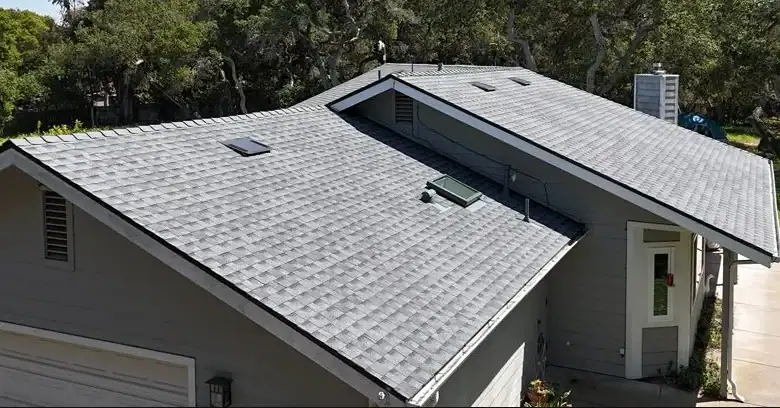
Ready for Asphalt Shingle Roofs for a Home in Central Coast California?
Creative Roofing installs and repairs the shingle coverings found on most houses in the area, for homes in Central Coast California and the towns around it.
Phone 805-723-2381 and ask about a shingle roof for your house.
What a Shingle Roof Is Made Of
The common residential shingle starts as a reinforcing mat, which is coated with asphalt and then surfaced with mineral granules, so the whole shingle depends on all of them. The granules do more than add color, because they shield the asphalt from ultraviolet light, so a handful of grit in a downspout tells a story.
How Shingle Lines Differ
The basic strip shingle is a simple product with a simple appearance, and fewer new roofs use it today. Most new roofs on houses today use architectural shingles, which look richer and resist wind better, so there is something for most houses. Premium and luxury lines go further, with thicker laminates, deeper shadow lines and designer shapes, and a sample on site shows the difference clearly.
Why Sunny Slopes Age First
Hot weather and strong sun dry the oils in asphalt, leaving the surface stiff and brittle, and the effects are visible on the south and west slopes first. Edges that lift, corners that curl and surfaces that crack all point to age, and the pattern across the roof shows how far the wear has gone.
Color, Reflectivity and Cooling
Color is a practical decision as much as a matter of taste, and the effect is easiest to see on a hot day. Cool shingle lines are designed to lower roof temperatures without changing the look much, and local rules sometimes encourage them.
The Craft Behind a Good Install
Nails driven too high or too low weaken the hold of the whole course, and a crew that cuts corners here causes trouble later. A starter strip along the eave and the rake gives the first course a sealed edge and extra grip, and the pattern is part of the manufacturer specification. A properly installed ridge looks neat and stays tight against the weather, and the ventilation opening below the cap should stay clear.
Gusts and Loose Tabs
Heat from the sun is what finishes the job on a new roof, and the nails hold the rest. Pieces that blow off expose the underlayment, which is not meant to sit in the sun, so a loose shingle should not wait for the next storm.
Attic Ventilation and Shingle Life
A balanced system of intake and exhaust keeps the temperature under the roof closer to the air outside, and it is easy to overlook. The right combination depends on the shape of the roof and the size of the attic, and that is worth keeping in mind.
Waterproofing Layers and Metal Pieces
The shingles shed most of the water, but the underlayment handles the rest, and the choice affects how the roof performs. Valleys are the crossing channels where two slopes meet, and they carry the most water on the roof, and a little care goes a long way.
Reading the Roof
Look for lines of shadow where shingles have lifted and for stains inside the house, and early action keeps choices open. Isolated problems from a branch or a loose tab respond well to a simple repair, and a good roofer will tell you when a repair is enough. Replacement is the sensible answer once the field of shingles has lost its protective surface, and the new roof will perform better than a patched old one.
Tear-Off, Layers and the Deck Beneath
Most shingle replacements begin with a full tear-off, in which the old layers are stripped away and the plywood or boards beneath are laid bare, and it pays to think it through. Putting a second layer on a tired roof can trap heat and moisture between the layers and shorten the life of both, and a second layer is difficult to remove later. Rotted boards and delaminated plywood are usually found around leaks, valleys and plumbing vents, and the cost of a few sheets is rarely large.
What the Site Should Look Like at the End
Tarps along the walls, plywood over delicate plantings and a bin positioned below the edge keep the mess contained, and it is easy to overlook. Nails are the main hazard left behind after any roofing job, and a magnetic sweep of the yard and driveway is standard practice, and the work is not finished until the cleanup is. Checking the gutters after the first big rain is a good habit, and it takes only a few minutes, and the new roof will thank you.
Planning Around Rain and Heat
Shingle work goes best in dry, mild weather, when the sealing strips bond quickly and the crew can leave the roof open without worry, and a little care goes a long way. Very hot afternoons can scuff new shingles underfoot and make nails harder to drive cleanly, so many crews start at dawn in midsummer, and the details are worth a closer look.
Coordinating With Other Trades
Roofers work around fixed obstacles all the time, but each one adds time and adds a place where water might enter, and mention any plans to add more later. Solar panels bolted to a shingle roof have to be removed and reinstalled when the roof is replaced, so the two projects should be planned together, and get the plan in writing.
Color, Fade and Repair Work
Manufacturers change colors and blends over time, so an exact match for a discontinued shingle may simply not exist anymore, and function matters more than appearance here.
Gutters, Drip Edge and the Roofline
Shingles should overhang the drip edge by a small, consistent amount so that water drops cleanly into the gutter instead of curling back under, and old fascia boards are easy to replace while the roof is open.
Getting Specific About the Product
A good proposal names the shingle line, the color, the underlayment and the flashing materials, and read them slowly. Ask how many layers of old roofing will be removed and how the deck will be inspected, and trust your sense of how the questions are received.
Tell Us What You Are Thinking
People researching Asphalt Shingle Roofs in Central Coast California are welcome to call with questions, with 805-723-2381 ready whenever you want to talk. Planning ahead usually leads to better choices than reacting to an emergency, so reach out whenever you are ready.






















