
Searching for Residential Roof Contractors Near Me for a Home in Central Coast California?
Creative Roofing covers each step of putting a new roof on a house, from Central Coast California out to the surrounding area.
Call 805-723-2381 to start a conversation about the roof over your head.
The First Step in a Roofing Project
Before any material is chosen, the existing roof has to be understood, and the notes from that visit steer every later choice. Signs of wear on top often point to a moisture problem underneath, and that is the evidence a sensible plan is built on.
Heat is the quiet cause behind much of the wear seen on roofs here, and a roofer who knows the area expects exactly that.
Setting the Scope of Work
The right answer depends on how much sound material is left on the house, and an honest roofer will say which one applies. Findings that cannot be pointed to are findings worth questioning, because you are the one living under the result.
When the decking underneath is damaged, the scope of the job grows, and agreeing on the approach in advance beats debating it with the roof open.
Choosing Materials for Your Home
The common choices are shingle, tile and metal, and each suits some houses better than others, but the framing and the slope decide more than preference does. Sun exposure makes color a practical question as well as a visual one, so hold a sample against the house in daylight.
Scheduling Around the Weather
For most of the year the weather here lets a roof go on with few interruptions, so exposed areas get covered at the end of each day. Roof surfaces get hot enough in July to change how materials behave, and the plan bends to the heat rather than the other way around.
Getting to a Clean Surface
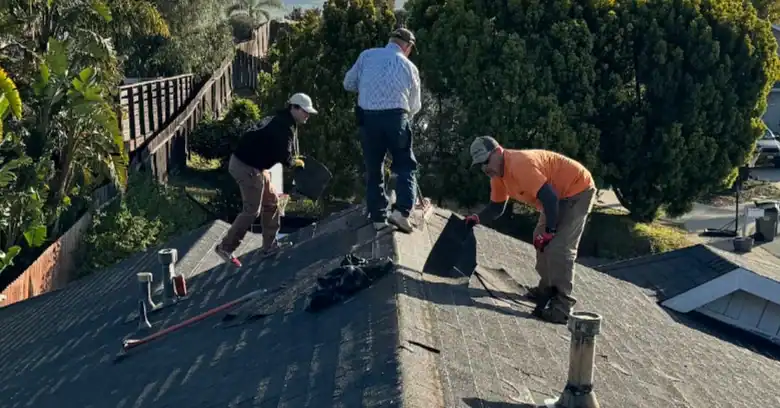
Taking the old roof off is the noisiest and messiest part of the job, so landscaping and windows are covered before the first piece comes up. Once the deck is bare, any damaged boards are replaced, because new material is only as good as what it is fastened to.
The Hidden Layers
The surface you see is only the outer layer of a roof, and valleys, eaves and penetrations get extra layers. Drying in gives the crew a margin against surprise weather, and rows are laid from the eave upward, each lapping the last.
Penetrations and Edges
The places where a roof is interrupted are the places most likely to leak, since worn metal under new material becomes the weak link. Pipe seals made of soft materials fail early in strong sun, and putting in new boots costs little when the roof is already open.
Intake and Exhaust
Heat collects in the space beneath the roof deck unless it has somewhere to go, and the details are worth a closer look. More vents are not always better, because intake and exhaust have to be balanced, because airflow is easy to plan now and hard to add later.
Finishing the Job
When the last piece is installed, the cleanup begins, and covers come off the landscaping and the beds are inspected. Questions are easier to settle while the crew is still on site, and a saved record answers questions nobody has thought to ask yet.
Permits and Paperwork
Depending on the town, a re-roof may need a permit before any material is ordered, so it is fair to ask who pulls the permit. Certain hillside and edge-of-town areas follow stricter material rules than the valley floor, and a roofer working in the area should already know them. Written proposals should describe the materials, the scope and the cleanup in plain words, because what is written down is what everyone remembers.
Protecting the House and Yard
The ground around a house takes a beating during a roof project, and it is reasonable to ask how this will be done. Pets, children and cars are best kept away from the work area, so tell the crew about anything fragile or valuable. Light fixtures and wall hangings can shift when a roof is being removed above them, and a sheet over stored boxes keeps the grit off.
Noise, Neighbors and Daily Life
Most residential projects are finished within days, not weeks, and plan on some slack for the weather. Roof work is loud, and the street will hear it, and most people are tolerant when they know what to expect. Working from home during a roof job is possible, though not always pleasant, and that is worth keeping in mind.
A Short List for Comparing Proposals
Ask how the crew protects the house when rain is in the forecast, and anything left vague deserves a follow-up. Knowing exactly what is going on the house removes a common source of disputes, and a good roofer will be glad you asked. A change in scope should be written down and approved before the work continues, and it is better to know in advance.
Caring for the Roof Once It Is Done
Checking the roof twice a year takes only a few minutes, and little problems stay little. Trim branches that touch or hang over the roof, and it protects the investment you just made. Missing pieces, lifted edges or a new stain are all reasons to have someone look, and the earlier the better.
Choosing the Right Season
Booking early in the dry season leaves time to compare more than one proposal, and calling in spring avoids the rush. Early fall is popular because the weather is still dry and the heat has eased, so do not feel the choice is locked in.
Insulation, Ducts and Cables Under the Roof
Rust on the points of roofing nails and dark patches on the sheathing are signs that moisture has been present for some time, and bring a flashlight if you can.
Next Steps for Your Roofing Project
Anyone researching Residential Roof Contractors Near Me in Central Coast California is one call away from a straight answer, and 805-723-2381 reaches the right person. Every roof is different, so every conversation starts from the house itself, and an early conversation costs little. Taking the first step is usually the hardest part of any home project, and that is a good place to begin.






















