
Weighing Residential Roofing Services Around Central Coast California?
Creative Roofing walks a household through every stage of a roofing project, across Central Coast California and the neighboring communities.
Reach out at 805-723-2381 and tell us what has you thinking about the roof.
Day One of a Roof Project
Every roofing job starts with someone climbing up to see what is actually there, and a rushed visit tends to cost more than it saves. Photographs taken on that first visit become the record for everything that follows, and the findings are worth asking to see.
Sun and heat age a roof in ways that rain alone never would, so the wear is rarely even from one side to the next.
What Should Actually Be Done
Some roofs need a patch, some need a section redone, and some have reached the end of the road, and the reasons should be easy to follow. Damage should be shown rather than only described, and the answer tells you a lot.
Hidden damage found during tear-off is the usual reason a project grows beyond its first outline, and agreeing on the approach in advance beats debating it with the roof open.
Shingle, Tile or Metal
Most houses here wear one of three coverings, and the choice shapes everything else, so structure comes first and appearance second. Sun exposure makes color a practical question as well as a visual one, so hold a sample against the house in daylight.
Timing the Work
For most of the year the weather here lets a roof go on with few interruptions, and crews watch the forecast closely. Heat affects the work as well, and the plan bends to the heat rather than the other way around.
Removing the Old Roof
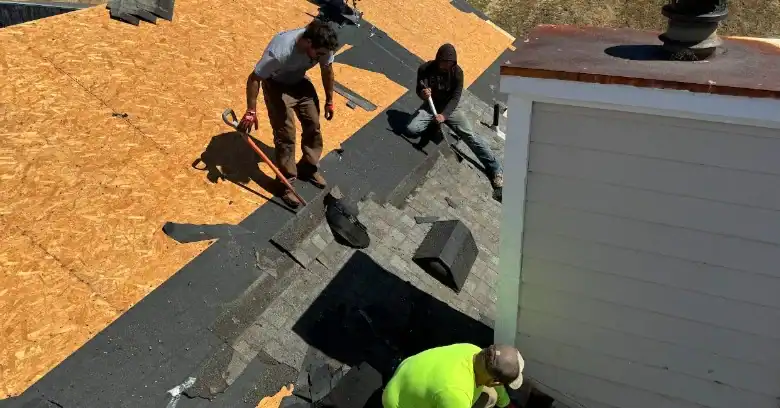
Taking the old roof off is the noisiest and messiest part of the job, so landscaping and windows are covered before the first piece comes up. Soft or split sheathing is cut out and new panels are fastened down, because new material is only as good as what it is fastened to.
The Hidden Layers
The surface you see is only the outer layer of a roof, and chimneys get particular care. Drying in gives the crew a margin against surprise weather, so the rest of the work can proceed without worry.
Penetrations and Edges
Flashing is the thin metal that keeps water out where the roof meets something else, and the cost is small next to the roof it protects. Sun dries and cracks the flexible parts over time, so this is an easy step to ask about.
Air Under the Roof
A roof without enough ventilation bakes the attic and everything stored in it, since warm air rises on its own when it is given a path. The design of the system matters more than the number of vents, and it is easy to overlook.
Leaving the Property Clean
When the last piece is installed, the cleanup begins, so gutters are checked and cleared of loose granules. A walk around the finished roof with the roofer is a reasonable thing to ask for, and it makes future repairs and sales smoother.
The Paperwork Side of a Roof
Depending on the town, a re-roof may need a permit before any material is ordered, because surprises at the counter slow everything down. Areas with wildfire exposure often have extra requirements for roofing materials and vents, and the details are worth a closer look. A proposal that names its materials and steps is easier to compare, so compare any two side by side.
Protecting the House and Yard
A roofing job puts a lot of weight, noise and debris around a house, so tarps and plywood go down where debris will land. Children and animals should stay clear of the yard while the work is underway, and a short talk the evening before covers the details. Attic contents are best covered or moved before the work starts, and it is best done the night before.
The Few Days of Commotion
Timing depends on the size of the roof, the complexity of the layout and the covering chosen, and plan on some slack for the weather. Neighbors appreciate a heads-up before the noise begins, so a friendly note goes a long way. Household routines bend a little while the work is under way, and the noise settles once the old roof is gone.
What to Ask Every Roofer
Ask how the crew protects the house when rain is in the forecast, and write the answers down. A proposal that only says shingles or tile is not specific enough, and a good roofer will be glad you asked. Ask what happens if something unexpected turns up under the old roof, and settle it before the first day.
Caring for the Roof Once It Is Done
A roof that is never looked at tends to fail when it is least convenient, and the best times are before the rainy season and after the first big storm. Debris on the roof holds moisture and wears the surface, and it also reduces fire risk in dry months. A prompt visit after damage keeps a minor repair minor, and the earlier the better.
Choosing the Right Season
Planning ahead usually gives better choices than reacting to an emergency, and calling in spring avoids the rush. Any month can work with the right planning and a willingness to move a day, and a good roofer will explain the trade-offs.
Attic Findings That Change the Plan
When the old roof comes off, the crew sees the underside of the deck, and stains, rust on nail tips and darkened wood tell the story of past leaks, and bring a flashlight if you can.
Talk to Us About Your Roof
Sorting out Residential Roofing Services in Central Coast California is easier with someone who can look at the house, so dial 805-723-2381 and say what you are seeing. The size of the project changes the schedule but not the principle, and an early conversation costs little. A short conversation can turn a vague worry into a clear plan, so pick up the phone when you are ready.






















